
Can We Finally Stop Decorating for Instagram? Why Your Home Isn't a Photo Shoot
Decorating for Instagram produces homes that look extraordinary for one second and feel wrong for every other one. Good design and good content are fundamentally different objectives: a photograph captures a single perfect moment, while a home has to survive every moment that follows. The signs you're decorating for the algorithm rather than your life include: rooms you don't actually use, furniture chosen for how it photographs rather than how it feels, and spaces that require constant restyling before they feel "right". The antidote is designing for how you live first — and letting the photography follow from that, rather than the other way around.
The perfectly styled home might be getting all the likes, but is it getting any actual living done? Imagine inviting friends over and spending twenty minutes hiding every sign that someone actually lives there.
The kettle.
The dog's bed.
The kids' Lego.
The remote control.
If that's normal... perhaps we've wandered a little too far.
Can We Finally Stop Decorating for Instagram?
There was a time when homes were designed for families. Now they seem to be designed for wide-angle lenses.
Don't get me wrong—I adore beautiful interiors. I'm an interior architect. Beautiful is literally my business.
But somewhere between perfectly edited reels and impossibly pristine kitchens, we've quietly started confusing good design with good content. They're not the same thing.
A photograph captures one perfect second. A home has to survive every other one. So are instagram homes realistic?
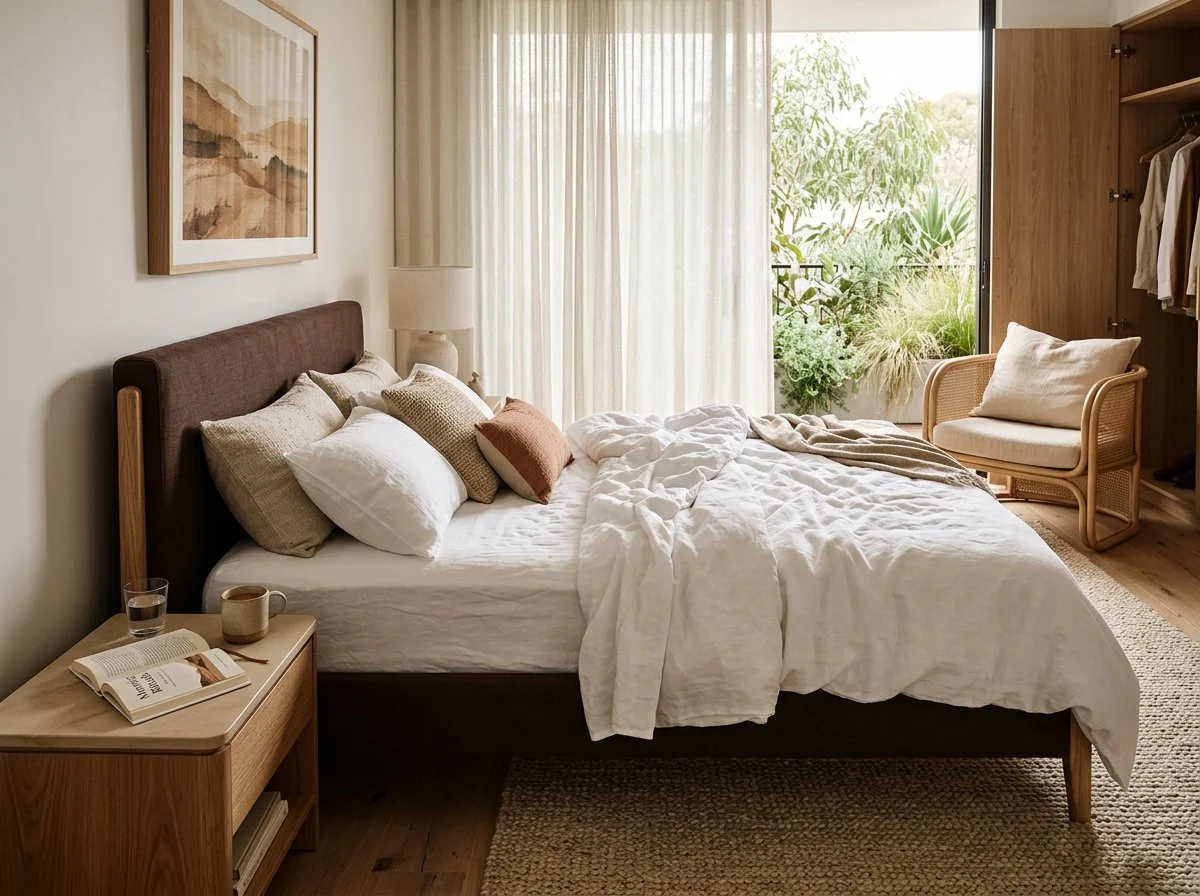
The Great Bouclé Epidemic
Apparently every chair in Australia now needs to resemble an oversized marshmallow wearing a fluffy dressing gown.
White bouclé.
Cream bouclé.
Off-white bouclé.
It's gorgeous...
...until someone sits on it.
Or owns a dog.
Or drinks coffee.
Or has children.
Or exists.
I'm not anti-bouclé. I'm anti-buying something because every influencer has one.
Furniture isn't a trend.
It's something you live with for the next ten years.
Coffee Tables That Look Like Museums
You've seen them.
Three identical books nobody has read.
A coral sculpture.
One lonely candle.
A decorative chain.
An empty bowl that has never contained anything.
Apparently this arrangement is sacred and must never be disturbed.
Meanwhile my favourite coffee tables have wine glasses, board games, flowers from the garden, a half-finished crossword, someone's reading glasses and yesterday's magazine.
That's called evidence of a life. Your home shouldn't look like nobody lives there. It should look like someone fascinating does.

The Kitchen With No Kettle
This one genuinely makes me laugh.
Magazine-worthy kitchens where there's no toaster.
No kettle.
No fruit bowl.
No coffee machine.
No bin.
Not even a tea towel.
Apparently everyone surviving inside these kitchens photosynthesises.
Real kitchens are wonderfully imperfect.
They're where people cook Sunday breakfasts, make midnight Milo, unpack groceries, burn garlic bread and gossip while leaning against the island bench.
If your kitchen can't cope with making a cup of tea, we've got bigger problems than your splashback.
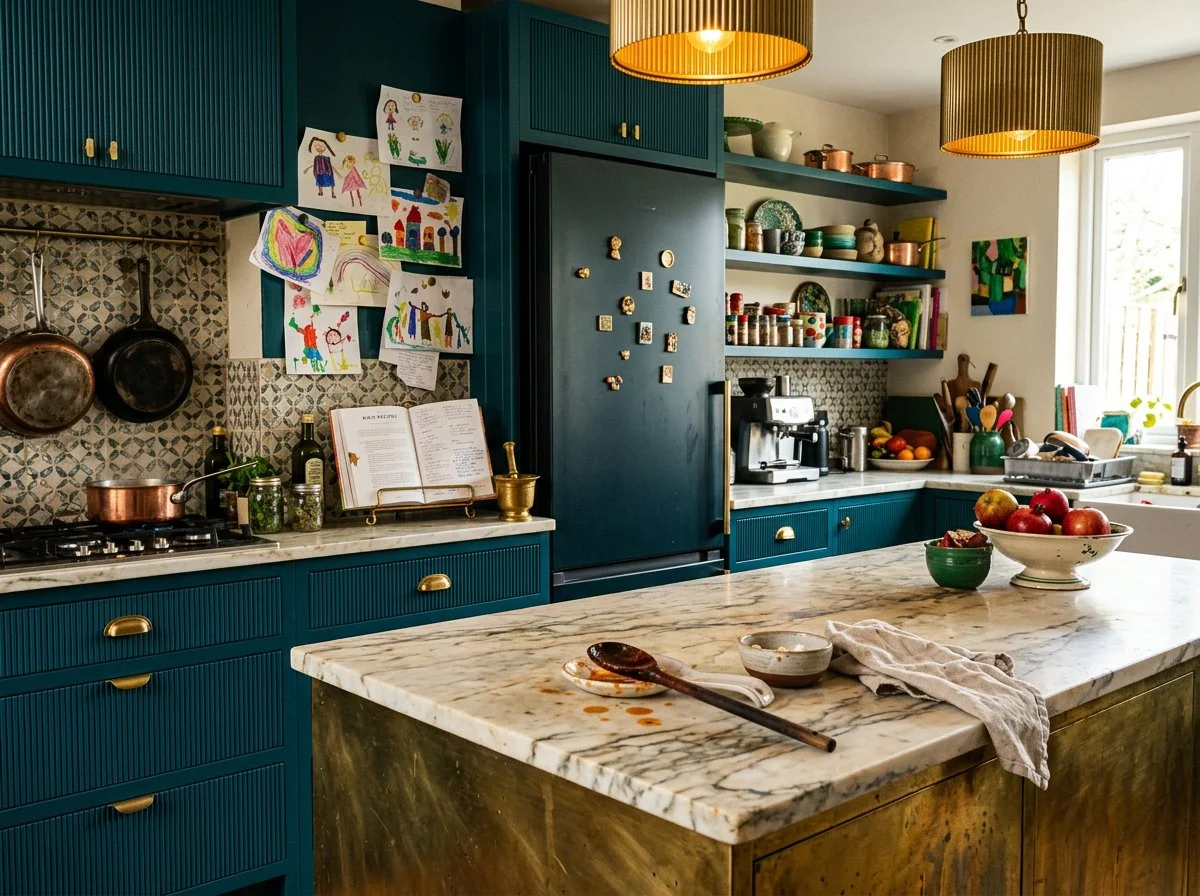
The Performance of Perfection
Here's what worries me.
We're slowly decorating for people who don't live there. We choose sofas because they'll photograph well.
We buy cushions because they match Pinterest. We paint entire houses greige because strangers on Instagram approved.
And then wonder why our homes don't quite feel...
...like us.
A beautiful home shouldn't feel like you're renting it from an algorithm.
It should tell your story.
The quirky lamp you found on holiday.
The slightly ridiculous artwork that still makes you laugh.
Your grandmother's cabinet sitting happily beside a contemporary sofa.
The ridiculously colourful cushions everyone told you not to buy. Those are the things guests remember.
Not whether your styling tray followed this season's trend forecast.

Personality Ages Better Than Trends
Instagram trends change faster than Melbourne weather.
One year it's boucle.
Next year it's limewash.
Then checkerboard.
Then chrome.
Then quiet luxury.
Then loud luxury.
Then something called "elevated organic" that somehow still looks suspiciously beige.
Meanwhile genuinely personal homes never go out of fashion.
Because authenticity doesn't have a trend cycle.
Here's My Radical Suggestion
Buy the colourful lamp.
Display the souvenirs.
Keep the kettle on the bench if you use it twelve times a day.
Choose the emerald velvet sofa if it makes your heart beat a little faster.
Mix old with new.
Break the rules.
Leave evidence that actual humans live here.
Because long after Instagram has moved on to the next aesthetic...
...your home still has to make you happy.
And that, my friends, deserves far more than a double tap.

Enough decorating for the algorithm. Start decorating for the humans who actually live there.
Here's a radical proposition: design your home for the Tuesday evenings. Not the Saturday morning photoshoot. Not the "we're having people over" version. The version where you're sitting in your own space, in your least impressive outfit, eating leftovers, and you look up and think — yes. This is mine. This is actually, genuinely mine.
That feeling? That's good design. That's the whole point.
The algorithm will not be there when you wake up at 3am. Your home will.
Design for the life you're living. Not the content you're creating.
Book a Design Power Session with Plush Design Interiors. Together, we'll design a home that earns compliments from your guests, not just your followers.
Love, Penelope xx - Interior Architect and Interior Designer
Beige is Banned. Luxury is Law. Apply Within.
Author of ‘Don’t Get Ripped Off By Your Reno’ and ‘A Home With A Pulse’. Both available on my e-book interior design and renovation resources page on my website.
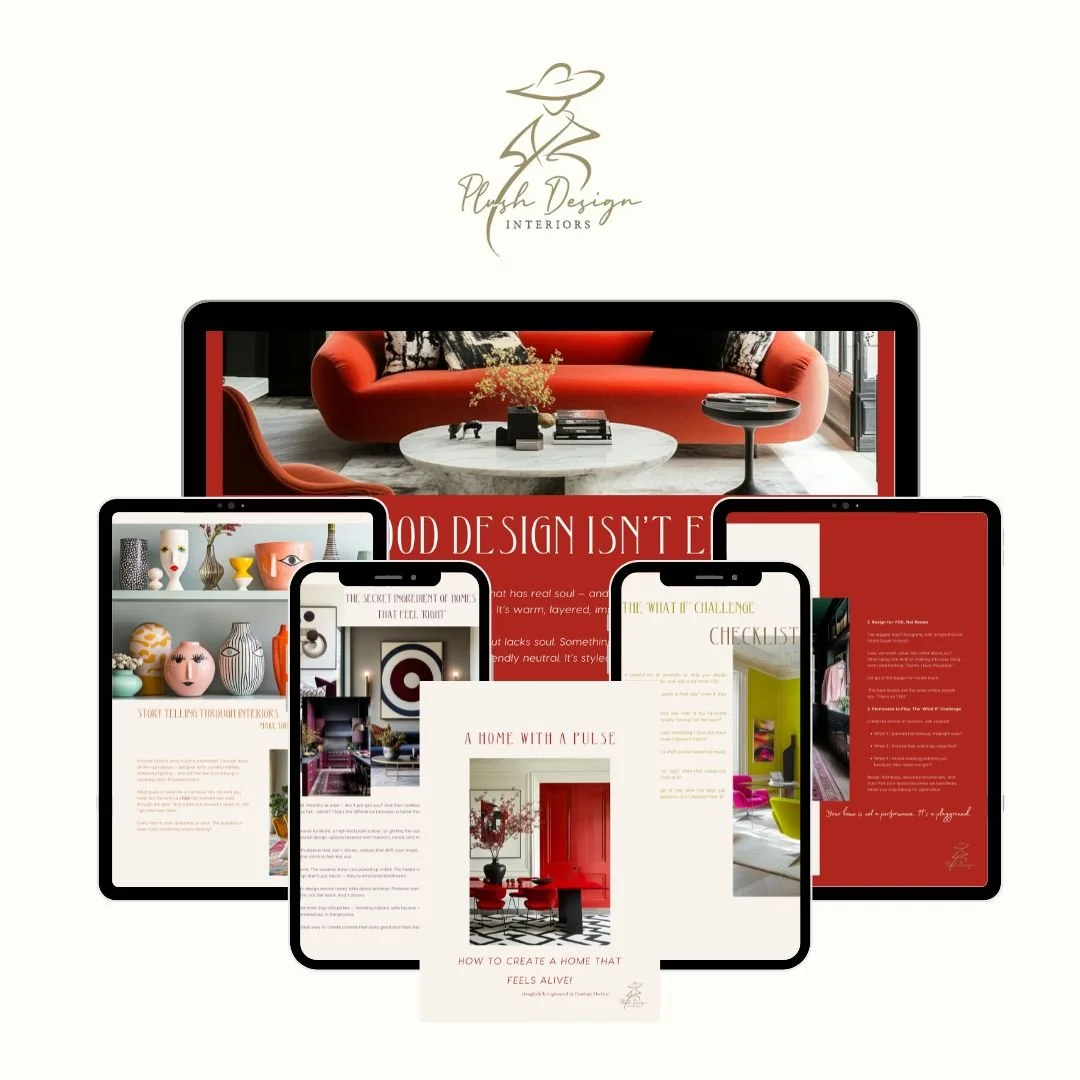
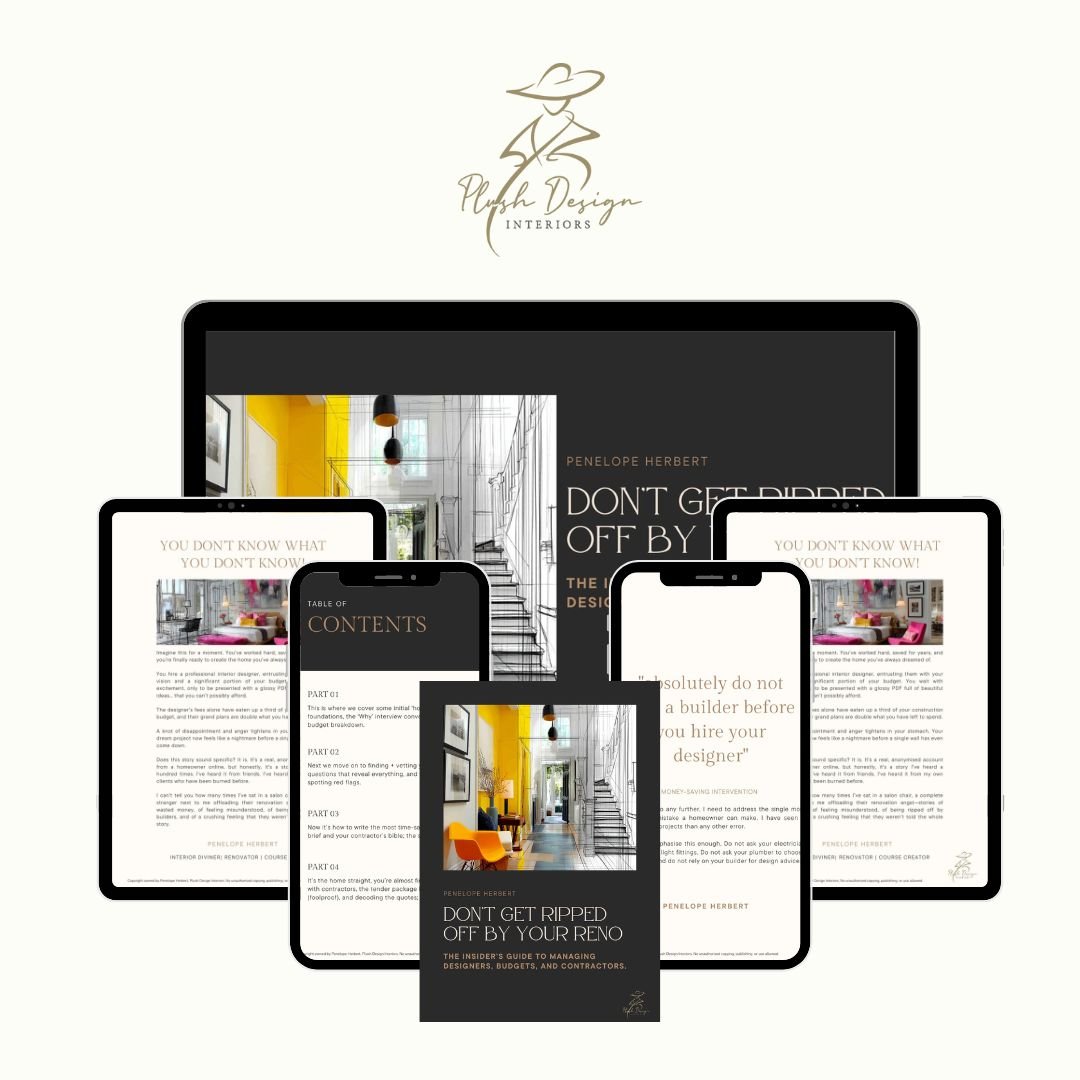
Plush Design Interiors uses AI‑generated imagery to help illustrate design concepts and possibilities in a fast, flexible and cost‑effective way. These images are inspirational visualisations only and may not represent final selections, exact colours, finishes or products available in Australia. All real‑world Plush Design Interiors work, including all design, specifications, selections and purchases, are curated by a human interior designer and are confirmed with clients using accurate samples, supplier information and detailed documentation before any work proceeds.
FAQs About Designing For Real Life vs Instagram
Is it okay to decorate using Instagram for inspiration?
Absolutely. Inspiration is wonderful. Copying someone else's home room-for-room isn't. Use social media as a starting point, then layer in your own personality, memories and lifestyle.
Are white interiors impractical?
Not necessarily, but they aren't practical for every household. Consider pets, children, entertaining habits and how you actually live before choosing delicate materials and finishes.
How do I make my home feel more personal?
Display meaningful artwork, heirlooms, travel finds, favourite books, collected objects and colours that genuinely make you happy. Great design reflects the people who live there.
Should kitchens be styled or practical?
Both. A beautiful kitchen should also function effortlessly. If you're constantly hiding appliances just to maintain a certain look, the design may not be working for your lifestyle.
Will a personalised home hurt resale value?
Not usually. Quality design, thoughtful layouts and timeless materials matter more than chasing fleeting social media trends. Personal styling can always be adjusted before selling.
Do I have to hide my kettle to have a designer kitchen?
Absolutely not. A well-designed kitchen should support the way you live. If you make tea or coffee every day, it's perfectly reasonable to keep frequently used appliances on the bench. Great design balances beauty with practicality.
Why do so many beautifully styled homes feel wrong to live in?
Because they were designed to be seen rather than lived in. A photograph captures one perfect moment — the right light, the right angle, a room styled with borrowed props and fluffed cushions. A home has to survive every other moment: the Tuesday morning, the rainy Sunday, the dinner party that ends in the kitchen. When the two objectives compete, real-life livability almost always loses. Staging and styling produce rooms that look extraordinary in a two-second scroll and feel exhausting to maintain for the people actually living in them.
What's the difference between a well-designed home and a well-styled home?
A well-designed home functions beautifully regardless of how it's photographed — the layout works, the light is right, the materials age well, the storage is adequate for real life. A well-styled home looks beautiful in photographs regardless of how it functions — cushions are perfectly placed, surfaces are clear, props are present. The best homes are both. The most common homes are styled but not designed, which is why they look good on Instagram and feel oddly wrong to live in.
How do I stop designing for resale and start designing for myself?
Ask one question before every design decision: will I love this in ten years? Not "will buyers love this?" Not "is this on trend?" Not "is this safe?" Will you specifically love it in ten years, knowing your taste, your lifestyle and your history with your home. Decisions made from that question produce homes with genuine character. Decisions made from resale anxiety produce homes that look like nobody in particular lives there — which, ironically, is not what buyers actually fall in love with.