
Your House Isn't a Gender Reveal Party (And Great Design Never Plays by the Rules)
The most unforgettable homes embrace contradiction, break decorating rules and refuse to fit neatly into anyone else's boxes.
The most memorable homes are built on contradiction, not coordination. A room where everything matches perfectly is technically correct and completely forgettable — the design equivalent of a dinner party where everyone agrees. What makes a home extraordinary is intentional tension: rough beside smooth, old beside new, serious beside playful, grand beside intimate. Great design doesn't follow rules — it understands them well enough to know exactly which ones to break, and why breaking them makes the room more itself rather than less.
Imagine walking into a dinner party where every guest is wearing exactly the same outfit.
Everyone politely agrees.
Nobody interrupts. Nobody laughs too loudly. Nobody tells an outrageous story.
Technically...
It's perfect.
You'd also leave after ten minutes.
Because perfection without tension is painfully boring.
Now imagine your house.
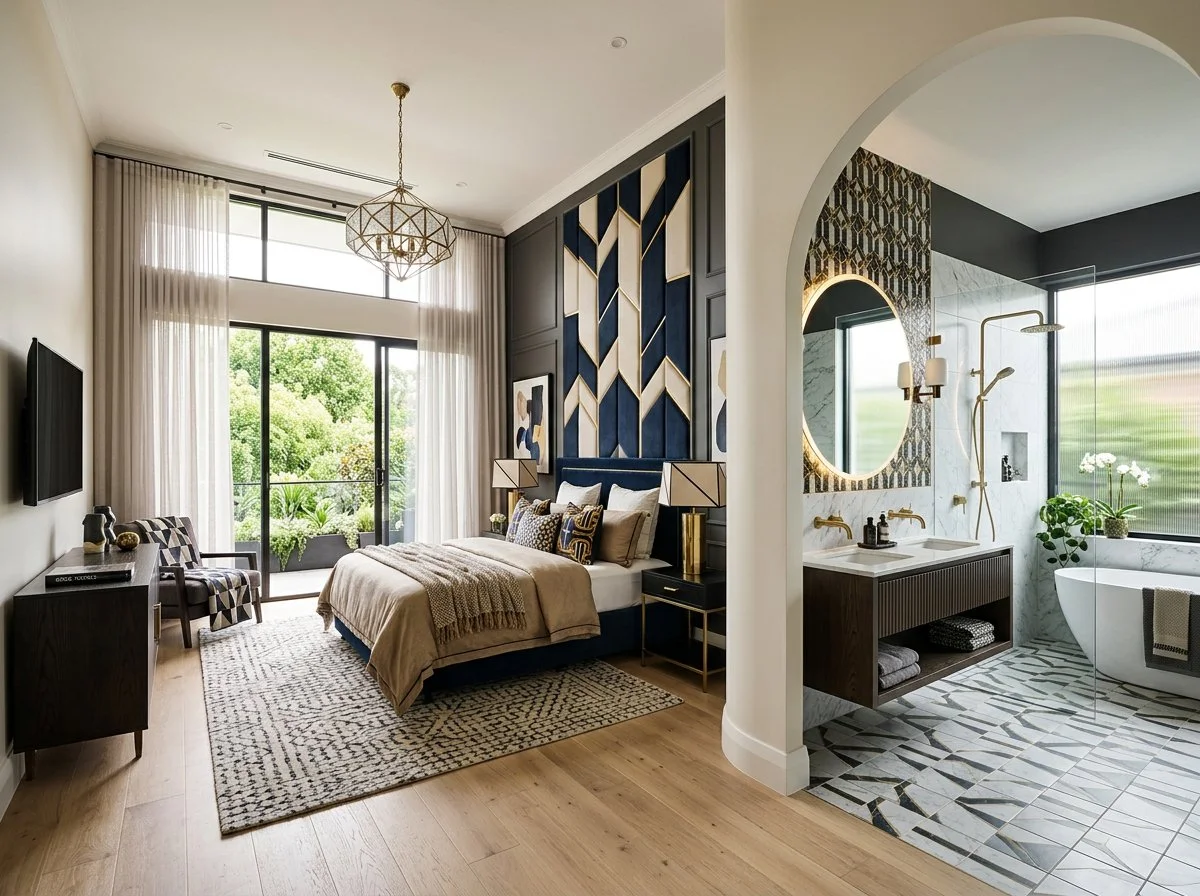
Your House Isn't a Gender Reveal Party
There.
I said it.
Your sofa doesn't need to identify as masculine. Your dining room isn't secretly feminine.
Your bathroom isn't confused because it has black tapware and dusty pink towels. And your kitchen certainly doesn't need to pick a side.
Somewhere along the way, we've started assigning personalities - and genders - to objects that are literally made of timber, stone and upholstery.
Apparently leather belongs to men.
Velvet belongs to women.
Florals are feminine.
Dark kitchens are for blokes.
Curves are for girls.
Really?
Since when did a coffee table need chromosomes?
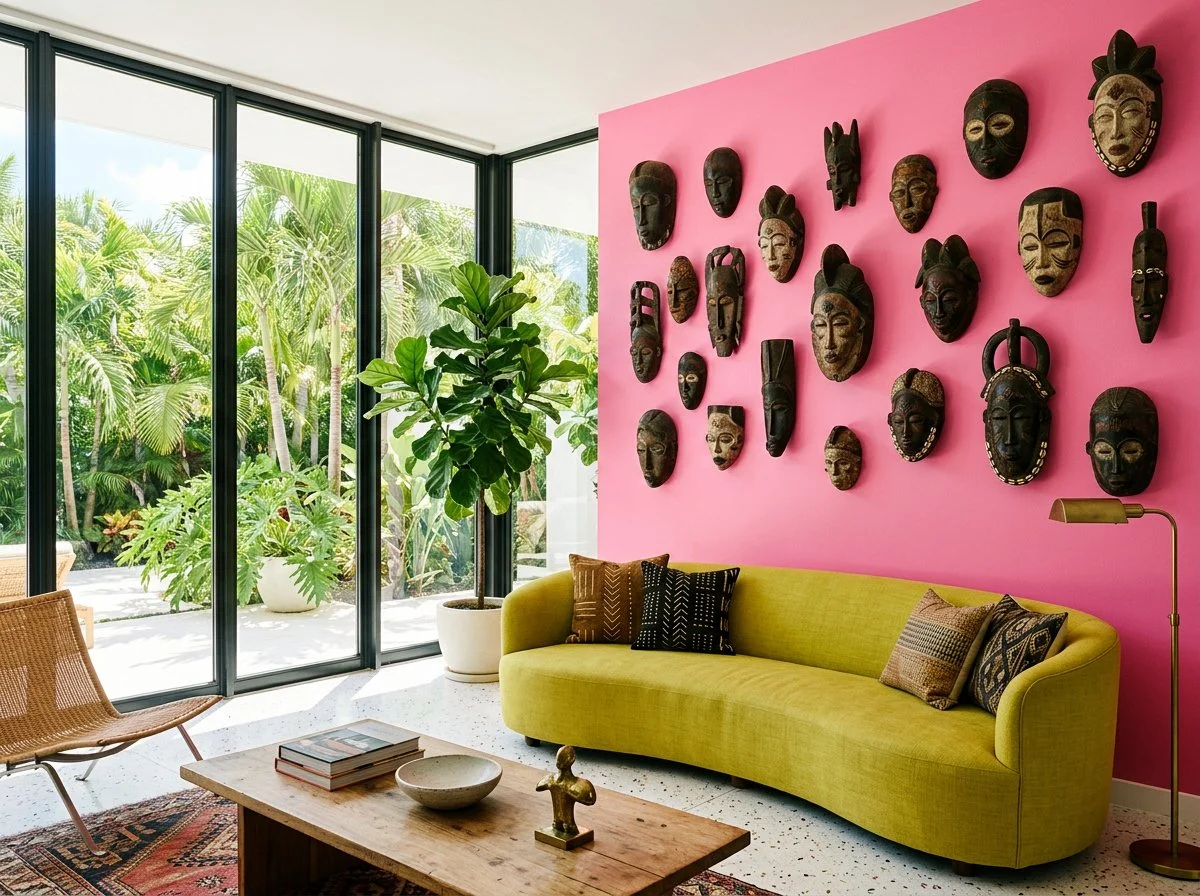
How Do You Mix Contrasting Styles In A Room?
Great design doesn’t choose sides! The homes that make you stop scrolling aren't following categories.
They're creating design tension interiors. They’re mixing old and new interiors.
A brutalist concrete wall beside a silk velvet sofa.
An antique French mirror hanging above minimalist cabinetry.
A crystal chandelier floating over reclaimed timber.
Industrial steel softened by linen curtains.
A marble kitchen that isn't afraid of an old oak dining table covered in family scratches.
That's where the magic lives.
Not in matching.
Not in labels.
In contrast.
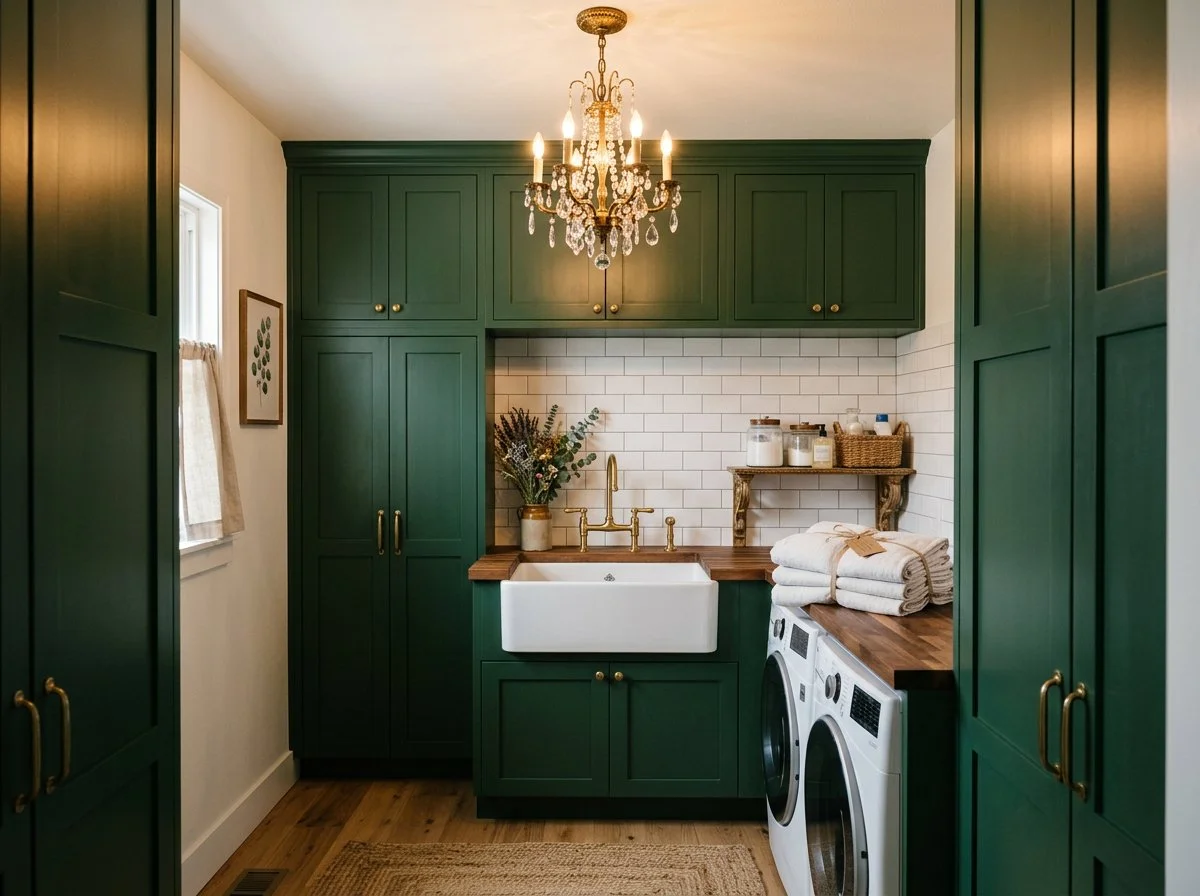

The Secret Ingredient Nobody Talks About : Juxtaposition in Interior Design
Every incredible film has conflict. Every unforgettable novel has contradiction.
Every brilliant outfit mixes something polished with something unexpected.
Interior design works exactly the same way.
Without tension...
There's no story.
That's why so many display homes feel strangely forgettable. They have no contrast in interior design.
Everything matches. Everything behaves. Everything is beautifully... beige.
They're technically correct.
Emotionally?
Flat as yesterday's champagne.
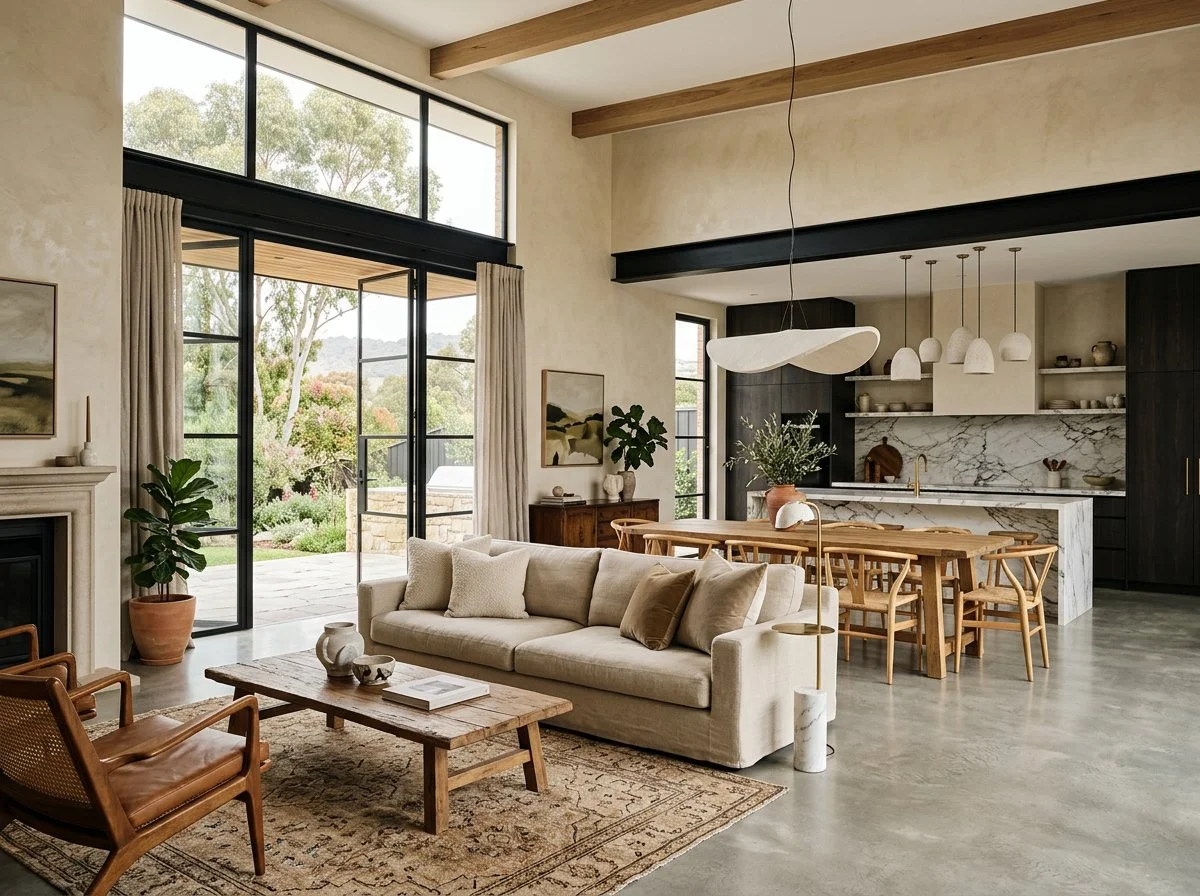
Permission Granted
You don't need permission to mix Art Deco with farmhouse.
Or Palm Springs with English country.
Or Japandi with Moroccan.
Or grandmother's antique cabinet with your ridiculously modern kitchen.
The design police aren't coming. The only question worth asking is:
Does this feel like me?
Because authenticity will always outlast trends.


Break Rules. Keep Principles.
Now before you throw leopard print at every wall...
Let's be clear.
I'm not suggesting chaos.
Good designers break rules because they understand principles.
Balance. Proportion. Harmony. Contrast. Emotion.
Those don't disappear.
They simply become the stage on which contradiction performs.
Create Beautiful Tension
Pair polished marble with weathered timber.
Mix structured architecture with oversized plants that look slightly out of control.
Put a glamorous chandelier in the laundry.
Hang contemporary art inside a heritage home.
Choose velvet dining chairs around a rustic farmhouse table.
Let your grandmother's vintage lamp sit proudly beside your sleek Italian sofa.
That's not confusion.
That's personality.


Stop Decorating. Start Storytelling.
Your home isn't supposed to look like a Pinterest board.
It's supposed to feel like your autobiography.
Collected. Layered. Unexpected.
A little contradictory. Wonderfully human.
The homes people remember aren't the ones that followed every trend.
They're the ones that made someone smile and think,
"I've never seen that before."
That's the highest compliment an interior can receive.
Here’s The Twist
The opposite of harmony isn't contrast. It's predictability.
Contrast creates harmony. Because without light there is no shadow. Without smooth there is no texture.
Without old there is no new. Without bold there is no calm.
Design isn't about removing contradiction.
It's about composing it beautifully.

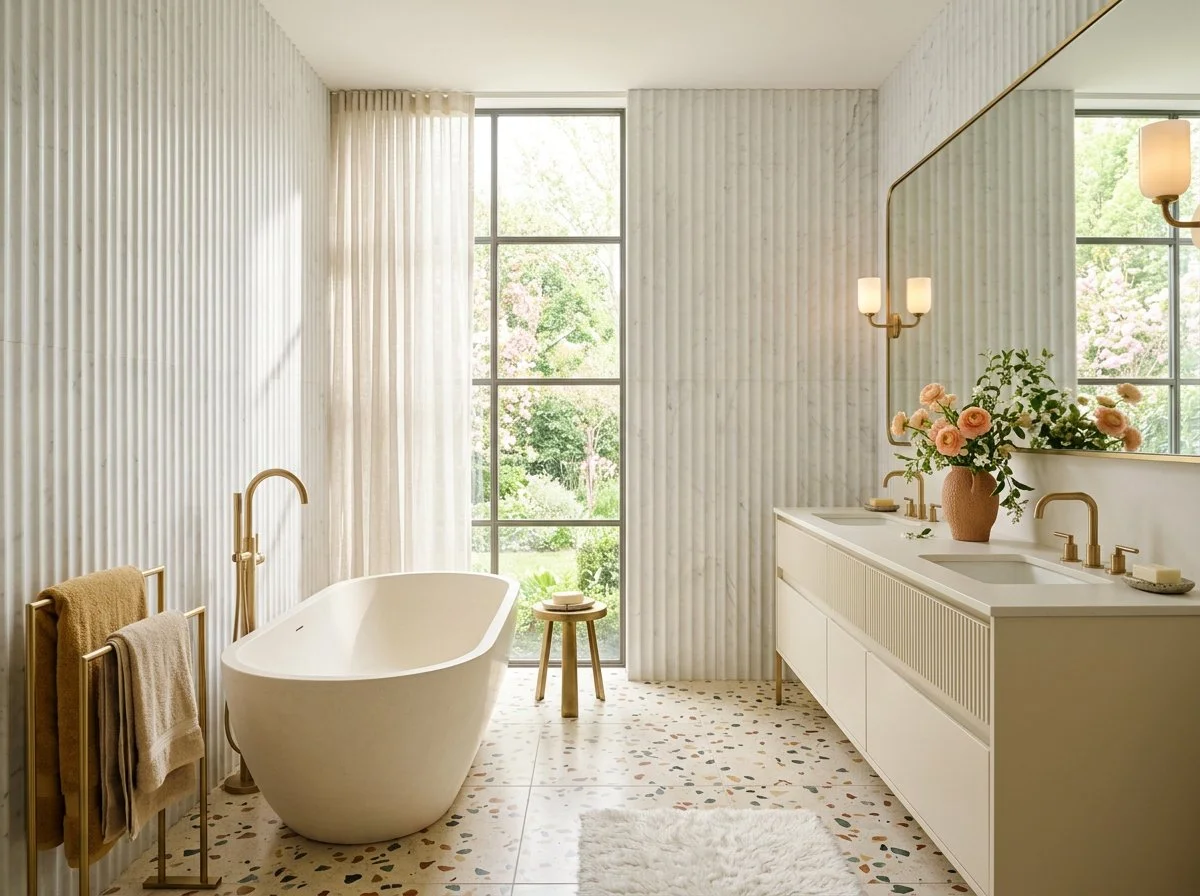
Ready to Create a Home That Doesn't Fit Inside Anyone Else's Box?
The rooms that stop people in their tracks are never the ones where everything matched. They're the rooms where something unexpected happened — where someone made a choice that shouldn't have worked and committed to it so completely that it absolutely did.
The rough plaster wall in the otherwise polished apartment. The Victorian chaise in the mid-century living room. The deeply saturated ceiling in the otherwise pale space. The antique in the renovation.
Tension isn't a risk. Tension is the point.
Your home is allowed to be complicated. So are you.
Break the rules. Own the contradiction. Refuse the beige.
Love, Penelope xx - Interior Architect and Interior Designer
Beige is Banned. Luxury is Law. Apply Within.
Author of ‘Don’t Get Ripped Off By Your Reno’ and ‘A Home With A Pulse’. Both available on my e-book interior design and renovation resources page on my website.
Plush Design Interiors uses AI‑generated imagery to help illustrate design concepts and possibilities in a fast, flexible and cost‑effective way. These images are inspirational visualisations only and may not represent final selections, exact colours, finishes or products available in Australia. All real‑world Plush Design Interiors work, including all design, specifications, selections and purchases, are curated by a human interior designer and are confirmed with clients using accurate samples, supplier information and detailed documentation before any work proceeds.
FAQ’s on Creating Interior Design Tension
What is design tension in interior design?
A: Design tension is the intentional pairing of opposing elements — materials, eras, textures, scales or moods — that create visual and emotional energy in a room. Rather than everything matching, contrasting elements are placed in deliberate relationship to make both more interesting and more beautiful.
Can you mix old and new furniture in the same room?
A: Absolutely — and you should. Mixing antique or vintage pieces with contemporary furniture creates design tension, adds personality, and prevents a room from looking like a showroom catalogue. The key is intentionality: choose the contrast deliberately and let each piece earn its place.
How do you mix contrasting interior design styles without it looking chaotic?
A: Anchor the room with one dominant style or palette, then introduce a contrasting element with intention. One antique in a modern room. One industrial material in a soft, feminine space. One dramatic statement in a minimal room. Restraint in quantity allows boldness in contrast.
What makes a room visually interesting?
A: Visual interest comes from contrast and tension — differences in texture, weight, era, material and scale that give the eye something to explore. A room where everything matches is resolved at a glance. A room with deliberate contrast keeps drawing you back.
Is eclectic interior design the same as design tension?
A: Eclectic design is a broad style that mixes elements from multiple sources. Design tension is a specific technique — the intentional juxtaposition of opposites to create energy and beauty. Design tension can exist within a single style (rough and smooth within a minimalist space) or across multiple styles (maximalist wallpaper behind a minimal sofa).
Do I need a big budget to create design tension?
A: Not at all. Design tension is about placement and intention, not price. Moving one antique piece into a modern room, hanging a dramatic mirror in a spare hallway, or layering a rough texture against a soft one costs very little and changes everything.
FAQs About Breaking Interior Design Rules
Which interior design rules are actually worth breaking?
The rules worth breaking are the ones built on fear rather than function. "Never use dark colours in a small room" — break it. "Always match your metals" — break it deliberately. "Keep the open plan neutral" — break it boldly. "Don't mix patterns" — break it with intention. The rules worth keeping are the ones built on physics and proportion: furniture scale relative to room size, lighting height relative to table height, rug size relative to seating arrangement. Break the aesthetic rules. Respect the spatial ones.
What makes a room feel deliberately designed rather than accidentally decorated?
Tension and intention. A deliberately designed room has at least one unexpected element that shouldn't work but absolutely does — and it's clearly there on purpose rather than by default. It also has a resolved colour palette (not matched, but considered), furniture at the right scale for the space, and lighting that creates atmosphere rather than just illumination. An accidentally decorated room has nice individual pieces that don't quite talk to each other, a colour palette that happened rather than was chosen, and overhead lighting doing all the work.
Is maximalism a valid design approach or just a trend?
Maximalism is a valid, ancient design philosophy that predates minimalism by several centuries. It's the approach of "more is more when the more is deliberate" — layered colour, pattern, texture and object density used with intention to create rooms that feel rich, personal and alive. It's currently having a significant revival in Australian interiors after a decade of minimal whitewash dominance. Whether it suits you depends entirely on your No-Vanilla Archetype — some people exhale in abundance; others need negative space to feel calm. Neither is wrong.