
What Is The Loudest Mistake in Every Adelaide Open-Plan Renovation?
The Interior Design Acoustic Fix Nobody Is Talking About
The loudest mistake in open-plan renovations is removing walls without planning for acoustic reverberation. Hard surfaces — polished concrete, stone benchtops, frameless glass, high ceilings — reflect sound rather than absorbing it, turning beautiful open-plan spaces into echo chambers. The fix involves layering soft, sound-absorbing materials: large area rugs, upholstered furniture, fabric window treatments, acoustic ceiling panels and soft furnishings. These aren't decorative afterthoughts — they're the acoustic engineering your builder forgot to mention and your renovation show never covered.
You spent $800K on polished concrete and frameless glass. Congratulations — you've built a reverb chamber. Here's how to fix it with design, not demolition.
You've just dropped somewhere between $500,000 and $1,500,000 turning your perfectly solid 1960’s Adelaide brick home into an open-plan dream. The walls are gone. The polished concrete gleams. The stone countertop stretches for miles. The frameless glass splashback catches the light.
And every single word anyone says in your kitchen ricochets around the space like a ping-pong ball in a shipping container.
Welcome to Australia's most popular renovation mistake — the one nobody warned you about because your builder isn't a designer, your tiler doesn't own an acoustics degree, and the renovation shows on Channel Nine never, ever mention the word reverberation.
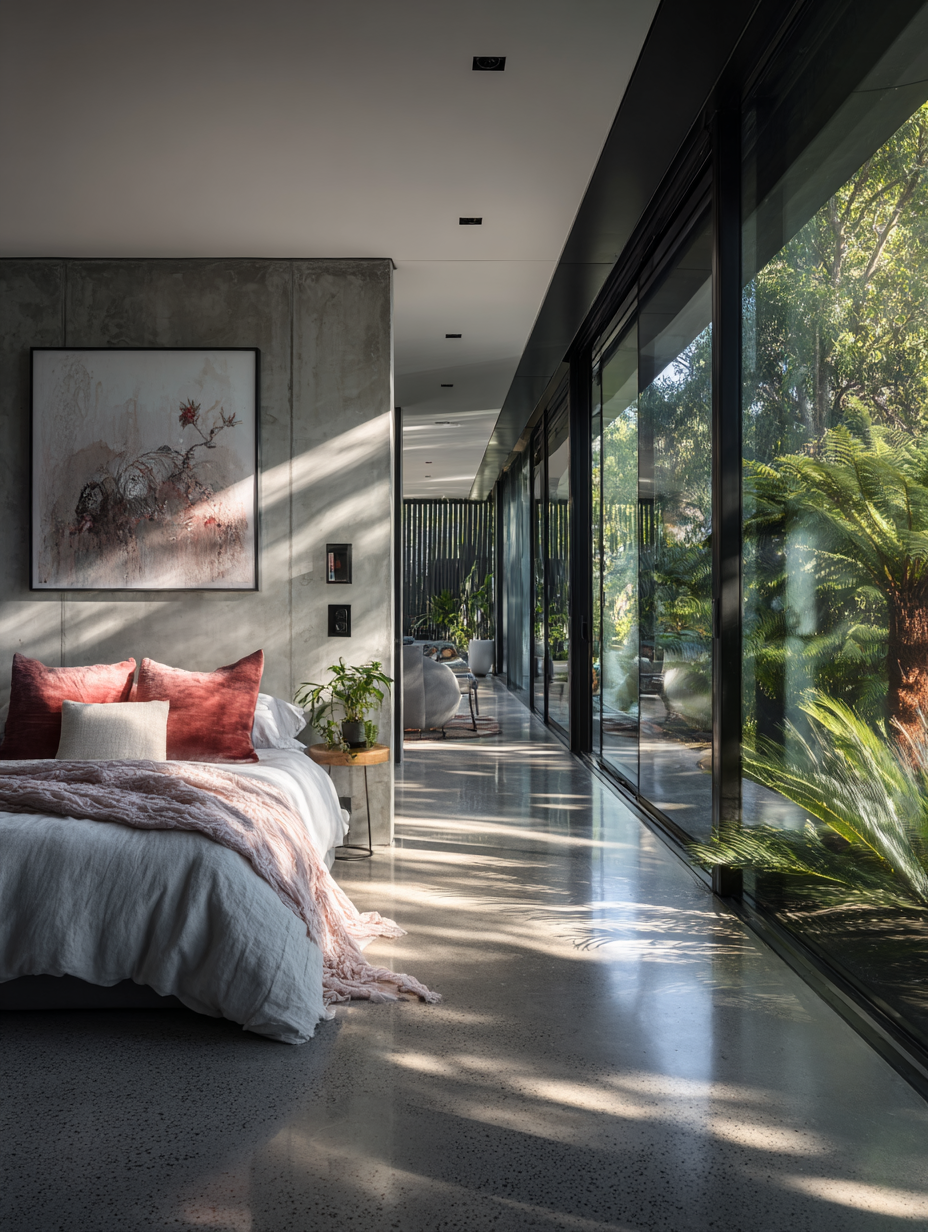

The Physics Your Builder Never Mentioned
Here's the uncomfortable truth: that gorgeous open-plan renovation you've poured your heart (and your equity) into is acoustically identical to a concert hall. Not in a good way.
Sound engineers measure how long it takes sound to decay in a room using something called RT60 — reverberation time. In a comfortable residential living room, the ideal RT60 is 0.4 to 0.6 seconds. That means sound dies away quickly, conversation feels natural, and your nervous system can actually relax.
A typical hard-surfaced, open-plan kitchen-living-dining space? It can hit 1.5 to 2.5 seconds. That's concert-hall territory. It's the acoustic equivalent of trying to have a quiet dinner inside the Adelaide Oval.
The culprit is straightforward: hard, reflective surfaces. Polished concrete has a Noise Reduction Coefficient (NRC) near zero — it reflects almost all sound energy back into the room. Stack that with stone benchtops, glass splashbacks, plasterboard ceilings, and minimal soft furnishings, and you've created Adelaide's favourite renovation formula, which also happens to be the formula for an echo chamber.
The Regulation Gap Nobody Is Filling
If you're waiting for building regulations to save you, keep waiting. The National Construction Code (NCC) Part F7 mandates acoustic insulation between dwellings in Class 2 and 3 buildings — apartments, boarding houses, and the like. But for a Class 1 detached house? There are zero acoustic requirements for sound within your own dwelling.
Nobody is protecting you from your own echo. Your builder can hand over the keys to a reverberant nightmare that meets every code requirement perfectly.
This matters more than aesthetics. Research from the UC Davis Center for Occupational and Environmental Health has linked chronic noise exposure and noise annoyance to sleep disturbance, hypertension, depression, anxiety, and PTSD-like stress responses.
As they note, "noise activates the sympathetic nervous system, leading to fragmented sleep." A BBC Future investigation into building acoustics found that the acoustic properties of our spaces directly affect mood, comfort, and behaviour — noisy settings are proven to cause annoyance linked to depression and anxiety.
And a Macquarie University study published in the Journal of the Acoustical Society of America found that high intrusive noise levels in open-plan classrooms negatively affect children's speech perception — a finding that translates directly to open-plan homes where families are trying to co-exist across cooking, homework, television, and conversation.

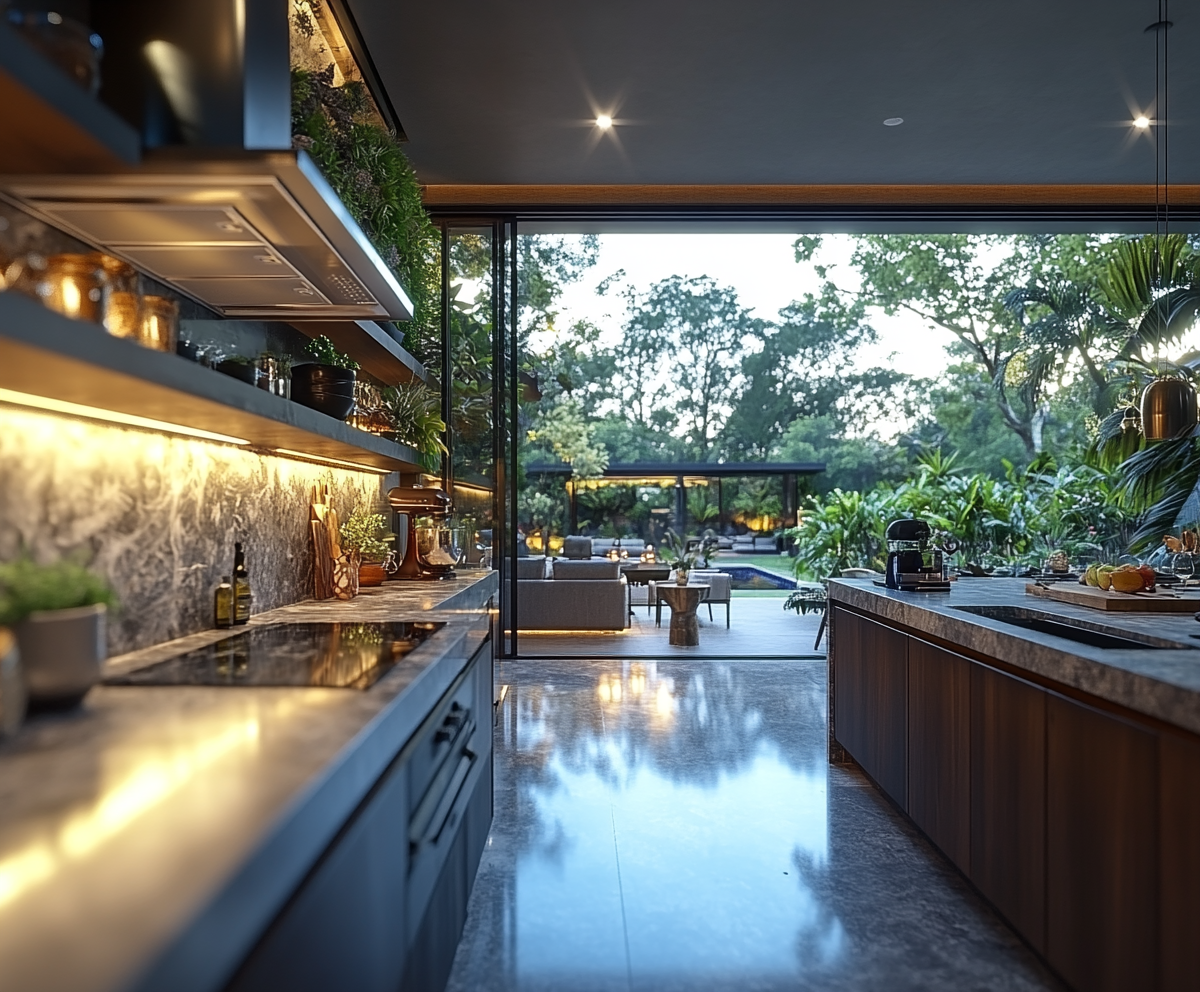
The Designer's Acoustic Toolkit (No Hard Hat Required)
Here's where it gets interesting — and where interior design becomes the hero of this story. Nearly every design intervention that makes a space feel layered, rich, and intentional is also an acoustic intervention. The two disciplines overlap almost perfectly, and nobody in the Australian design space is talking about it.
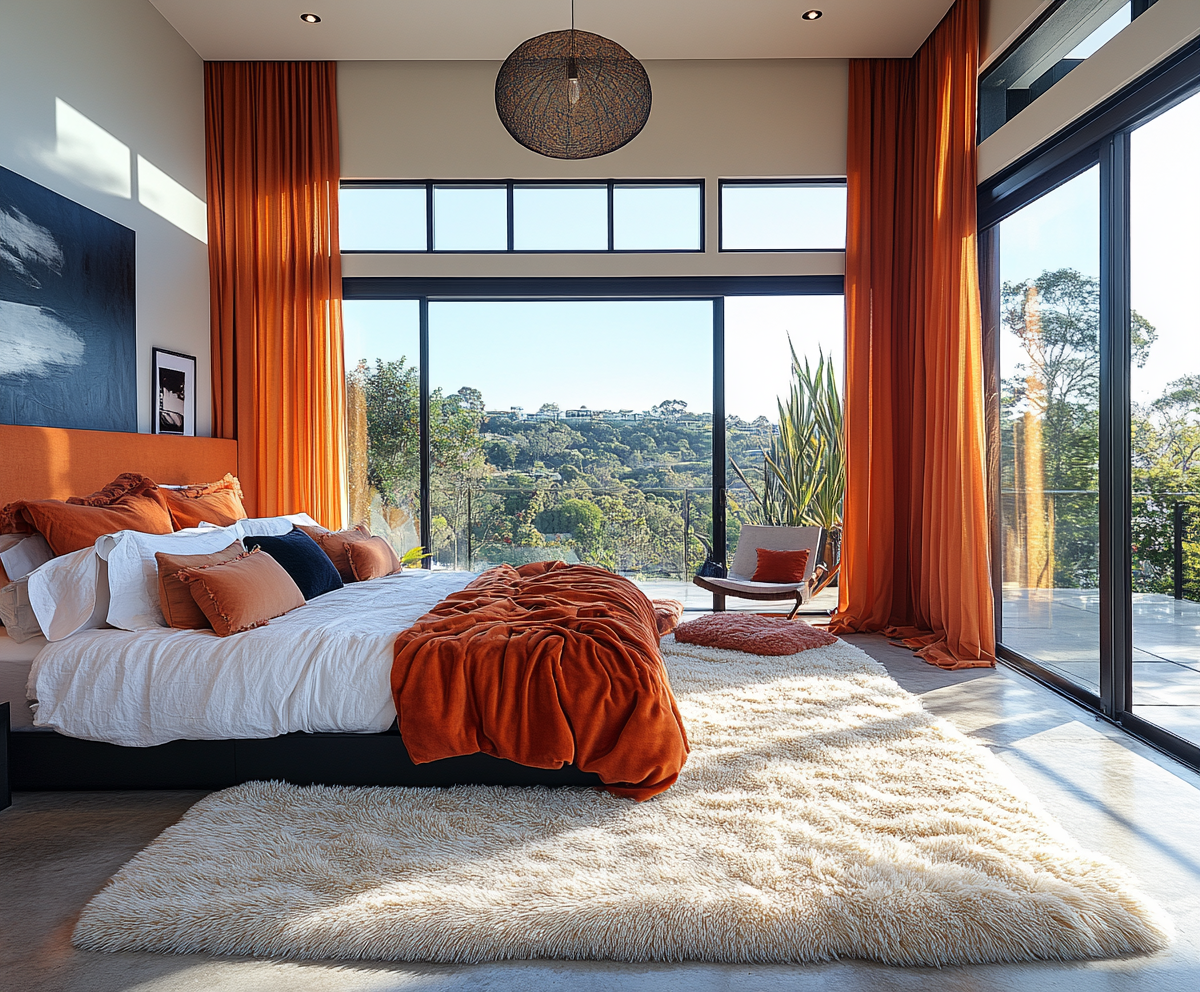
Layered rugs. Wool rugs with a high knot density don't just anchor a living zone — they absorb sound energy that polished concrete bounces straight back. Carpet has an NRC of approximately 0.4 to 0.5. One well-placed rug under your dining table can start bringing that RT60 down immediately. Layer two and you're making serious acoustic progress while creating the kind of textured, grounded space that looks like it belongs in an interiors magazine rather than a display suite.
Heavy curtains and drapes. Floor-to-ceiling curtains in a dense, heavy fabric achieve an NRC of 0.5 to 0.8 — they're among the most effective residential acoustic treatments available. Specialist brands like Acoustic Blinds and Curtains Australia offer tested acoustic window furnishings that look like luxury drapery and perform like professional sound panels. This is not about sticking ugly foam on the walls.
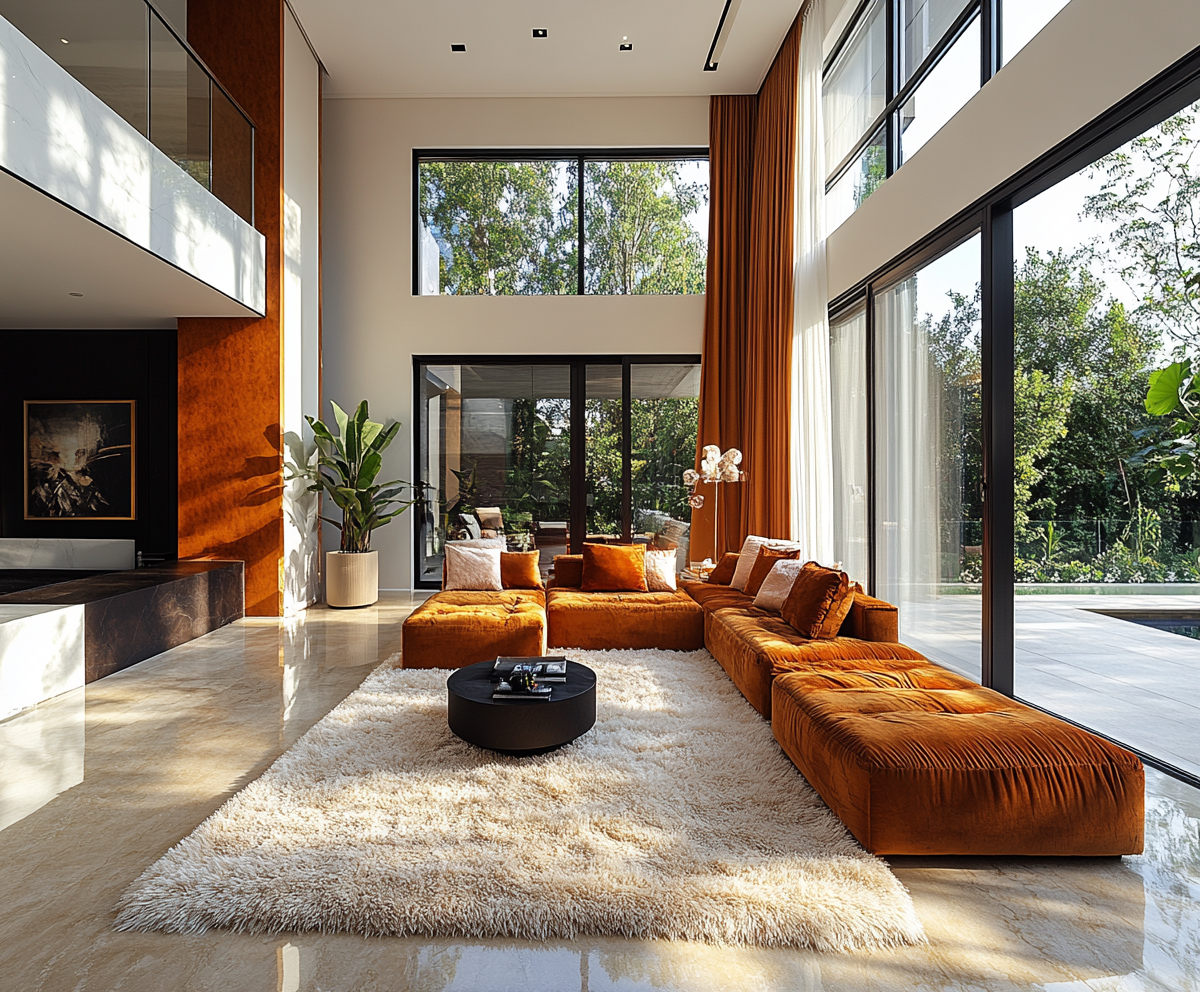
Upholstered furniture. That sleek leather sofa or hard-shell dining chair might photograph well, but fabric-upholstered furniture absorbs mid-range frequencies that make speech intelligibility muddy. Deep, generously upholstered sofas and armchairs are acoustic sponges. Choose them intentionally and your room sounds as good as it looks.
Wall panelling and acoustic panels. Australian brands are leading here. Autex Acoustics — a carbon-neutral manufacturer — produce panels including the Cube, Quietspace, and Acoustic Timber ranges that achieve NRC ratings of 0.65 to 0.95. Woven Image's EchoPanel, made from recycled PET bottles, doubles as a stunning design feature. Timber slat panelling, whether acoustic-rated or decorative, breaks up flat wall surfaces that bounce sound.
Bookshelves as diffusers. A well-stocked bookshelf isn't just storage or styling — it's a sound diffuser. The irregular surface of books at varying depths scatters sound waves instead of reflecting them cleanly, reducing that hard echo without absorbing all the life from a room.
Ceiling treatments. Flat plasterboard ceilings are the fifth wall of your echo chamber. Suspended timber battens, fabric-wrapped ceiling panels, or even a well-considered pendant light arrangement can break up sound reflection overhead — the surface most renovators completely forget.
Strategic placement. Where you place soft furnishings matters as much as what you choose. Positioning an upholstered reading nook against the wall opposite your kitchen, or hanging a dense textile artwork on the largest unbroken wall surface, targets the reflection points where sound energy concentrates.

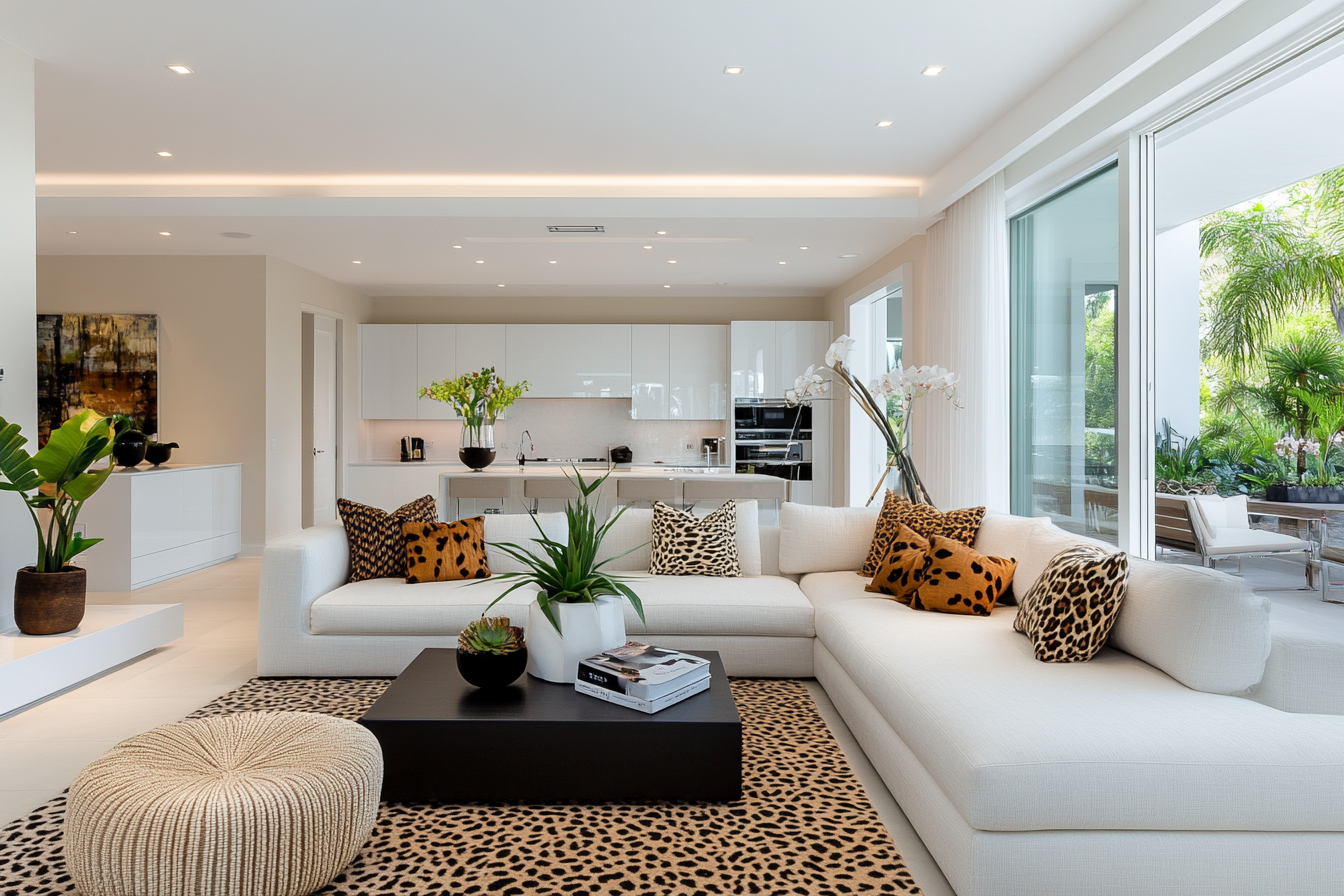
Bold Interiors Are Better-Sounding Interiors
Here's the kicker — and the reason this topic is so close to my no-vanilla heart. The beige minimalist renovation — bare floors, sparse furniture, lots of glass, all-white everything — is acoustically the worst possible design approach. It looks 'clean' on Instagram. It sounds like a swimming pool.
Bold, textured, layered interiors — the kind I've been championing through the No-Vanilla Design Manifesto — naturally solve acoustic problems. Thick rugs over hard floors. Statement curtains pooling on the ground. Walls with depth and texture, not just flat white paint. Upholstered furniture with personality. Bookshelves overflowing with life. Every single element that makes a room feel rich, considered, and intentionally designed also makes it feel quiet, calm, and comfortable. The science and the style are aligned.
Adelaide is a renovation city. With a median house price exceeding $925,000 and relocation costs upwards of $81,000, homeowners are staying put and transforming what they've got. The dominant housing stock — those solid 1950s to 1970s brick homes, the gorgeous Adelaide Hills stone cottages — is being opened up into open plan, and broken plan, flowing living spaces. That's brilliant for lifestyle. It's a disaster for acoustics, unless someone designs the solution into the space from the start.
That someone should be a designer, not a builder.
If You Scrolled Too Fast
Your open-plan renovation probably has a reverberation time of 1.5–2.5 seconds — concert-hall territory. Ideal residential is 0.4–0.6 seconds.
The National Construction Code has zero acoustic requirements for sound inside a detached house. Nobody is protecting you from your own echo.
Polished concrete, glass, and stone reflect almost all sound. Layered rugs, heavy curtains, upholstered furniture, and acoustic panels absorb it.
Research links chronic noise annoyance to depression, anxiety, sleep disturbance, and cardiovascular stress.
Bold, textured, layered interiors are naturally acoustic-friendly. Minimalist, hard-surfaced rooms are the worst acoustic performers.
Design the acoustics in from the start — don't try to fix them after the polished concrete is poured.
Ready to Make Your Renovation Sound as Good as It Looks?
If your open-plan space has you raising your voice over the kettle or reaching for the TV remote every time someone opens a drawer, the fix isn't more insulation — it's smarter design. Book a Design Power Session and let's turn your echo chamber into a space that actually feels like home.
And if you're still in the planning stages, grab a copy of Don't Get Ripped Off By Your Reno before your builder starts swinging the sledgehammer. Because the time to think about how your home will sound is before the concrete is poured, not after.
Love, Penelope xx
Interior Designer + Author of ‘Don’t Get Ripped Off By Your Reno’ and ‘A Home With A Pulse’. Both available on my e-book interior design and renovation resources page on my website.


Plush Design Interiors uses AI‑generated imagery to help illustrate design concepts and possibilities in a fast, flexible and cost‑effective way. These images are inspirational visualisations only and may not represent final selections, exact colours, finishes or products available in Australia. All real‑world Plush Design Interiors work, including all design, specifications, selections and purchases, are curated by a human interior designer and are confirmed with clients using accurate samples, supplier information and detailed documentation before any work proceeds.
FAQ’s for Acoustically Sound Renovations in Adelaide
Q1: Why does my open-plan renovation echo so much?
Open-plan renovations echo because they combine large volumes of space with hard, reflective surfaces — polished concrete floors, stone benchtops, glass splashbacks, and flat plasterboard walls and ceilings. These materials have a very low Noise Reduction Coefficient (NRC), meaning they reflect sound instead of absorbing it. The reverberation time in a typical hard-surfaced open-plan living area can reach 1.5 to 2.5 seconds, compared to the ideal residential range of 0.4 to 0.6 seconds. The fix is adding sound-absorbing surfaces through interior design: rugs, heavy curtains, upholstered furniture, and acoustic wall treatments.
Q2: Does the Australian building code require good acoustics inside a house?
No. The National Construction Code (NCC) Part F7 only mandates acoustic insulation between dwellings in Class 2 and 3 buildings, such as apartments and boarding houses. For a Class 1 detached house — which covers most Adelaide homes — there are no acoustic requirements for sound within the dwelling. Your builder can deliver a home with significant echo and reverberation and still be fully code-compliant.
Q3: What is the best way to reduce echo in an open-plan living area?
The most effective way to reduce echo in an open-plan living area is to add sound-absorbing soft furnishings and materials. Start with large wool rugs on hard floors (NRC 0.4–0.5), hang heavy floor-to-ceiling curtains or drapes (NRC 0.5–0.8), choose upholstered fabric furniture over leather or hard-shell options, and consider acoustic wall panels from Australian brands like Autex Acoustics or Woven Image. Bookshelves also work as sound diffusers. A layered, textured interior will dramatically reduce reverberation time and improve acoustic comfort.
Q4: Do rugs and curtains really help with noise in a room?
Yes, significantly. Carpet and thick rugs have an NRC (Noise Reduction Coefficient) of approximately 0.4 to 0.5, meaning they absorb 40–50% of sound energy that hits them, rather than reflecting it. Heavy curtains and drapes achieve an NRC of 0.5 to 0.8, making them among the most effective residential acoustic treatments. In comparison, polished concrete has an NRC near zero. Adding just one or two of these elements to an echoey room can noticeably reduce reverberation and make conversation easier.
Q5: Can noise inside your home affect your health?
Yes. Research from the UC Davis Center for Occupational and Environmental Health has linked chronic noise exposure and noise annoyance to depression, anxiety, sleep disturbance, hypertension, and PTSD-like stress responses. Noise activates the sympathetic nervous system, leading to fragmented sleep even when you're not consciously aware of it. A study published in the International Journal of Environmental Research and Public Health found that 25% of the EU population experiences quality-of-life deterioration due to noise annoyance. Managing the acoustics of your home is a health investment, not just a comfort one.
Q6: What are the best acoustic panels available in Australia?
Two leading Australian brands for residential-grade acoustic panels are Autex Acoustics and Woven Image. Autex Acoustics is a carbon-neutral manufacturer offering ranges including Cube, Quietspace, and Acoustic Timber, with NRC ratings of 0.65 to 0.95. Woven Image produces EchoPanel, made from recycled PET bottles, which is available in a wide range of colours and patterns. Both brands create panels that function as design features, not institutional-looking treatments. For acoustic window furnishings, Acoustic Blinds and Curtains Australia offers tested solutions.
Q7: Why is polished concrete so bad for sound?
Polished concrete has a Noise Reduction Coefficient (NRC) near zero, meaning it reflects almost 100% of sound energy back into the room rather than absorbing it. When combined with other hard, reflective surfaces like stone benchtops, glass splashbacks, and plasterboard walls — common in Adelaide open-plan renovations — the cumulative effect creates significant reverberation. This is why rooms with polished concrete often sound echoey, hollow, or "loud" even with normal conversation. Layering rugs, textiles, and soft furnishings over and around polished concrete is the most effective design-based fix.
Q8: How do Adelaide renovation trends contribute to bad home acoustics?
Adelaide's dominant renovation trend involves opening up 1950s–1970s solid-brick homes to create large open-plan kitchen-living-dining areas, often finished with polished concrete, stone benchtops, and minimal soft furnishings. This combination of increased room volume and hard, reflective surfaces is the formula for an echo chamber. Adelaide Hills stone homes present an additional challenge, as natural stone surfaces are highly reflective. With a median house price of $925,000 and relocation costs exceeding $81,000, more Adelaide homeowners are renovating rather than moving — making acoustics a growing quality-of-life issue across the city.