
Taj Mahal Quartzite: The Stone That Makes Everything Else Look Like It's Trying Too Hard
Why Australia's Most Specified Natural Stone Just Got a Porcelain Upgrade — And Why Your Kitchen Deserves Better Than Another Safe, Flat Tile
I'll tell you a little secret about being an Adelaide interior designer who's specified Taj Mahal quartzite on more projects than I've had flat whites this year: it never disappoints. Not once. Not even slightly.
And in a world where "safe" has become the default setting for most residential interiors — where people are still choosing tiles by squinting at a 50mm sample under fluorescent showroom lighting and hoping for the best — Taj Mahal quartzite is the stone that walks into a room and makes everything else look like it's trying too hard.
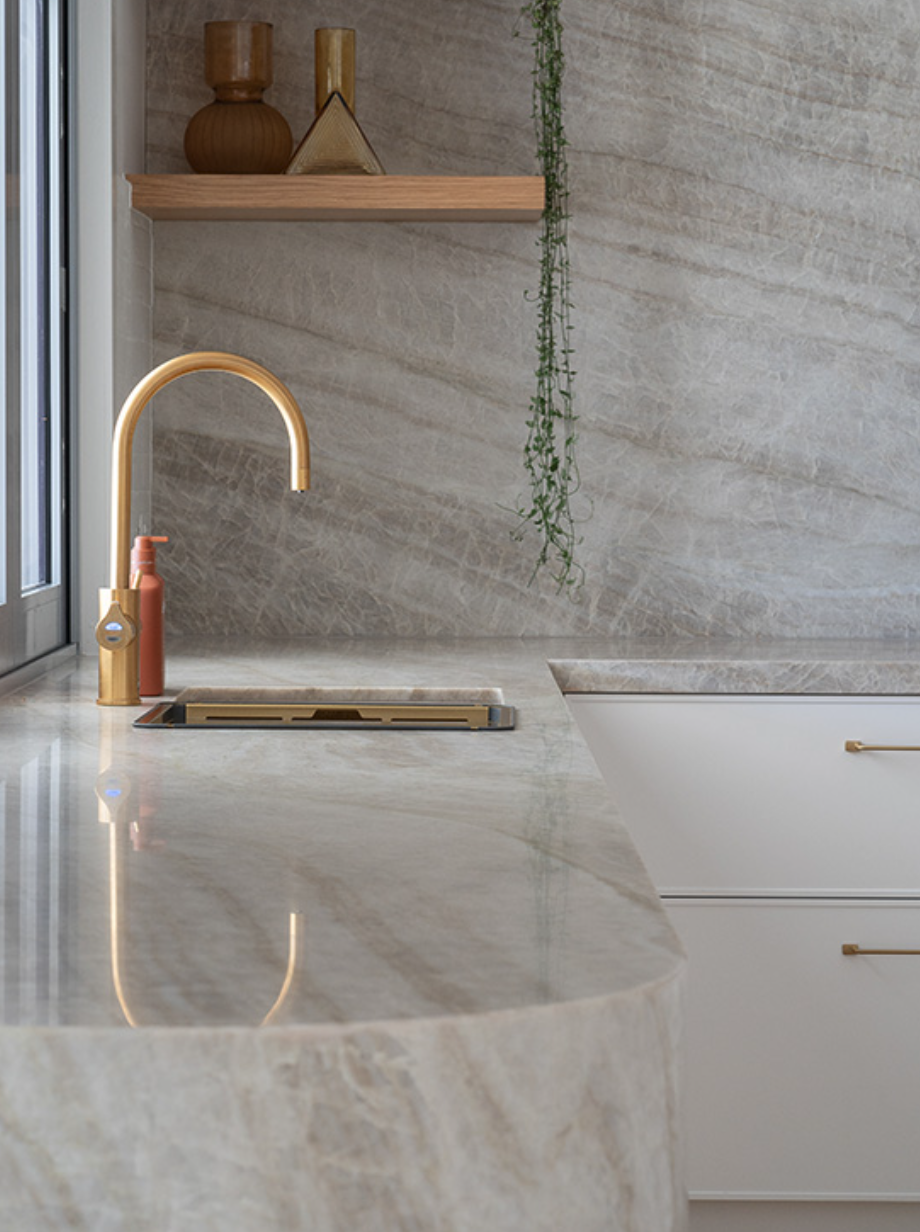
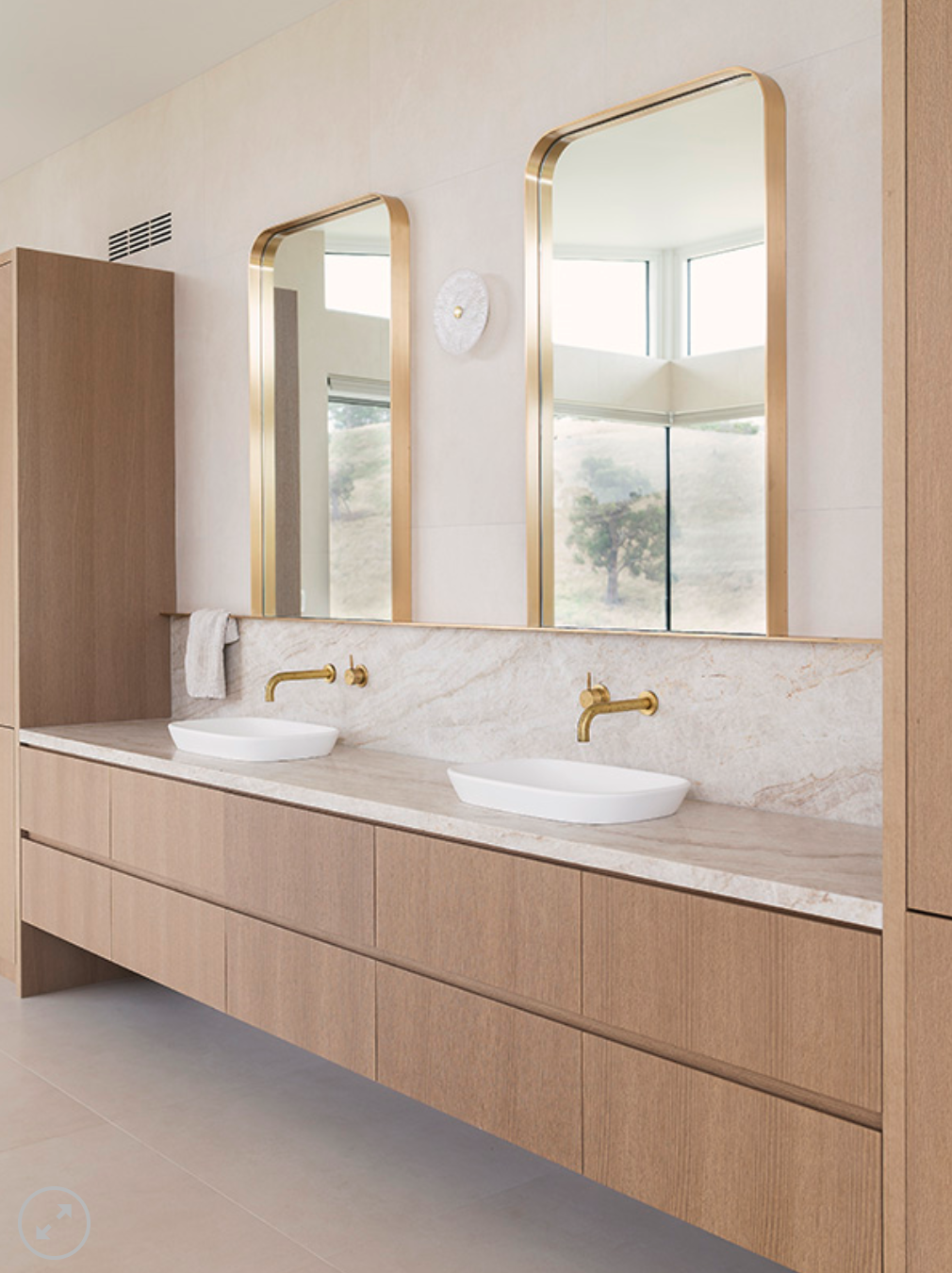
The Stone That Didn't Need a Marketing Department
Quarried in Brazil, Taj Mahal quartzite has a creamy, soft base with veining that drifts between gold, taupe, grey and ivory — never committing fully to warm or cool. It just sits there, being effortlessly gorgeous, shifting with the light like it has somewhere better to be.
The veining is gentle, not dramatic. The palette is layered, not loud. And yet it commands a room with the quiet confidence of someone who doesn't need to raise their voice to be heard.
This is what separates Taj Mahal from every other stone-look surface on the market. It doesn't scream. It doesn't compete with your joinery, your art or your fixtures.
It anchors everything around it with a warmth that reads differently at sunrise, midday and evening — which, for anyone designing a kitchen or bathroom that actually needs to work across a full day of Australian light, is non-negotiable.
The Problem With Most Porcelain Alternatives
Here's where things have historically gone a bit pear-shaped. Natural quartzite is stunning, but it comes with the reality of sealing, maintenance and a price tag that makes some renovation budgets weep quietly in the corner. So people turn to porcelain alternatives — and too often, they end up with tiles that capture the pattern of natural stone but absolutely none of the feeling.
A flat matte tile printed to look like Taj Mahal quartzite is like a photocopy of a love letter. You can read the words, but the emotion's gone. The depth's gone. The way light catches a natural surface and reveals new layers depending on the time of day — gone. You get the pattern, but you lose the magic.
And that's precisely why I sat up and paid attention when Beaumont Tiles released their Oyster Taj Mahal collection as their 2026 Tile of the Year.
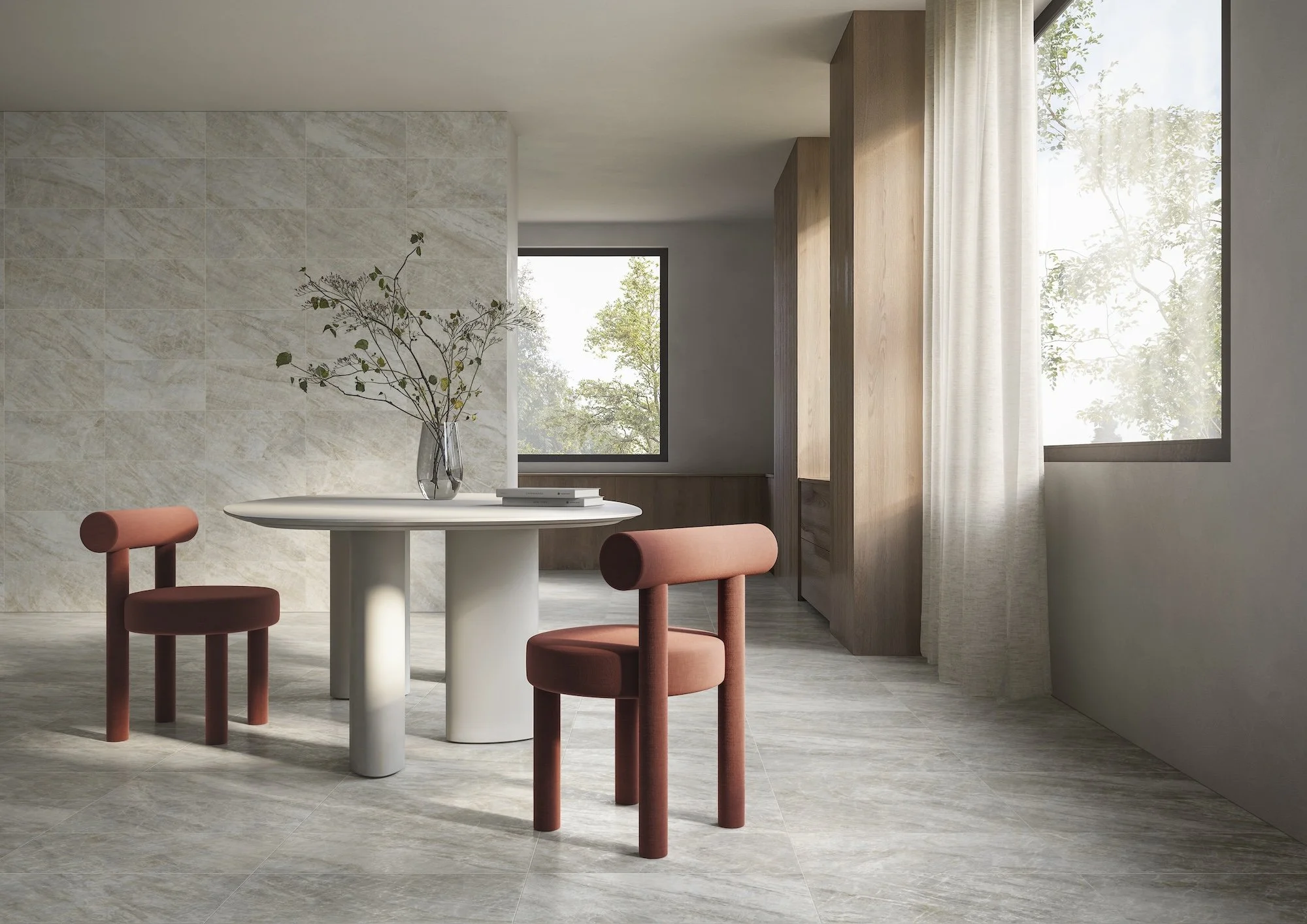
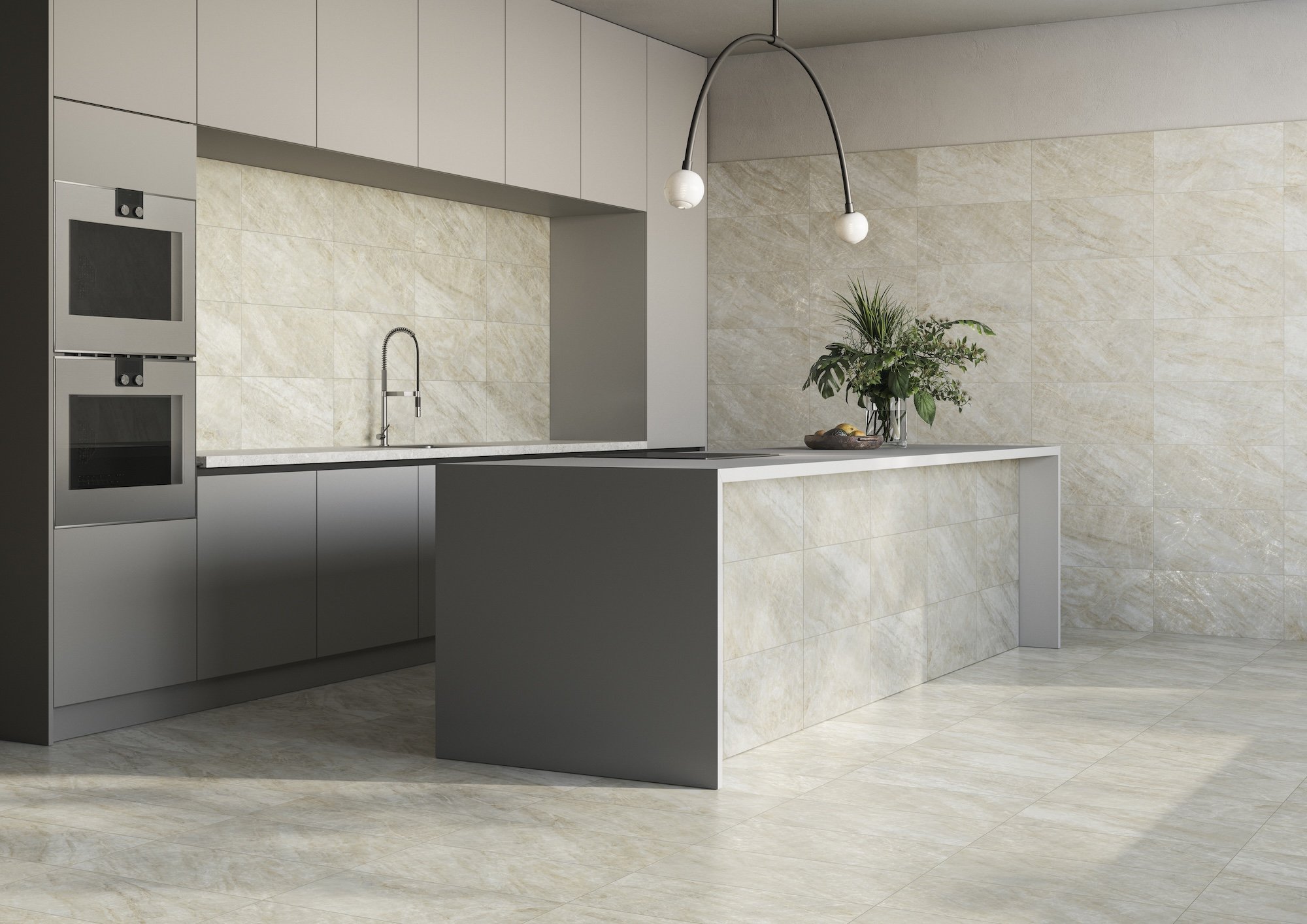
Enter Oyster: The Porcelain That Finally Gets It
Crafted in Italy (because of course it is), the Oyster Taj Mahal range uses something called HiLite technology — a finish that creates a soft, translucent quality across the tile surface. This isn't your standard matte. It's not a glossy sheen pretending to be subtle. It's a reactive glaze that allows light to move across the surface and reveal the layered veining beneath, rather than just sitting on top like a sticker.
Beaumont Tiles Design Specialist Christie Wood described it as "a subtle shimmer — almost like light moving across water — that adds depth and softness you simply don't get from a standard matte finish." And honestly? She's not wrong.
Available in Beige, White and Grey, and in both 300x600mm and 600x600mm formats, the range captures that signature Taj Mahal warmth — the gentle gold undertones, the drifting veins, the ability to look completely different depending on where the sun hits it. It's porcelain that doesn't just imitate the stone; it understands what makes the stone special.
No sealing. No fuss. Pool-rated. Wear Rating 4. Italian-made glazed porcelain with 64 face variations in the rectangular format — meaning your floor won't look like a sad, repeating grid. This is the kind of product that makes an interior designer's heart do a small, quiet dance.
The Bigger Shift: Low-Contrast Is Having Its Moment
Let's talk about the trend driving all of this, because it's not just about one tile. Australian interiors are moving — finally, beautifully — away from the high-contrast, stark-white-kitchen-with-black-tapware formula that's dominated the last decade. We're shifting towards spaces that feel layered, textured and considered. Materials with gentle movement. Palettes that don't shout.
Taj Mahal quartzite — whether in its natural form or this porcelain interpretation — sits perfectly in that space. It brings interest without drama, warmth without heaviness, and a depth that rewards you the longer you look at it.
This isn't the design equivalent of beige surrender. This is restraint with intention. And there is a colossal difference.


The Kismet Moment
Here's the twist most people miss: the reason Taj Mahal quartzite photographs so differently in every project isn't because of the photographer or the styling. It's because the stone genuinely changes character with light. Every room orientation, every window placement, every time of day reveals a different version of the same surface. Oyster's HiLite finish replicates this — and that's not an aesthetic detail. It's an emotional one. Your kitchen at 7am and your kitchen at 7pm should feel like two different experiences. The right surface makes that possible.
Imagine If…
Imagine specifying the world's most sought-after quartzite for a client's dream kitchen — but you can't seal it, can't baby it, and there are three kids under seven who treat every surface like a science experiment. Now imagine that same stone look with the bulletproof durability of Italian porcelain. That's not a compromise. That's called winning.


If You Scrolled Too Fast
Taj Mahal quartzite is the natural stone that shifts with light, refuses to commit to warm or cool, and makes everything around it look better.
Most porcelain copies capture the pattern but lose the depth. Beaumont Tiles' Oyster Taj Mahal range, their 2026 Tile of the Year, uses HiLite technology to actually replicate how the stone feels in a room.
Available in Beige, White and Grey, in 300x600mm and 600x600mm, Italian-made, pool-rated, no sealing required.
Low-contrast, layered interiors are the design direction of 2026 — and Taj Mahal sits at the heart of it.
If your tile looks the same at sunrise and sunset, it's doing half the job.
I'll leave you with this, because someone needs to say it: not every tile deserves to be in your home.
I know that sounds dramatic. I don't care. I've walked into too many kitchens where someone spent $60,000 on cabinetry and then chose a floor tile with all the depth and personality of a car park. A surface that does nothing. Reflects nothing. Changes nothing. Just… exists. Like beige wallpaper at a dentist's office.
Your home is not a dentist's office.
The whole point of a material like Taj Mahal — whether you go natural quartzite or Beaumont's Oyster porcelain with its rather brilliant HiLite finish — is that it participates in the room. It responds to your light, your orientation, your time of day. It gives you a different kitchen at breakfast than it does at dinner. And that is not a luxury detail. That is a minimum standard.
So next time someone shows you a flat, lifeless, seen-it-a-thousand-times matte tile and calls it "timeless," feel free to call it what it actually is: lazy.
Your floor called. It wants a promotion.
Love, Penelope xx
Penelope Herbert | Founder, Plush Design Interiors | Creator of The No-Vanilla Design Manifesto | Professionally intolerant of tiles that don't pull their weight. DISCLAIMER I do NOT receive any inducements, payments, or subsidies of any kind to talk about products and services. Images supplied by Beaumont Tiles.
See the Oyster range: Beaumont Tiles – Tile of the Year 2026


Plush Design Interiors uses AI‑generated imagery to help illustrate design concepts and possibilities in a fast, flexible and cost‑effective way. These images are inspirational visualisations only and may not represent final selections, exact colours, finishes or products available in Australia. All real‑world Plush Design Interiors work, including all design, specifications, selections and purchases, are curated by a human interior designer and are confirmed with clients using accurate samples, supplier information and detailed documentation before any work proceeds.
FAQ’s on Taj Mahal Quartzite and Oyster Taj Mahal from Beaumont Tiles
1. What is Taj Mahal quartzite?
Taj Mahal quartzite is a natural metamorphic stone quarried in Brazil, prized for its creamy base colour and soft veining in tones of gold, grey, taupe and ivory. Unlike marble, quartzite is extremely durable, heat-resistant and less prone to staining, making it popular for kitchen benchtops, bathroom vanities and feature walls in Australian homes.
2. What is the Beaumont Tiles 2026 Tile of the Year?
The Beaumont Tiles 2026 Tile of the Year is Oyster Taj Mahal — an Italian-made glazed porcelain range that replicates the look and light-reactive qualities of natural Taj Mahal quartzite. It features HiLite Matt technology and is available in Beige, White and Grey in 300x600mm and 600x600mm formats.
3. What is HiLite Matt finish on tiles?
HiLite Matt is a reactive glaze finish used on Beaumont Tiles' Oyster Taj Mahal range. Unlike traditional matte tiles where the surface sits flat, HiLite creates a soft translucent quality that allows light to shift across the tile and reveal layered veining beneath the surface, producing a gentle shimmer similar to light moving across water.
4. Is Taj Mahal quartzite good for kitchens?
Yes. Natural Taj Mahal quartzite is incredibly dense and heat-resistant, making it an excellent choice for kitchen benchtops and islands. It resists scratches and staining better than marble when properly sealed. For floors and splashbacks, porcelain alternatives like Beaumont Tiles' Oyster Taj Mahal offer the same aesthetic with zero sealing requirements and superior everyday durability.
5. What is the difference between Taj Mahal quartzite and porcelain tiles that look like quartzite?
Natural Taj Mahal quartzite is a one-of-a-kind stone with unique veining in every slab. It requires periodic sealing and careful maintenance. Porcelain alternatives like Beaumont Tiles' Oyster Taj Mahal replicate the stone's appearance and, with HiLite technology, its light-reactive depth — but with the advantages of no sealing, pool-suitability, and greater stain and scratch resistance for high-traffic areas.
6. Why does Taj Mahal quartzite look different in every room?
Taj Mahal quartzite's veining sits between warm and cool tones without committing to either, which means it responds dramatically to changes in natural and artificial light. A surface can appear ivory and soft in morning light, warm and golden at midday, and moody and layered in the evening. This chameleon quality is one of the stone's most valued design characteristics.
7. Are Beaumont Tiles Oyster Taj Mahal tiles suitable for bathrooms and pools?
Yes. The Oyster Taj Mahal range is glazed porcelain with a water absorption rate of less than 0.5% and is pool-rated, making it suitable for bathroom floors, walls, wet areas and pool surrounds. The range carries a Wear Rating of 4, suitable for residential and moderate commercial traffic.
8. What sizes does the Beaumont Tiles Oyster Taj Mahal come in?
The Oyster Taj Mahal range is available in two formats: 300x600mm (rectangular) and 600x600mm (square). The rectangular format features 64 face variations and the square format features 32, ensuring minimal visual repetition when installed across larger areas.