
Future-Proof Kids' Rooms: Design for the Person They're Becoming
Because a room built around a dinosaur obsession and a single bed that'll be outgrown by Year 4 is not a design strategy — it's an expensive mistake.
A future-proof kids' bedroom is designed around function and flexibility rather than a theme or phase. The key principles are: invest in quality storage that adapts as needs change, choose a single bed with a trundle or a loft configuration that can be reconfigured later, keep walls neutral and add personality through bedding and art that can be swapped easily, build in a dedicated study zone from the start, and choose lighting that works for both play and homework. Designing for the person they're becoming — not the obsession they have right now — saves Australian families thousands in avoidable redesigns.
Let's have an honest conversation about the most expensive room in your house that nobody talks about.
It's not the kitchen. It's not the main suite. It's your child's bedroom — the one you lovingly designed around their favourite cartoon character, their "phase" of being obsessed with rainbows, or the single-sleeper bed that made total sense when they were six.
The one you're now standing in, three renovation cycles later, wondering how you got here again.
This is what I call the revolving door of kids' room design — and it costs Australian families thousands of dollars every few years in furniture replacements, repaints, and "why did I even bother" moments.

Here's the good news: it doesn't have to be this way. Designing a child's bedroom that grows from the primary school years all the way through to the moody teenager stage isn't just possible — done well, it's genuinely stunning. This is future-proof kids' room design, and it is one of the smartest investments you'll make inside your home.
I'm Penelope Herbert, principal interior designer and interior architect at Plush Design Interiors, based in the Adelaide Hills. I design high-end residential spaces that are built to live in — not to look good in a photoshoot for eighteen months before the whole thing needs doing again. And today, we're talking about kids.
The Problem with Designing for Right Now
The biggest mistake parents make when designing a child's bedroom is designing for the current child. The one who loves Bluey. The one who is, right now, obsessed with dinosaurs. The one who has absolutely no concept that in three years, they will find said Bluey wallpaper deeply humiliating.
I see this constantly — and it's not a parenting failure, it's a design brief failure. Nobody told you to think ten years ahead. Nobody warned you that the themed bed frame would be obsolete before the warranty expired. Nobody mentioned that "kid's room" doesn't have to mean "room I'll gut and redo before they hit high school."
The interior design industry has quietly accepted a model where children's spaces are disposable — and that's a problem I refuse to perpetuate. If you're investing in a renovation or a proper room design, your investment should last.

What Future-Proof Kids' Room Design Actually Means
Future-proofing a child's bedroom doesn't mean designing a beige, personality-free void that offends nobody. That's not restraint — that's cowardice. I've been saying this for years and I'll say it again: bold can be future-proof. You just have to be strategic about where the boldness lives.
Here's the framework I use with my Adelaide clients:
1. Invest in the bones; play in the soft furnishings
The bones of the room — the bed frame, the wardrobe, the study desk, the lighting — should be selected for longevity. This means adult-scale furniture, quality materials (solid timber or powder-coated steel, never particleboard-with-a-hope-and-a-prayer), and a design language that doesn't rely on a trend or a character licence to be interesting.
The personality of the room? That lives in the textiles, the artwork, the rug, the wallpaper if you choose it, the cushions. These are the elements that can evolve with your child's taste for a fraction of the cost of replacing furniture.
A king single bed in solid timber? Timeless from age five to twenty-five. The same bed dressed in Pokémon bedding at age eight and moody charcoal linen at fifteen? Perfect. That's the game.
2. Proportion matters more than you think
One of the most common mistakes in children’s bedroom design is buying child-scale furniture. It's adorable. It's also redundant in two years. If the room's proportions allow, go adult scale from the start — a full-sized wardrobe (with an internal lower rail to make it accessible for small humans), a king single rather than a single, a desk that won't make a teenager feel like they're doing homework at a doll's table.
Out of the Cot in Adelaide is one of my go-to local references for families wanting furniture that thinks ahead. They stock boutique and heirloom-quality pieces — including their own Adelaide-manufactured range — and the team genuinely understands longevity over novelty. Worth every minute of a visit.
3. Zoning is your friend (and your child's)
A room that works for a six-year-old and a sixteen-year-old has something in common: zones. A sleep zone. A study zone. A personal zone where their identity gets to show up — art wall, shelf, nook. The proportions of those zones will shift as they grow (the play zone shrinks; the study and personal zones expand) but if the layout anticipates all three from the start, the room adapts without a full re-fit.
Zoning with rugs, lighting, and furniture placement is something I cover in my Design Power Sessions — because a good two-hour intensive can save you years of expensive indecision.
4. Colour strategy, not colour avoidance
The reflex response to "future-proof" is to go neutral. And while a neutral base can work beautifully, it's not the only option — it's just the laziest one.
Consider this instead: one bold, committed wall or ceiling colour — something that reads as a proper design decision, not an afterthought. Inky navy. Deep sage. A warm ochre. Something that doesn't scream "five-year-old" and doesn't get dated the way a pastel rainbow feature wall might.
The rest of the room supports that hero moment. And when the time comes to refresh? You repaint one wall, swap the soft furnishings, and the room has entirely transformed — for roughly the cost of a weekend's groceries compared to a full renovation.

The Supplier Shortlist: Where to Shop in Australia
When I'm sourcing furniture for future-proof children's rooms for my Adelaide clients, these are the places I point them towards:
Out of the Cot (OOTC) — Adelaide Adelaide-born and bred, OOTC stocks boutique international and Australian kids' furniture brands alongside their own Adelaide-manufactured exclusive range. If you want quality that lasts and service from people who actually know what they're talking about, this is your starting point.
Lilly & Lolly — Australian Made Handcrafted in Australia from solid timber, with custom fabric options and pieces designed to be heirloom-quality. Their beds, desks, and bedside tables are built to survive both childhood and early adulthood — and they look genuinely beautiful doing it. The kind of furniture you hand down, not tip out.
Dreamland — Adelaide For beds and mattresses specifically, Dreamland's Adelaide stores are worth a proper visit. Sleep quality is a serious design consideration — not just a comfort afterthought — and getting the right bed base and mattress combination for a growing child is something their team does well.
A Word About Teenagers (And Why They Deserve Better)
Can we talk about the teenager for a moment? Because the teenager is the most underserved person in the family home interior design conversation.
They're too old for the "cute kids' room" category and too young (and usually too broke) for adult interior design content to feel relevant. So they end up with the room that was designed when they were eight, because nobody's had the budget or energy to change it — and they sit in this room that doesn't reflect who they are at all, wondering why they want to spend all their time somewhere else.
The future-proof approach solves this by design. If you've built the bones for longevity, the teenager transformation doesn't require a renovation — it requires a refresh. New art. New textiles. Their own input on the colour direction. A desk lamp that doesn't look like a children's hospital waiting room. Suddenly, the room belongs to them — and they actually want to be in it.
I wrote about this in a bit more depth in my kid-friendly family spaces post — worth a read if this is landing for you.

In Case You Scrolled Too Fast
✦ Stop designing for the child they are — design for the one they're becoming.
✦ Invest in long-lasting bed frames, wardrobes, and desks; play with personality in soft furnishings.
✦ Buy adult-scale furniture from the start where possible.
✦ Zone for sleep, study, and personal expression — and let those proportions evolve.
✦ One bold colour decision beats a timid neutral void every time.
✦ Adelaide suppliers worth knowing: Out of the Cot, Lilly & Lolly, Dreamland.
Still designing for the child they are? Darling, we need to talk.
If their room is one cartoon phase away from a full gut-renovation, it's time to get strategic. A Design Power Session is two hours, zero fluff, and a clear plan you can actually act on — before you spend another dollar on furniture that'll be in the skip by Year 6.
Love, Penelope xx - Adelaide Interior Designer + Home Renovator
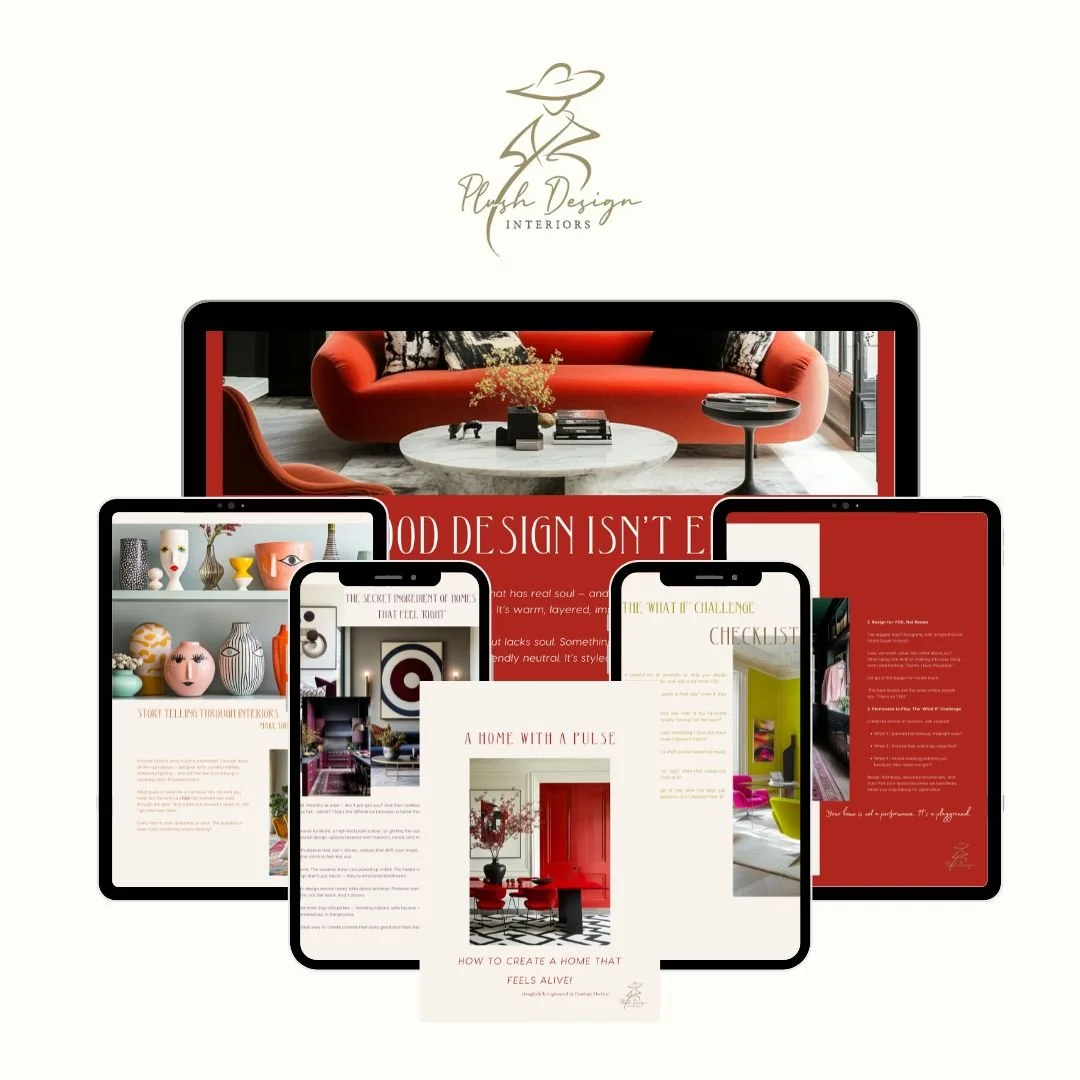
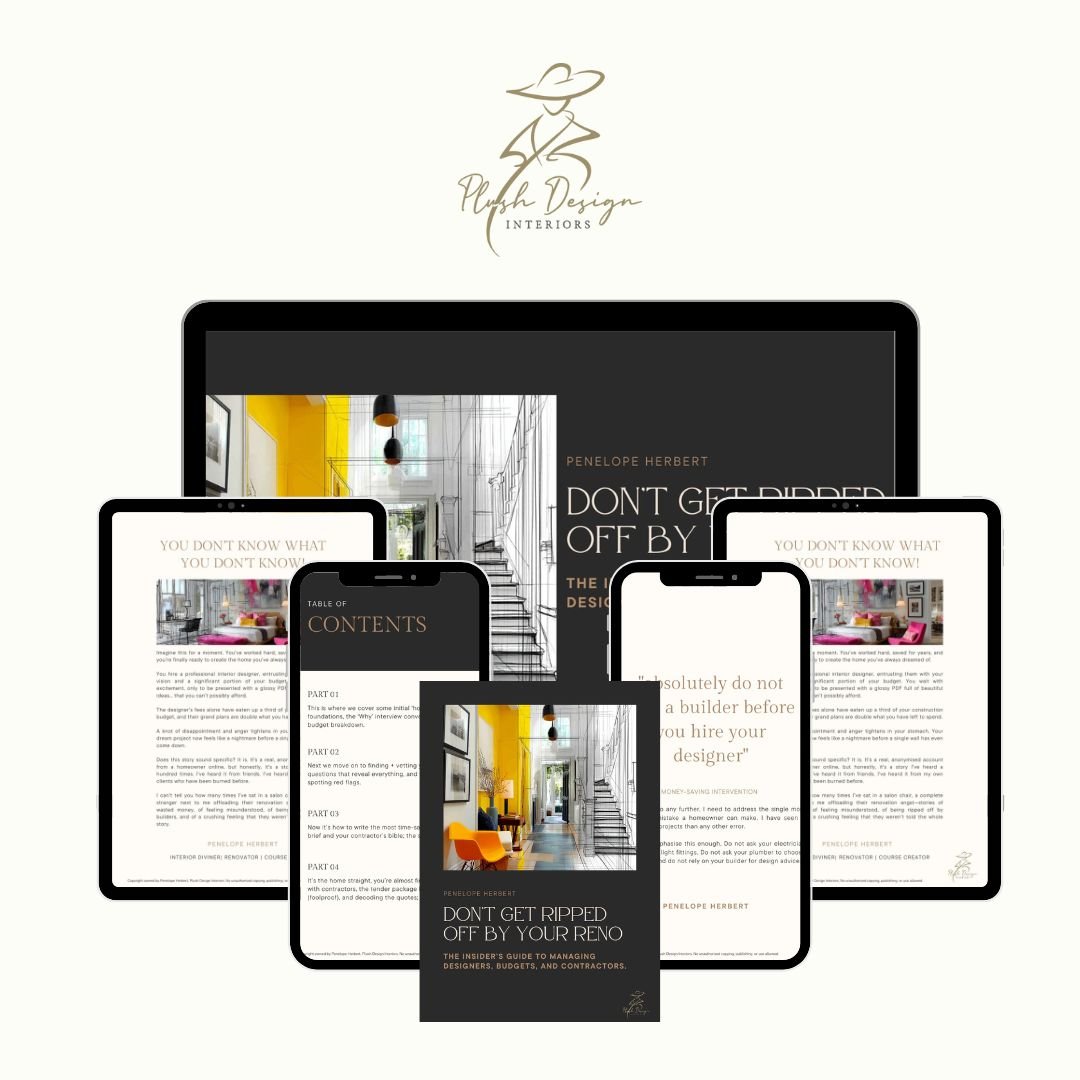
Interior Designer + Author of ‘Don’t Get Ripped Off By Your Reno’ and ‘A Home With A Pulse’. Both available on my e-book interior design and renovation resources page on my website.
Plush Design Interiors uses AI‑generated imagery to help illustrate design concepts and possibilities in a fast, flexible and cost‑effective way. These images are inspirational visualisations only and may not represent final selections, exact colours, finishes or products available in Australia. All real‑world Plush Design Interiors work, including all design, specifications, selections and purchases, are curated by a human interior designer and are confirmed with clients using accurate samples, supplier information and detailed documentation before any work proceeds.
FAQs on Future-Proof Kids’ Bedrooms
Q1: What does "future-proof" mean in kids' room design? Future-proofing a child's bedroom means making design decisions today that will still work when your child is a teenager. This includes choosing adult-scale furniture in quality materials, using timeless base colours, and reserving personality-driven elements for easily swappable soft furnishings like bedding, rugs, and wall art.
Q2: What furniture should I invest in for a child's bedroom in Australia? Prioritise the bed frame (a king single is ideal for longevity), a full-size wardrobe that can be reconfigured internally, a proper study desk and chair, and quality lighting. These are the pieces that need to last 10–15 years. Brands like Lilly & Lolly (Australian-made solid timber) or Out of the Cot (Adelaide) are excellent starting points.
Q3: Is it worth hiring an interior designer for a kids' bedroom in Adelaide? Absolutely — especially if you're renovating or building. Getting the spatial planning, lighting, zoning, and furniture scale right from the start saves significant money over repeated redesigns. A Design Power Session with an experienced Adelaide interior designer can give you a clear brief and actionable strategy in as little as two hours.
Q4: How do I make a child's bedroom work for both younger kids and teenagers? Zone the room from the beginning: a sleep zone, a study zone, and a personal expression zone. The proportions shift over time — the play area shrinks, the desk and personal zones grow — but the layout bones stay constant. Layering personality in textiles and art rather than structural elements means updates are affordable and painless as your child grows.
Q5: What colours work best in a future-proof kids' room? Avoid highly themed palettes as the dominant colour story. Instead, consider one bold, intentional hero colour — inky navy, deep sage, warm charcoal, or terracotta — on a feature wall or ceiling, with a neutral supporting palette. This reads as a considered design decision at every age, and the room can be refreshed with new soft furnishings rather than a full repaint.
Q6: What are the best kids' bedroom furniture stores in Adelaide? Out of the Cot (OOTC) is the standout local specialist — stocking boutique international brands alongside their own Adelaide-manufactured range. Dreamland Adelaide is excellent for beds and mattresses. For Australian-made heirloom-quality pieces with custom fabric options, Lilly & Lolly ships Australia-wide.
Q7: How do I design a shared kids' bedroom that adapts as children grow? Individual zoning within a shared space is the key. Each child needs their own clearly defined sleep zone, storage, and a small personal zone. Modular or bunk-bed configurations with integrated storage and desk space work brilliantly. The overall design framework should be cohesive but allow each child's personality to show up independently in their own zone.
how to design a kids room that grows with them | kids bedroom furniture that lasts into teenage years | multifunctional children's bedroom ideas Australia | future-proof children's bedroom ideas Adelaide | interior design for kids and teenagers Adelaide Hills | future-proof kids room design | kids bedroom design Adelaide | children's room interior design Australia | modular kids bedroom furniture Australia | kids room that grows with them | interior designer Adelaide kids rooms | children's bedroom design ideas Australia