Metal Magic: Curved Walls, Killer Splashbacks and Seriously Sexy Surfaces
How to use metal laminates, liquid metal and laser-cut screens for walls, ceilings, splashbacks, kickers and more – indoors and out.
Metal laminates, applied metal coatings and laser-cut screens can be used on virtually any surface in an Adelaide home — walls, splashbacks, rangehood cladding, kickers, stair risers, ceilings and outdoor screens. The three main systems are: real metal laminates (for joinery, walls and low-wear verticals), applied metal and liquid metal (for curves, custom shapes and sculptural elements), and electroplated sheet metals (for panelling, doors and hardware). Metal as a surface finish is lighter and more affordable than solid metal, responds dramatically to light, works indoors and out depending on the system specified, and turns overlooked surfaces like kickers and shadow lines into architectural jewellery.
Welcome, design divas, steampunk devotees and the gloriously metal‑curious. If you’re here for beige, you’ve taken a wrong turn at “builder basic” – this corner of the internet is strictly for homes with a heartbeat and a slightly wicked glint.
This is part four of my five-part series on finishes with pulse: we’ve already flirted with tiles, seduced you with wallpaper, and romanced you with natural stone – I’ll link each one so you can binge the whole saga in order.
Today, we’re cranking the dial to “hot” and talking metal skins, veneers and coatings for walls, ceilings, splashbacks, kickers and every overlooked surface that’s dying to misbehave.

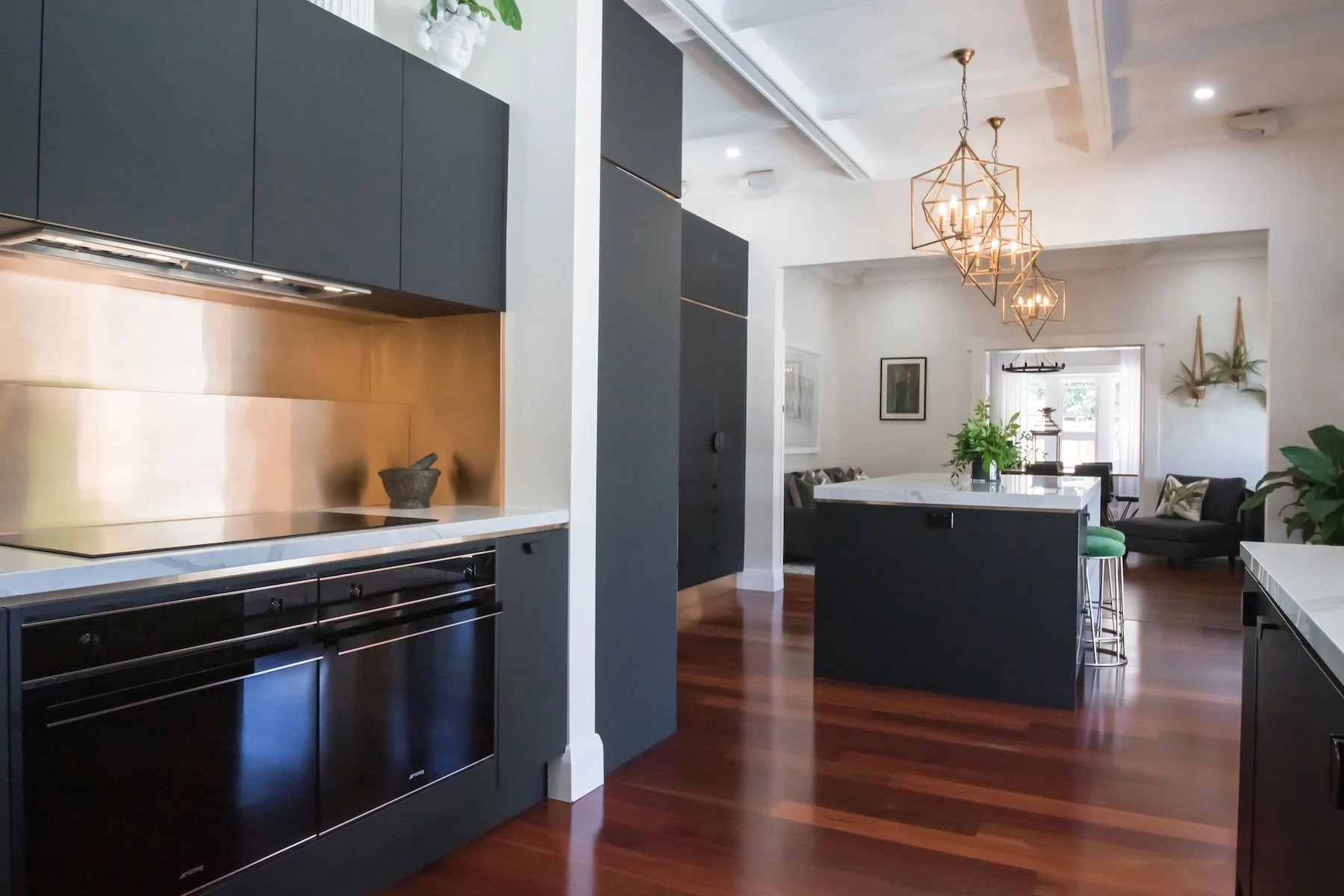
The Toorak Gardens (Adelaide) kitchen interior architecture and interior design by Plush Design Interiors with rose gold metal splashback, kickers and shadow lines. See more of this luxury three-zone kitchen in our Portfolio.
Your Walls Deserve a Love Affair, Not a Light Beige Situation.
This is your official permission slip to stop playing nice with matte paint and start wrapping your home in unapologetic metal – brushed, burnished, perforated and just the right amount of dangerous.
If you’ve ever looked at your stair wall, your rangehood or those sad little kickers and thought, “You could be so much hotter,” this is the post where we turn them into the architectural equivalent of a slow, knowing wink.
Because once you’ve seen a curved wall in brushed bronze or a shadow line trimmed in blackened metal, you’ll never look at plain plasterboard the same way again. Consider this your intervention: step away from the safe choices and let your surfaces misbehave a little.
Metal Veneers: Couture, not Cladding
Most homes are walking around in budget polyester when they could be in couture metal.
Metal veneers and coatings give you the look and feel of solid metal on almost any substrate – MDF, joinery carcasses, GIB, exterior cladding profiles – without the weight, cost or drama.
That Metal Company’s 100% real metal laminates come in over 100 finishes and are designed for vertical and low-wear surfaces like feature walls, cabinetry, splashbacks, bench fronts and lighting.
Axolotl’s applied metal system uses real semi-precious metals like brass, bronze, zinc and copper on virtually any shape, inside or out.
Astor Metal Finishes electroplate metals such as brass, copper, bronze, nickel and black nickel onto steel and aluminium for high-end residential and hospitality projects.
This is not “a nice feature wall”. This is metal as skin – stretched over curves, folded around rangehoods, punched into screens and slipped into shadow lines.
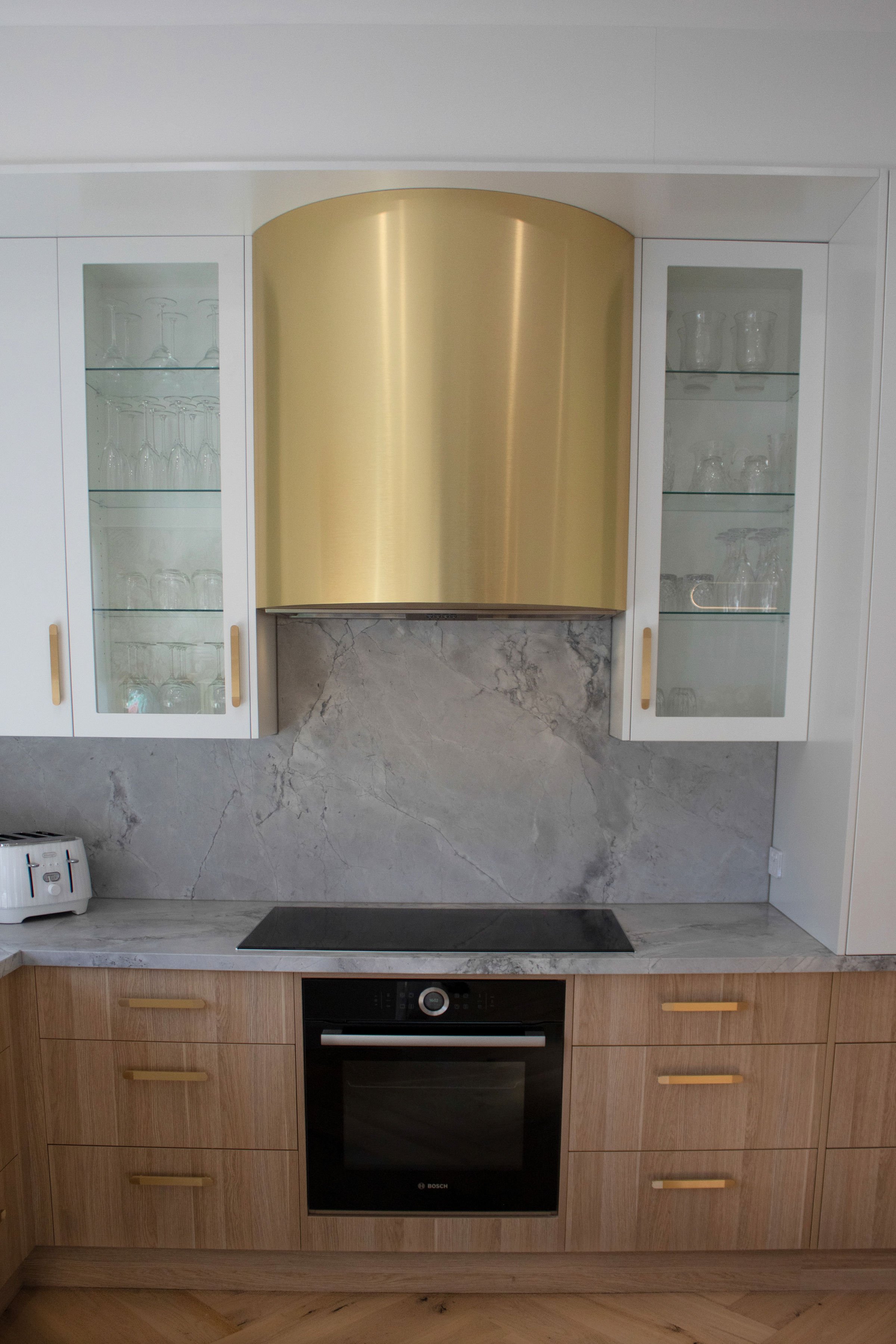
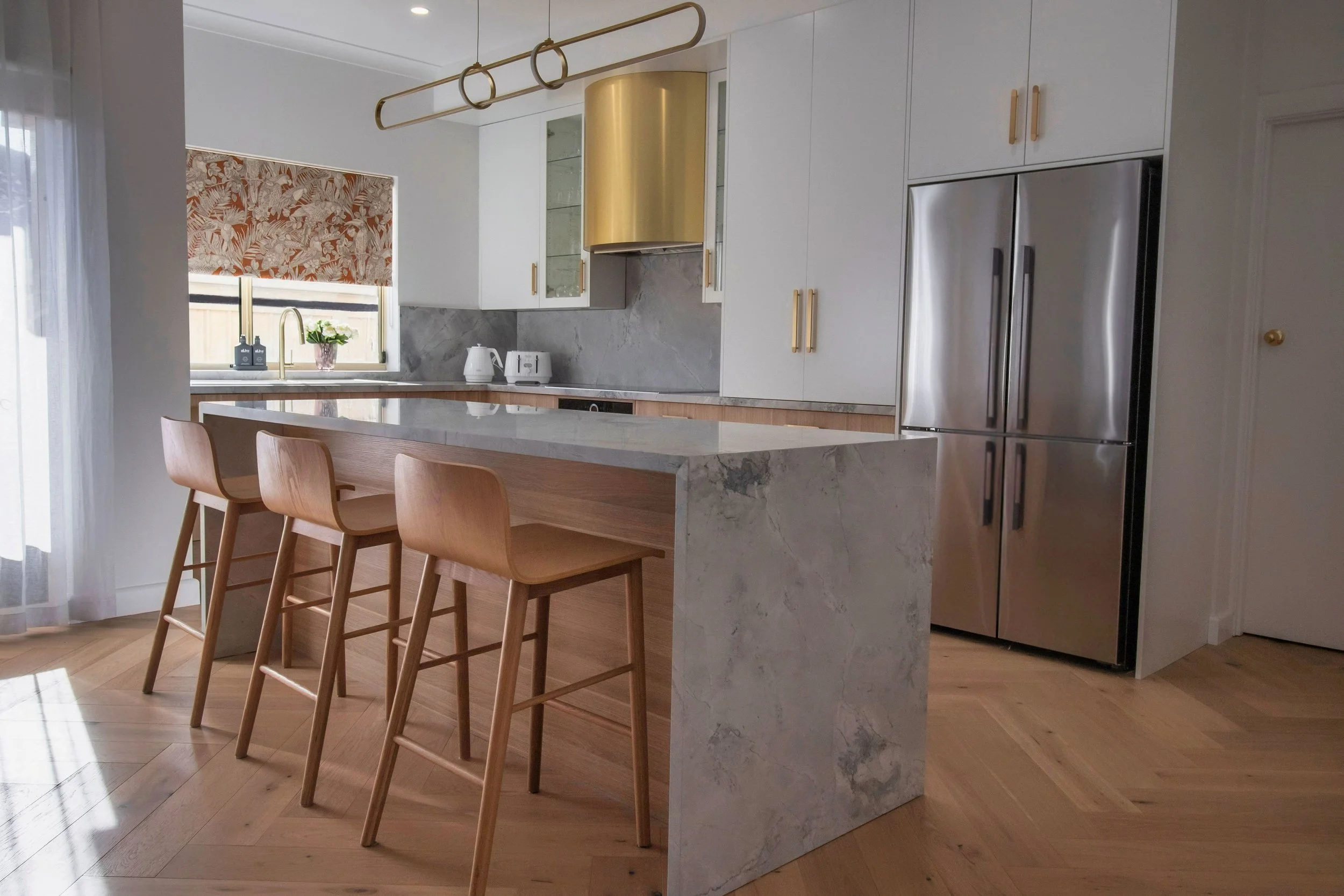
The Hazelwood Park (Adelaide) kitchen interior architecture and interior design by Plush Design Interiors including custom brushed brass wrapped rangehood cover. See more of this resort-style kitchen in our Portfolio.
Where to Use Metal Veneers (beyond the obvious)
Metal veneer-style finishes shine on both flat and curved substrates, and they love being pushed.
Curved walls and ceilings: Architectural Cladding Suppliers show how curved metal cladding creates seamless, flowing feature walls using profiles like standing seam and snaplock in steel, zinc, copper and brass.
Splashbacks and bench fronts: Brushed and patinated laminates from That Metal Company are specifically refined for splashbacks and bench fronts, not just “somewhere in the kitchen”. In my experience, when it comes to metal splashback vs tiles, metal splashbacks are surprisingly easy to keep clean - just warm soapy water and a soft cloth will do it.
Kickers, stair risers and shadow lines: Slim metal laminates or plated sheet turn forgotten joins into jewellery – think blackened brass risers and a razor-thin metal reveal instead of plastic trim.
Rangehood cladding: Axolotl’s applied metal and sheet metals can wrap rangehoods and bulkheads in aged brass, verdigris copper or deep bronze so the hood becomes sculpture.
Screens and room dividers: Di Emme’s custom laser-cut screens and metalwork transform partitions into art that controls light, privacy and pattern.
In short: if it’s a flat (or gently curved) surface, it’s a candidate. The only real limit is your appetite for drama.
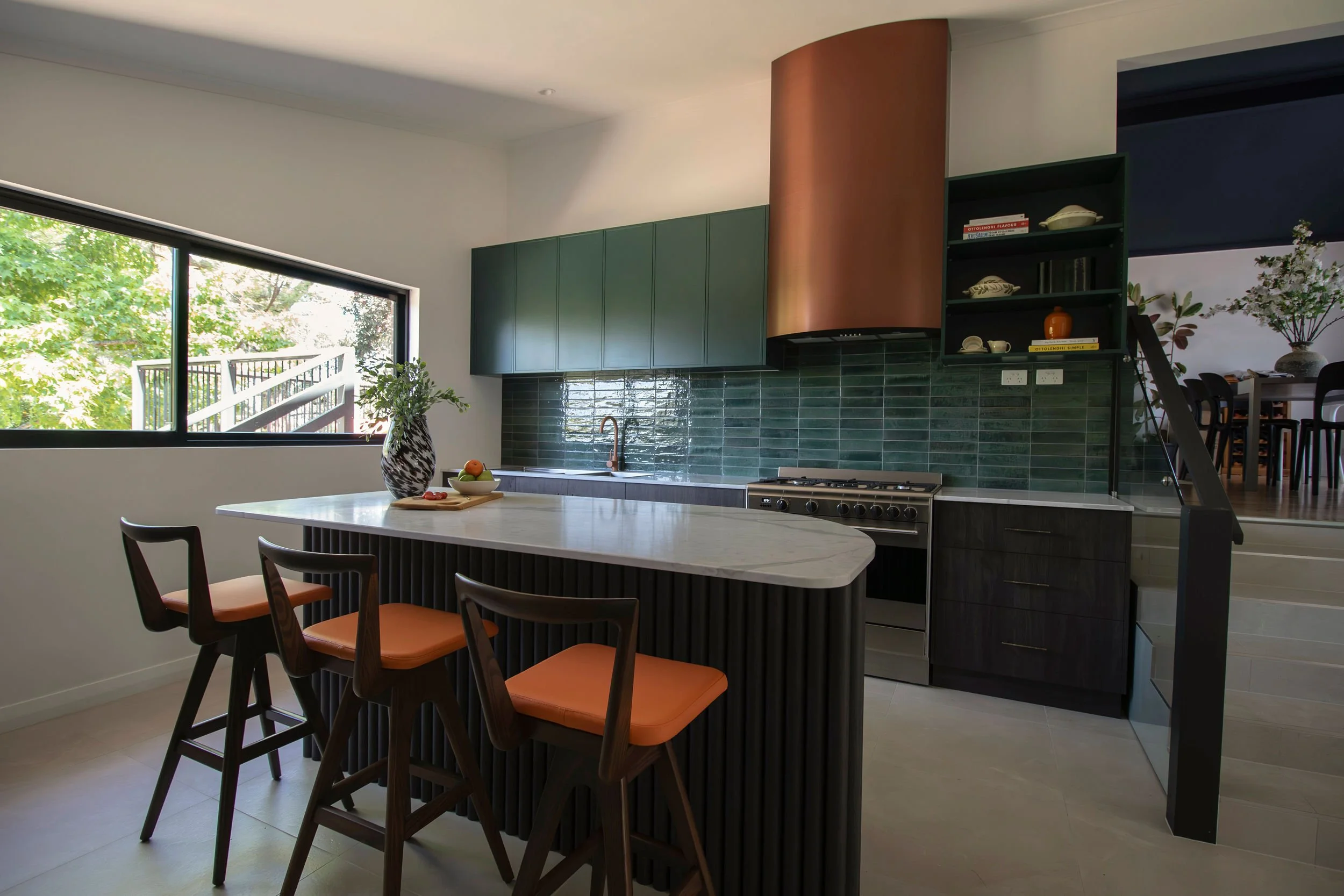
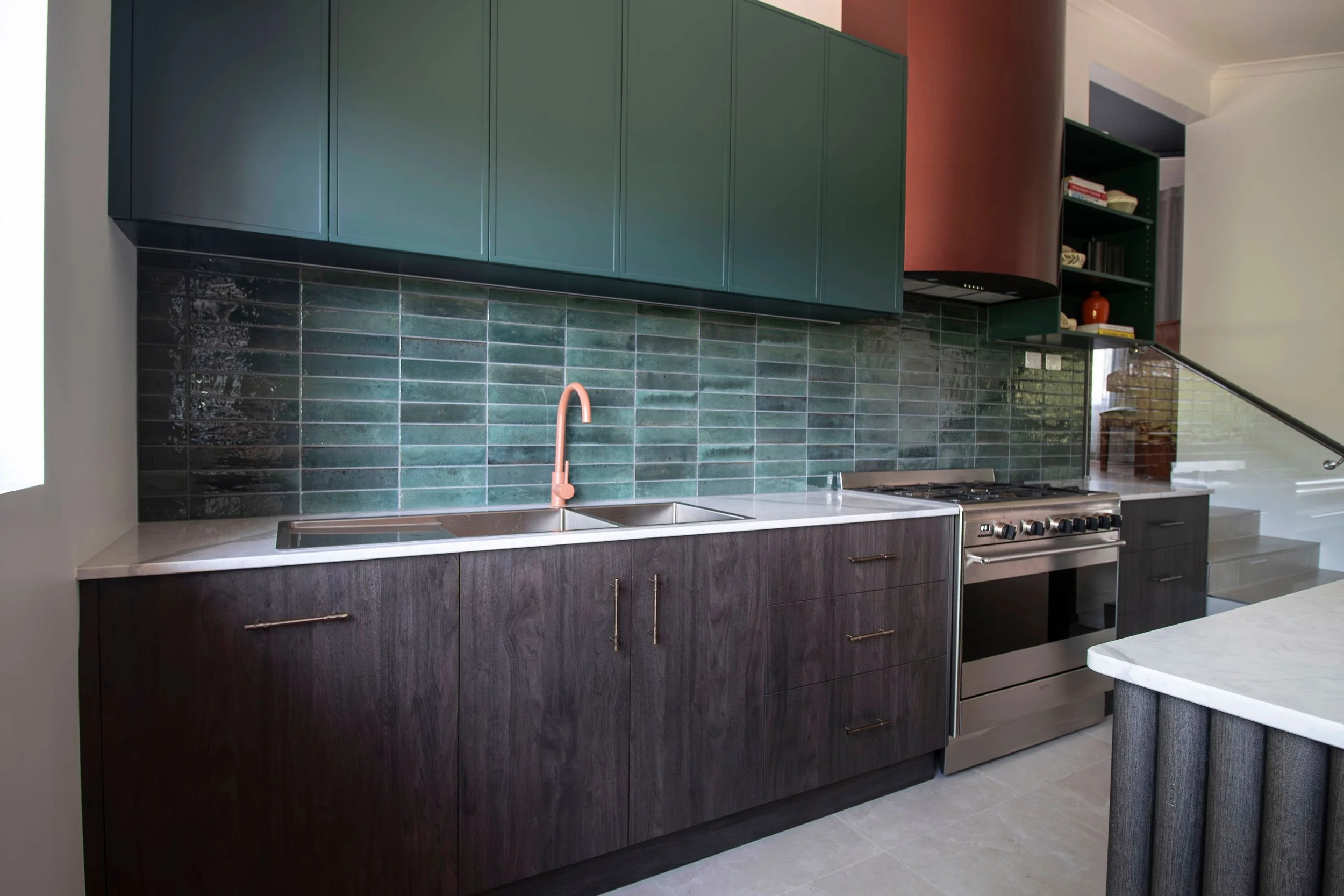
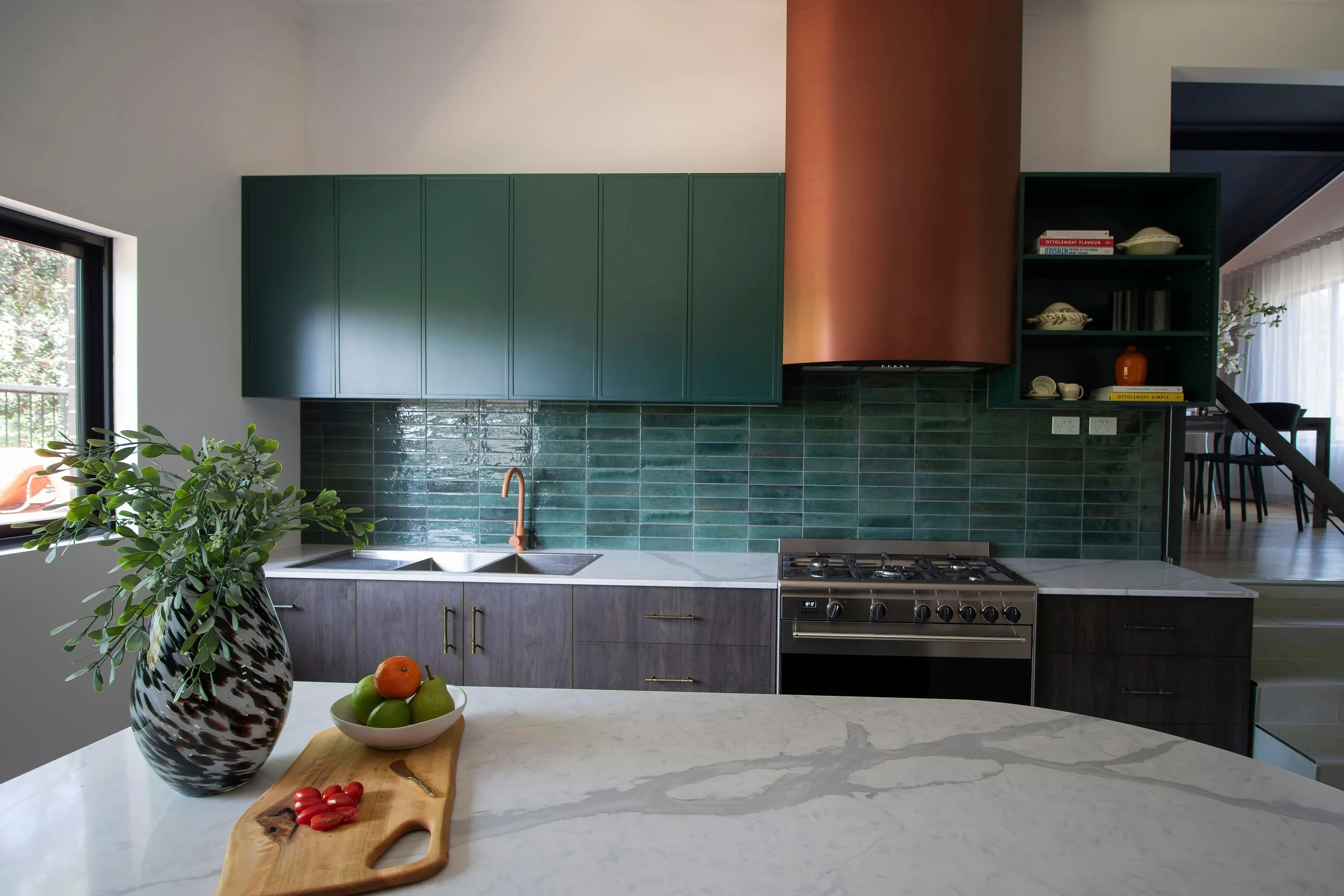
The Bridgewater (Adelaide Hills) kitchen interior architecture and interior design by Plush Design Interiors with custom antique bronze metal wrapped rangehood cover. See more of this project in our Portfolio.
Indoor vs Outdoor: What Actually Works
Metal veneer finishes are not all created equal, and some are divas about where they live.
Interior heroes: Real metal laminates from That Metal Company are engineered for vertical and low-wear interior surfaces like walls, cabinetry and splashbacks.
Interior + exterior weapons: Axolotl’s applied metal coatings and sheet metals are formulated for both interior and exterior applications, including façades, doors, balustrades and cladding.
Plated workhorses: Astor’s electroplated brass, copper, bronze and nickel finishes are used across residential and commercial projects, including panelling and operable walls.
Architectural screens and façades: Di Emme fabricate corten, aluminium and other metals into exterior screens, cladding, signage and sculptural elements for clubs, churches and public spaces.
This is where you talk to the supplier early, match the base substrate and finish to the environment, and avoid the “why is my outdoor brass crying green tears onto the pavers?” moment.


Ai concepts by Plush Design Interiors showing different ways to use metal screens for outdoor living - stylish and textural whilst providing privacy and wind protection. Yes, we use Ai to show clients initial design ideas to form a direction for a renovation.
Kismet Moment: Metal + Curves + Light
The kismet moment with metal veneers is when you realise they’re not just a finish – they’re a light instrument. Curved, brushed and patinated metals catch and bend light in ways paint cannot, turning a simple stair wall or ceiling into a shifting, luminous backdrop.
Put metal on a curve, add grazing light, and suddenly your “wall” behaves like a living object – brighter by day, moody by night, never visually flat.
Imagine THIS scenario!
Imagine walking into a million-dollar renovation where the “hero wall” is… white. Perfectly plastered. Perfectly lit. Perfectly nothing. The clients spent more on downlights than on every surface finish combined.
Now imagine the same space with a brushed bronze metal laminate wrapping the entry curve, a blackened steel rangehood skin, and a perforated metal screen casting shadows across the floor. Same floor plan. Same budget ballpark. Completely different soul.
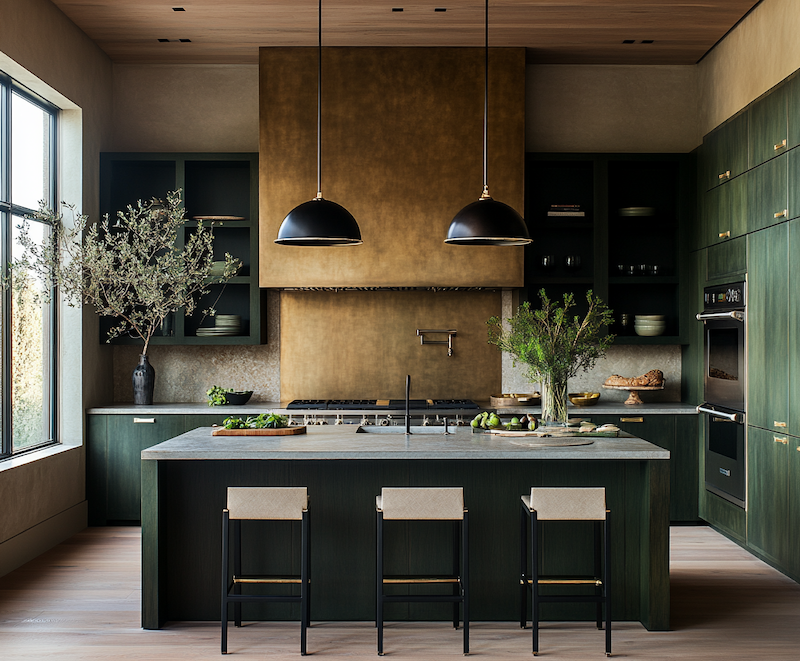

Ai concepts by Plush Design Interiors featuring sheet metal as a rangehood cover and splashback, and laser cut outdoor screens. Yes, we use Ai to show clients initial design ideas to form a direction for a renovation.
Practical tips for specifying metal veneers
Pick the right system for the job:
Laminates for joinery, walls, kickers, brass stair riser detail, splashbacks, feature ceilings and low-wear verticals.
Applied metal and liquid metal for complex curves, mouldings, custom rangehoods and sculptural elements.
Electroplated and sheet metals for panelling, doors, operable walls and hardware details.
Laser-cut panels for screens, façades and ceilings.
Always plan your joins and edges. Metal veneer wall panels look expensive when the seams are deliberate, aligned and shadowed – not when they’re hacked off at the nearest corner.
Respect patina: Axolotl and others can deliver pre-aged patinas like verdigris or florentine in days, not decades, but you still need to design for movement and variation rather than expecting “paint-like” perfection.
If you’ve made it this far, you’re officially too hot for flat paint.
Go stand in the room that annoys you most, pick one wall, one rangehood, one ceiling or one set of stair risers and promise it a metal makeover with real attitude. No more “maybe just a warm white” – your home is ready for brushed, burnished and a little bit dangerous.
When you’re done, tiles, wallpaper and natural stone can play supporting roles… but metal? Metal’s the one turning heads and starting rumours.
Love, Penelope xx Interior Architect and Interior Designer
Interior Architect and Interior Designer + Author of ‘Don’t Get Ripped Off By Your Reno’ and ‘A Home With A Pulse’. Both available on my e-book interior design and renovation resources page on my website.
Plush Design Interiors uses AI‑generated imagery to help illustrate design concepts and possibilities in a fast, flexible and cost‑effective way. These images are inspirational visualisations only and may not represent final selections, exact colours, finishes or products available in Australia. All real‑world Plush Design Interiors work, including all design, specifications, selections and purchases, are curated by a human interior designer and are confirmed with clients using accurate samples, supplier information and detailed documentation before any work proceeds.
FAQs for Using Metal To Create Seriously Sexy Surfaces
What is the difference between metal veneer and solid metal?
Metal veneer or applied metal uses a thin layer or coating of real metal over a substrate like MDF, GIB or existing cladding, giving the look and feel of solid metal without the weight, structural load or cost.
Can metal laminates be used on kitchen splashbacks?
Yes – certain real metal laminates are refined specifically for splashbacks and bench fronts, but they are recommended for vertical, low-wear applications and must be installed with the correct adhesive and backing.
Are metal veneer finishes suitable for exterior walls?
Some systems, such as Axolotl’s applied metal and specific sheet metals, are formulated for both interior and exterior use, while many laminates are for interior applications only.
Can you use metal finishes on curved walls and ceilings?
Yes. Curved metal cladding profiles and applied metal systems can be fabricated and installed to achieve continuous curves across walls and ceilings, creating seamless, sculptural surfaces.
How durable are electroplated metal finishes on panelling?
Electroplated finishes from specialist applicators like Astor are designed for residential and commercial use, offering durable brass, copper, bronze and nickel finishes when specified and detailed correctly.
Are laser-cut metal screens only for outdoors?
No. Custom metal screens can be used as interior partitions, ceiling features and wall art, as well as exterior façades and fences, provided the base metal and finish suit the environment.