
How I Accidentally Built the Career I Was Always Supposed to Have
The one where a girl who mapped entire towns on brown paper finally figured out she was an interior architect all along.
Plush Design Interiors was founded by Penelope Herbert — interior designer, interior architect and unapologetic enemy of beige — from her studio in Aldgate in the Adelaide Hills. This is her origin story: the child who mapped towns on brown paper, the career that took several wrong turns before finding its right one, and the moment in a whiteboard-covered kitchen that made everything make sense. It's also a story about what happens when you stop designing for everyone else and start designing for yourself.
How Did Plush Design Interiors Start?
There's a concept in astrology called the Lion's Gateway — a cosmic alignment that opens a portal of energy, clarity, and manifestation. You walk through it changed. You walk through it knowing.
Mine happened in a kitchen in the Adelaide Hills, in front of a whiteboard covered in what appeared to be the ravings of a highly caffeinated, slightly maniacal woman who had finally — finally — stopped lying to herself.
That woman was me. That moment was everything.
But let's back up. Because a good origin story, like a good room, doesn't work without its foundation. So, who is Penelope Herbert interior designer + interior architect?
The Edit Suite, the Film, and the Completely Feral First Career
Before I was an interior designer, I was a film editor.
And I do mean film. Not videotape. Not digital. Film. Physical celluloid, cut with a razor blade, joined with cement, hand-wound through a flatbed editing machine called a Steenbeck. The kind of work where a mistake costs money, time and your producer's goodwill all at once, and where the rhythm of a story lived entirely in your hands.
A film editor is arguably the last true author of a film. After the director calls cut, after the cinematographer packs their lights and goes home, after the actors take their faces off — the editor inherits the raw chaos of production and sculpts it into something that breathes, that moves, that means something.
The edit is where a film either lives or dies. It's where pacing is born, where performances are protected or quietly buried, where the emotional truth of the whole enterprise is either found or lost forever. The editor is the storyteller's surgeon. The timeline is the operating table.
I loved it.
I left high school and walked straight into that world — vivid, unregulated, creative, and gloriously free of the things that had made school feel like a cage. I'm a Sagittarius. Half horse. Don't fence me in isn't just a country song, it was practically my personal theme music. And the film industry of the very early 1980s? It was all shoulder pads and late nights and being young and free and fabulous, and there was absolutely nothing wrong with that.
Except.
You know how freedom, when you're very young and slightly reckless and completely unbothered by consequences, has a way of not exactly building towards anything? Yes. That.
I lurched from party to party and project to project, having a spectacular time, while my career slowly didn't develop the way it might have if I'd been, let's say, a more focused individual. When adulthood eventually came for me — and it comes for everyone, even the most committed freedom-seekers — I pivoted. Into marketing. Into public relations. Into international relations. Into jobs that were fine, that were fine, but that never once made me feel like I'd found my thing.
Decades. That's how long this went on.
The Clues Were Everywhere (I Was Just Not Looking)
Here's the humiliating part. The thing I was always supposed to be doing? It was right there. It had always been right there.
When I was about three, my father gave me a book about how children live around the world. I can still picture the boy in America with his crew cut, his cork flooring, his colour-blocked floor-to-ceiling storage. I can still picture the child living on a junk in China. I was riveted. Not by the children. By the spaces they lived in.
My hometown, Christchurch, was a city of extraordinary High Victorian Gothic architecture and gorgeously decorative wooden villas. I spent hours in the museum replica of a Victorian London street — shops, houses, horse and carriage — absolutely transported. I designed entire towns on large sheets of brown paper from the art room, down to every street corner and corner dairy (that's a New Zealand deli, for the uninitiated).
My technical drawing classes in high school were supposed to produce modest floor plans. Mine always ended up with indoor pools and luxury boudoirs. I simply couldn't help myself. A quaint three-bedroom home never happened. It was constitutionally impossible.
I'd visit furniture stores for fun. I'd rearrange the furniture constantly. I'd go through the monthly free real estate paper — black and white newsprint, no addresses — and mark streets with unerring accuracy. My boyfriend at the time, a property developer, genuinely couldn't believe how right I was.
When I eventually moved out of home, my bedroom in my share house was so exquisitely put together that my friend Melanie would jump on my bed whenever she came over, purely out of protest against how perfect it was.
My flatmate Jill — a nurse — used to show it to people. She'd fling open my bedroom door like a tour guide: "Look at THIS." As if the room were somehow her accomplishment.
And yet.
I continued to think of it as a hobby.
Don't ask me why. I genuinely wish I knew. It would have saved an enormous amount of angst, multiple ill-fitting careers, and at least several years of collective confusion.
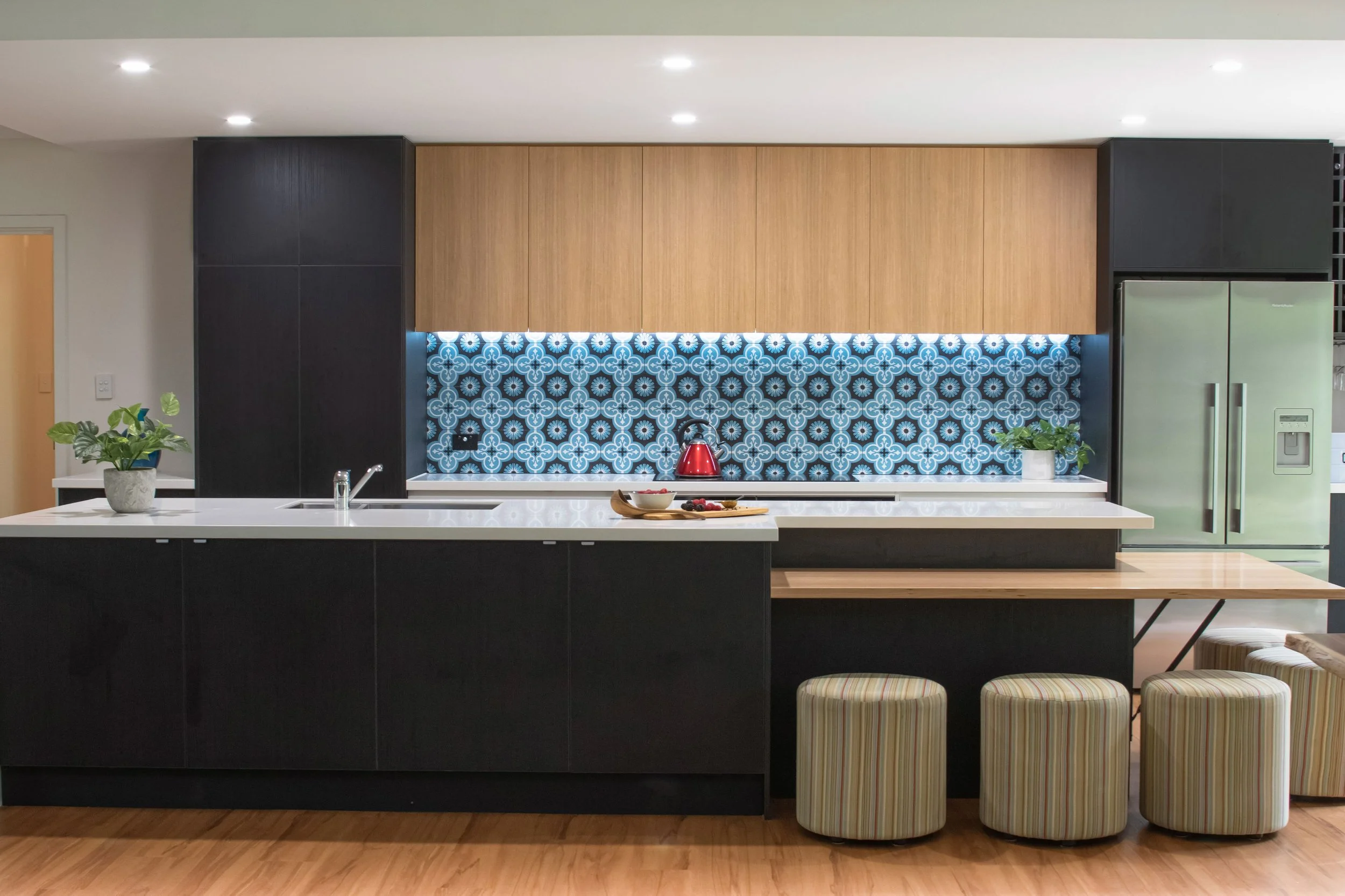
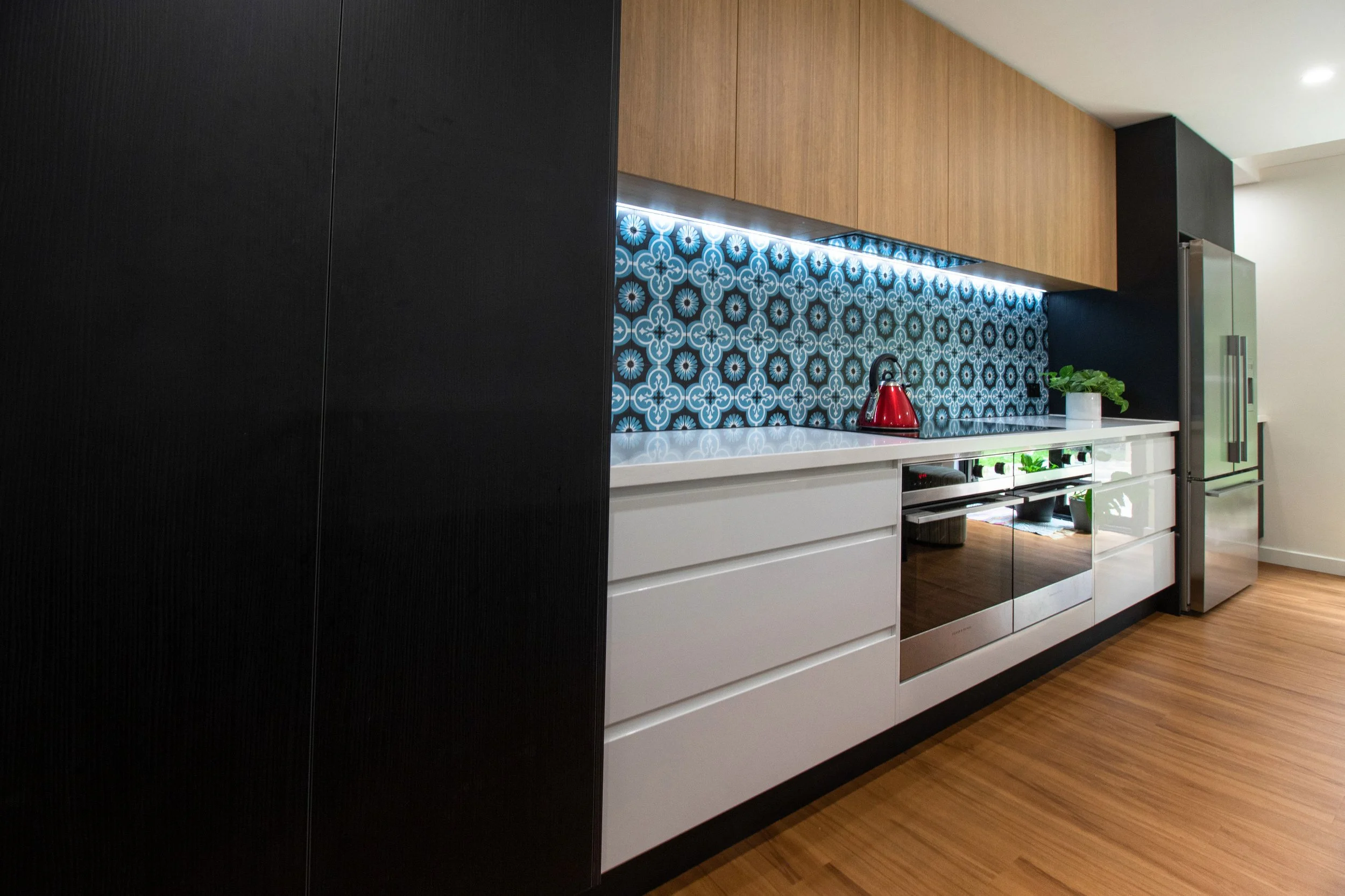
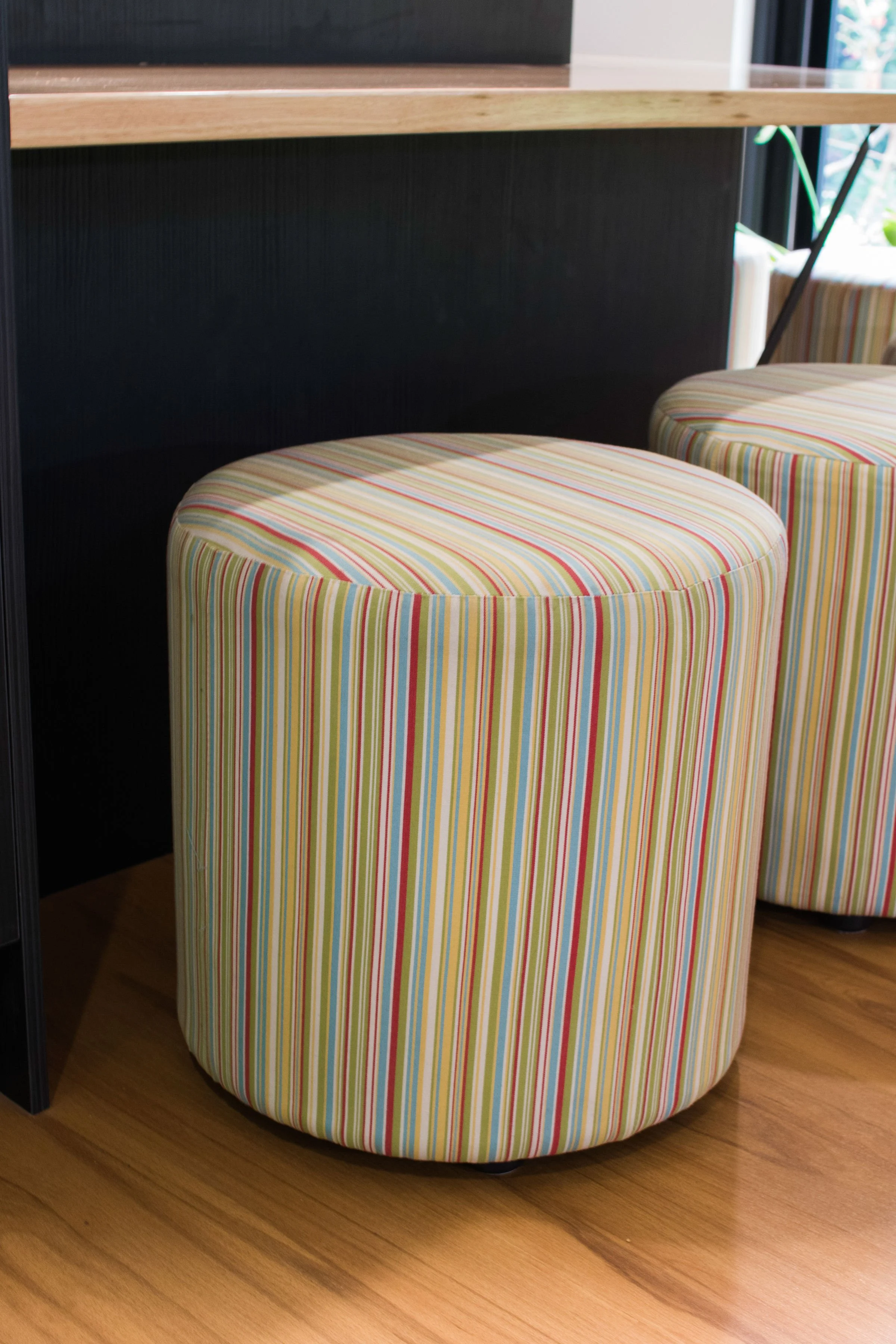
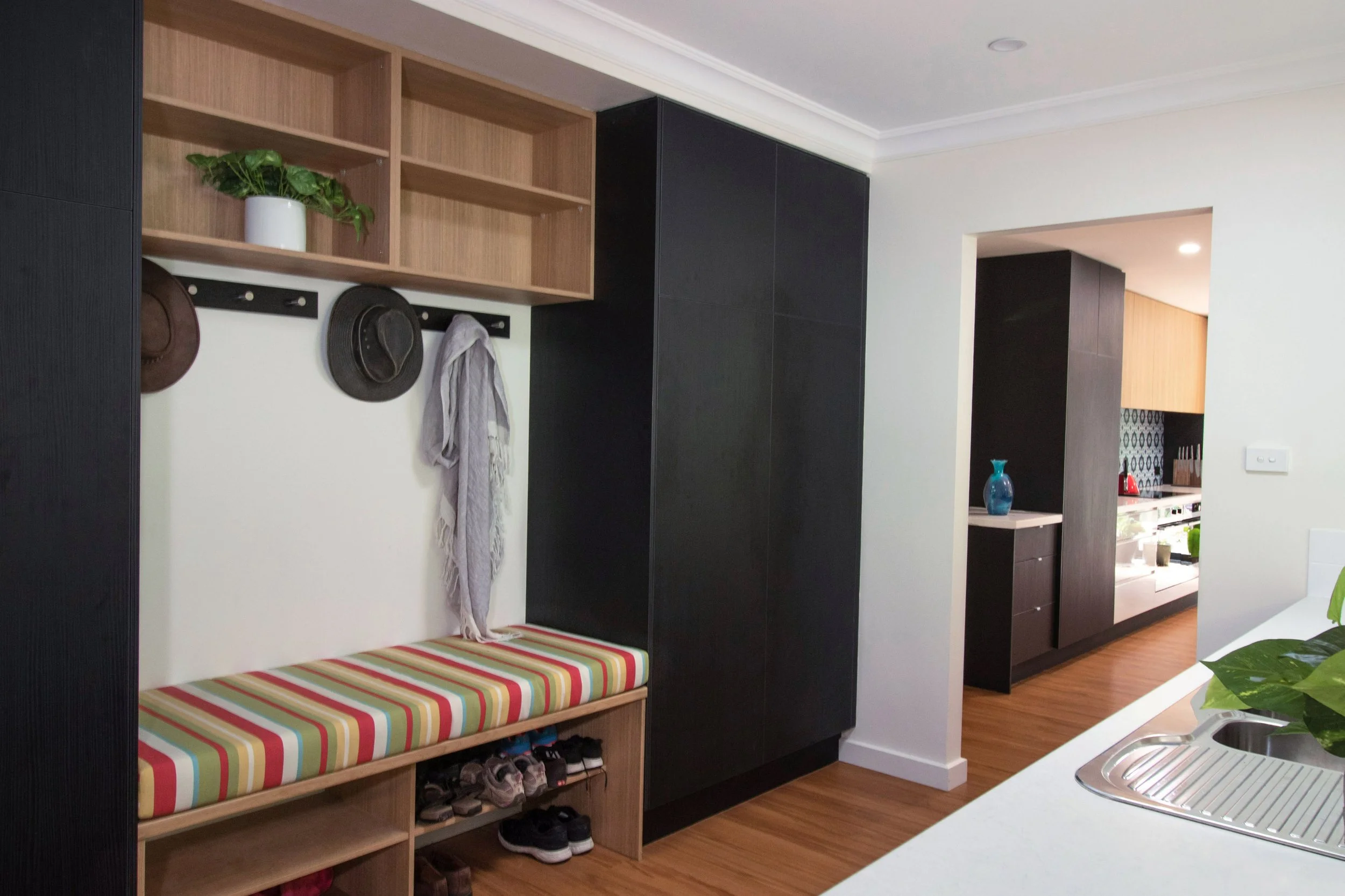
The first kitchen I ever designed, in Crafers (Adelaide Hills), and I’m so proud of it still. We demolished three rooms to create a new open-plan kitchen and turned the old kitchen into a mudroom. The renovation included refreshing the existing laundry, separate toilet, and entry foyer, while creating a beautiful study nook in the lounge area by opening up an old walk-in linen closet. It was my first big renovation working with a builder and hiring trades. All images by Claudine Burgess Photography.
The Whiteboard That Changed Everything
I arrived in my early fifties at a crossroads so wide I could barely see the edges of it.
I wasn't happy. I wasn't fulfilled. I was in marketing — a discipline for which I had polished competence and absolutely zero love — asking myself the question that I suspect many people reach eventually: What the hell am I actually doing here?
My father, who was one of the finest humans I have ever known, used to say: "Never be impressed by what people have. Be impressed by who they are."I have lived by that.
Money, frankly, has never impressed me — I've always chosen freedom and independence over financial prudence, a fact my bank account has confirmed on multiple occasions. But meaning? That has always mattered enormously. And I didn't have any.
So I took a large whiteboard. And I brain-dumped. Words, ideas, images, fragments, memories, longings — all of it. Manic brain-mapping at its most gloriously unhinged.
And when I stepped back and looked at the chaos on that board, there was one thread running through everything. One constant. One passion that had followed me across careers and countries and decades, waiting patiently for me to finally give it my full and undivided attention.
Architecture. Interiors. Spaces.
An epiphany - can I change careers to interior design? I decided, in my early fifties, with no formal track record in this industry, no clients, and no money, to open an interior design studio.
As one does.
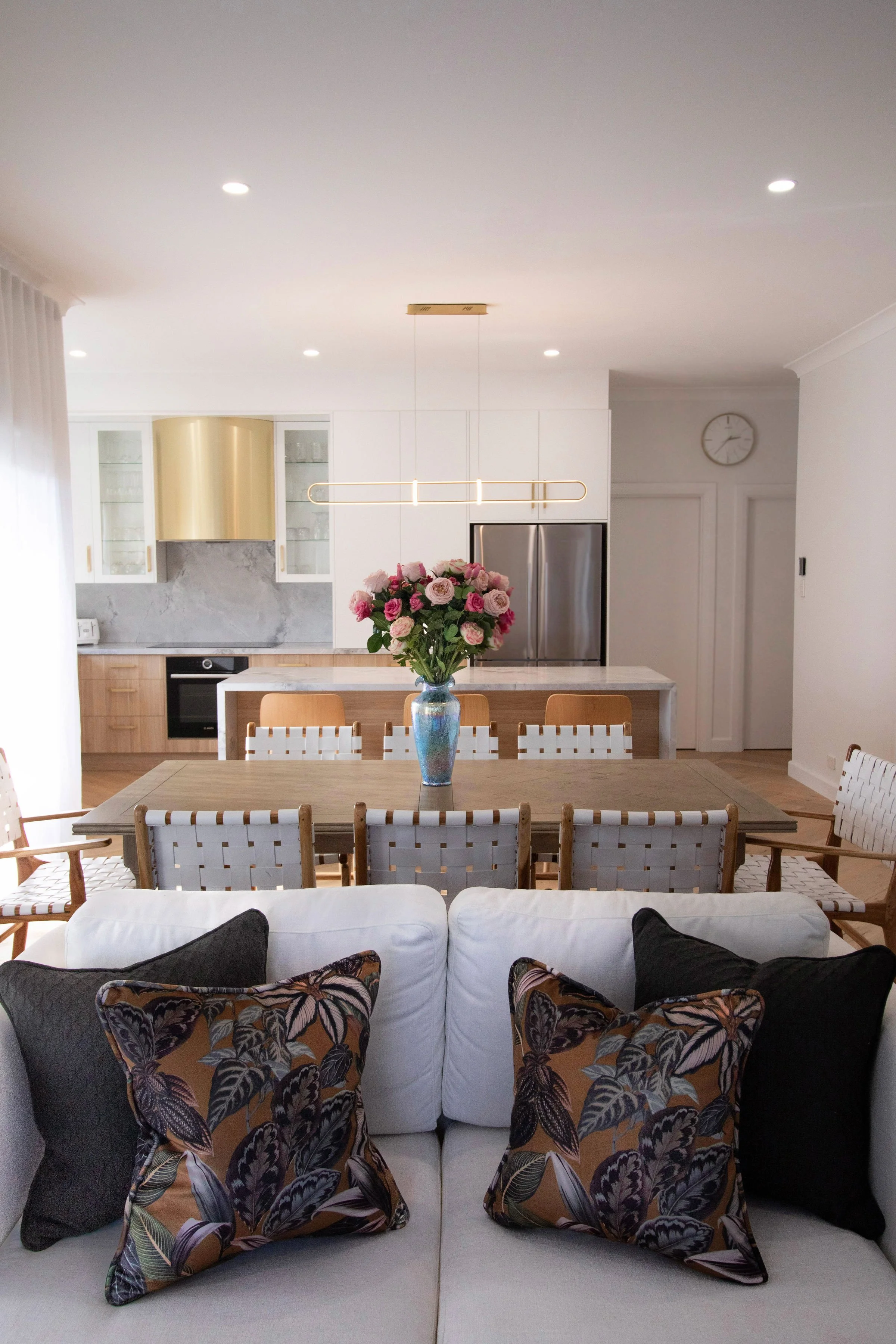
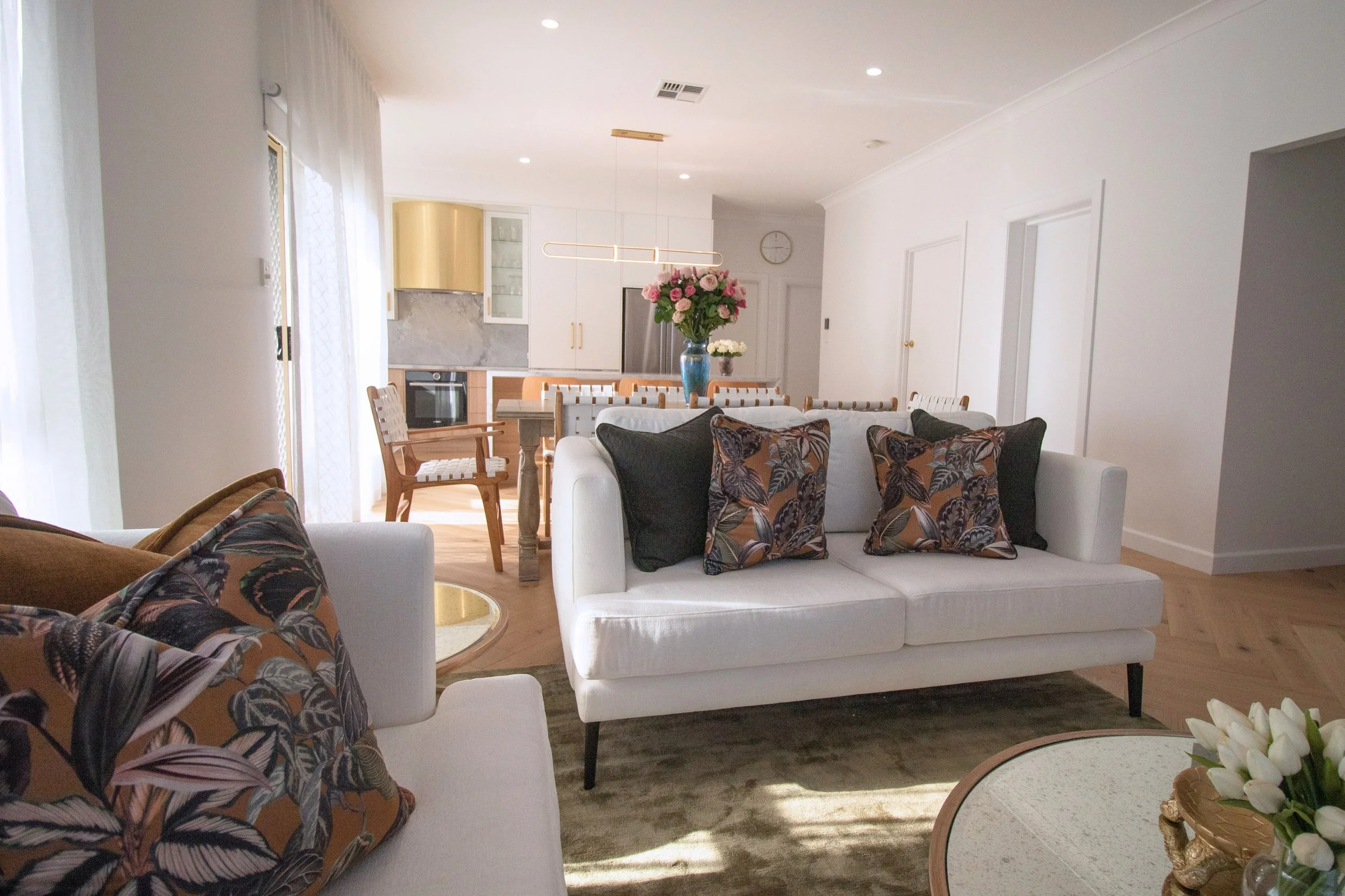
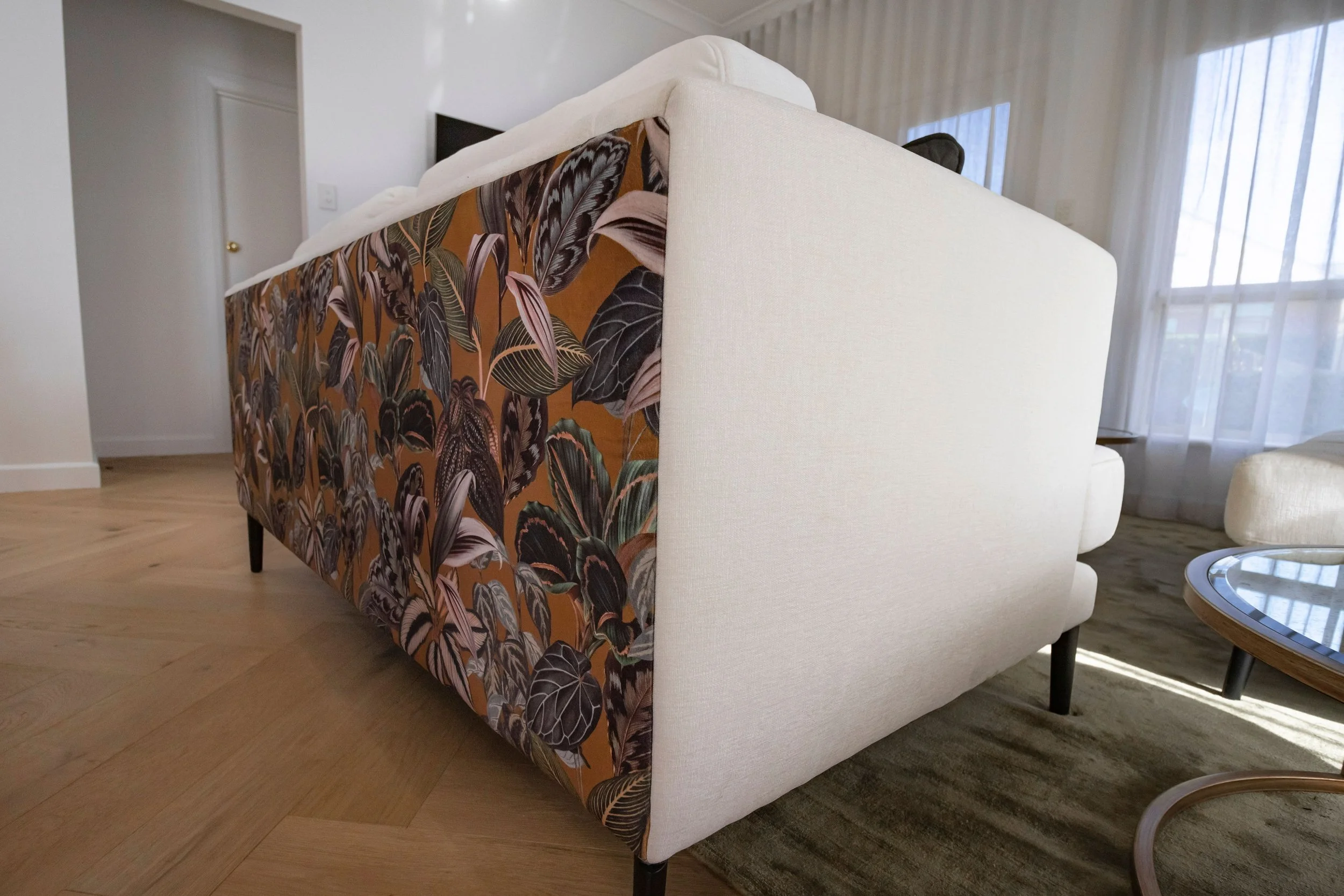
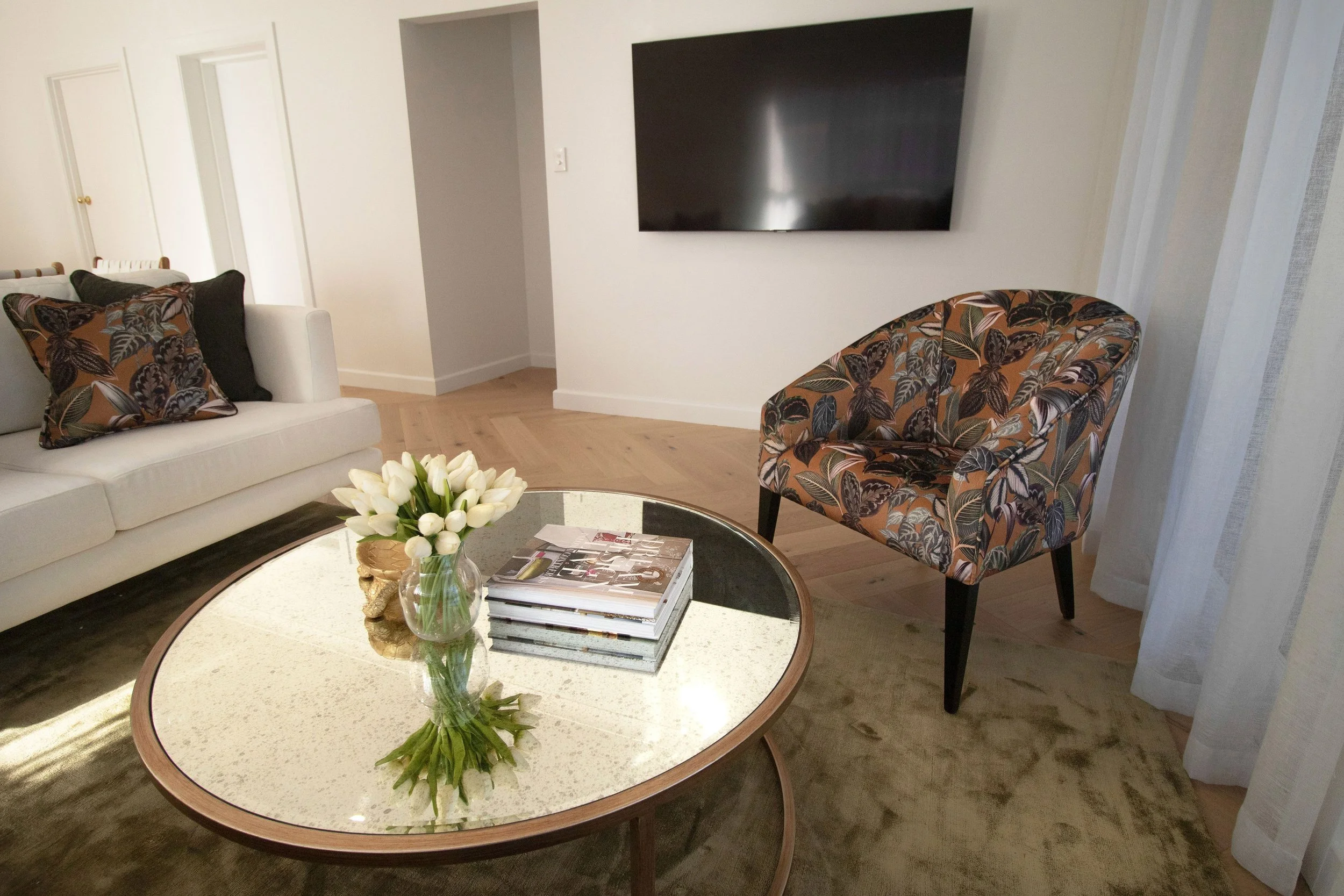
Images from our Hazelwood Park open plan kitchen / dining / casual living project. Custom furniture and cushions. I designed the sofa with the tropical velvet fabric on the back as that’s what you see first when you walk in to the space. Who needs to see a white sofa back when you can see a luxurious patterned velvet? All images by Claudine Burgess Photography.
Building the Thing
I want to be real with you here, because this is a blog post about an origin story and not a myth. It wasn't immediate. It wasn't linear. It wasn't a montage with a triumphant soundtrack.
I started with mood boards and room designs. I refreshed my credentials through an Interior Design Academy course. I worked in a small way at first — a room refresh here, a new-build colour palette there, carefully, cautiously, with every project teaching me something.
My first truly blank-canvas project was a main bedroom in North Adelaide: a calm, textural space that I built from twelve different materials — wallpaper, velvet, cut velvet, linen, silk, wool, marble, glass, metal, and timber. No bold colour. Just extraordinary texture and quiet sophistication. It gave me the confidence to reach for more demanding spaces.
Then COVID hit — as it did — and instead of grinding to a halt, I spent those months deep in the craft. Learning to design joinery for wet areas, bathrooms, kitchens, laundries. Specialist storage. Complex, precise, technical work that raised the bar considerably on what I could offer. Renovation support. Full design of the spaces clients actually dream about.
Four years ago, I hired Renee - a graduate with both an Interior Design qualification and a Bachelor of Architecture - who is now the Mum of two and the calmest person I know. More recently, Parvathi joined us, an Interior Architecture graduate with a love of colour and pattern.
Plush Design Interiors is no longer just me. It is us. A studio with a vision, a philosophy, and a genuinely fierce appetite for helping people create homes that feel like them.
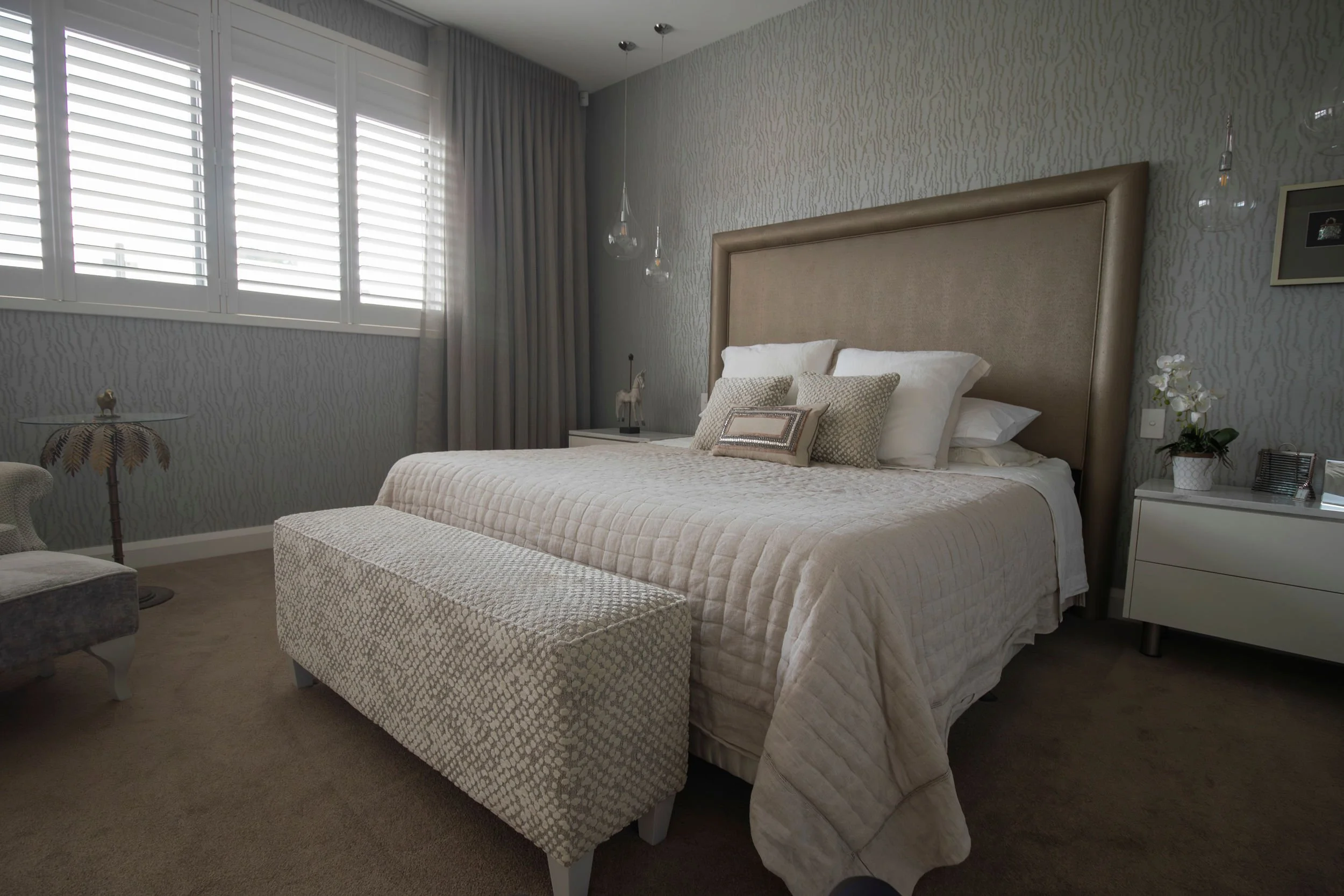
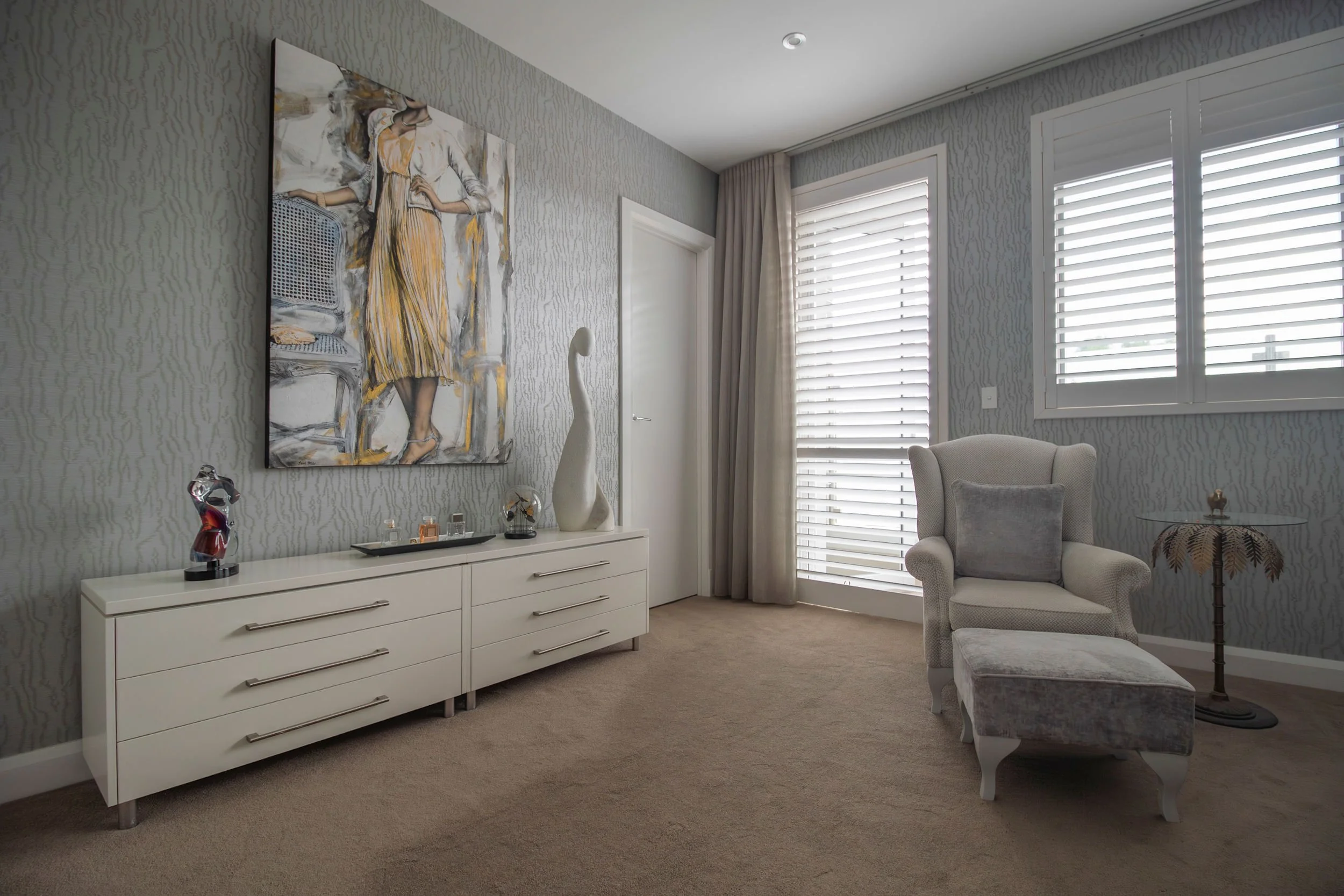
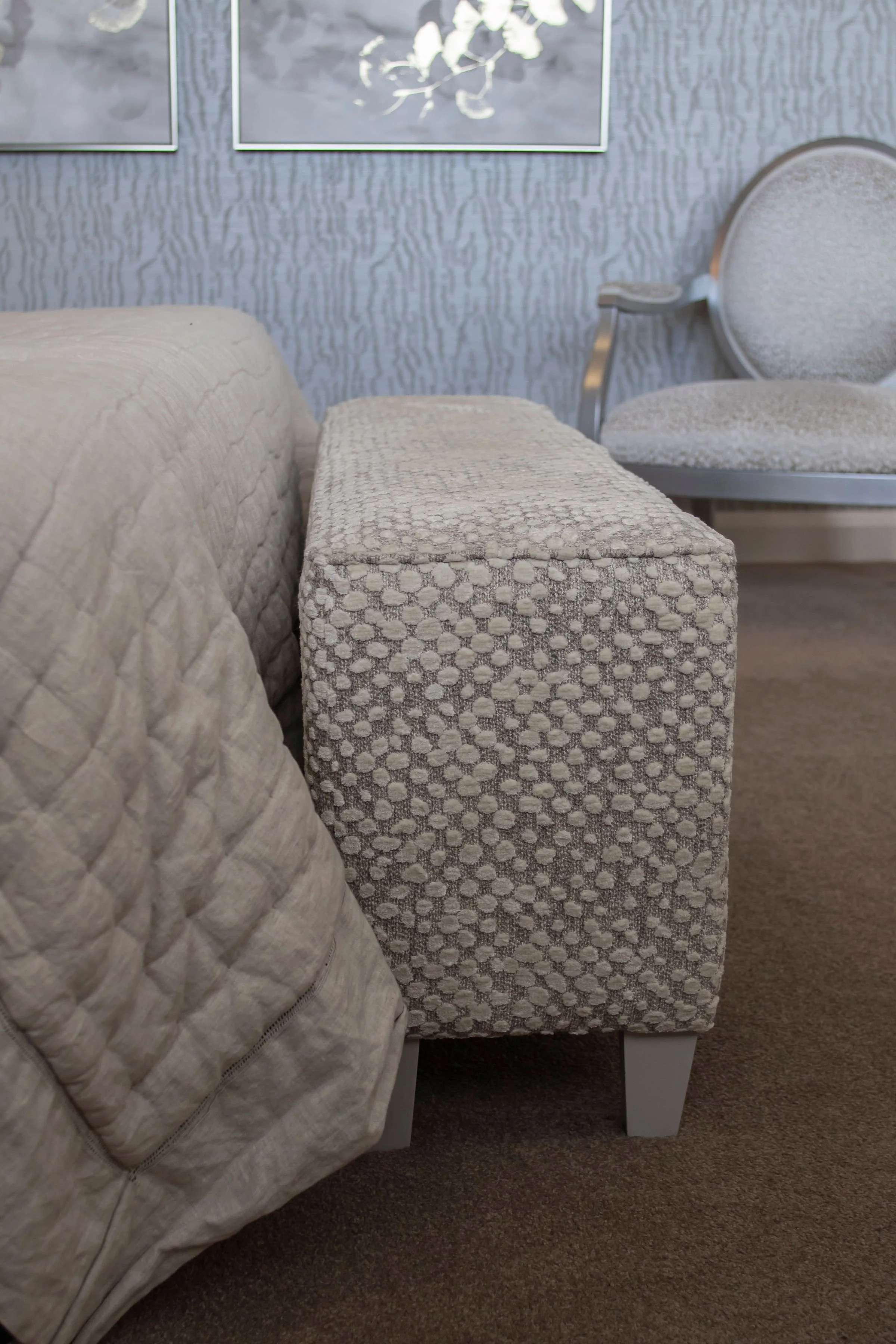
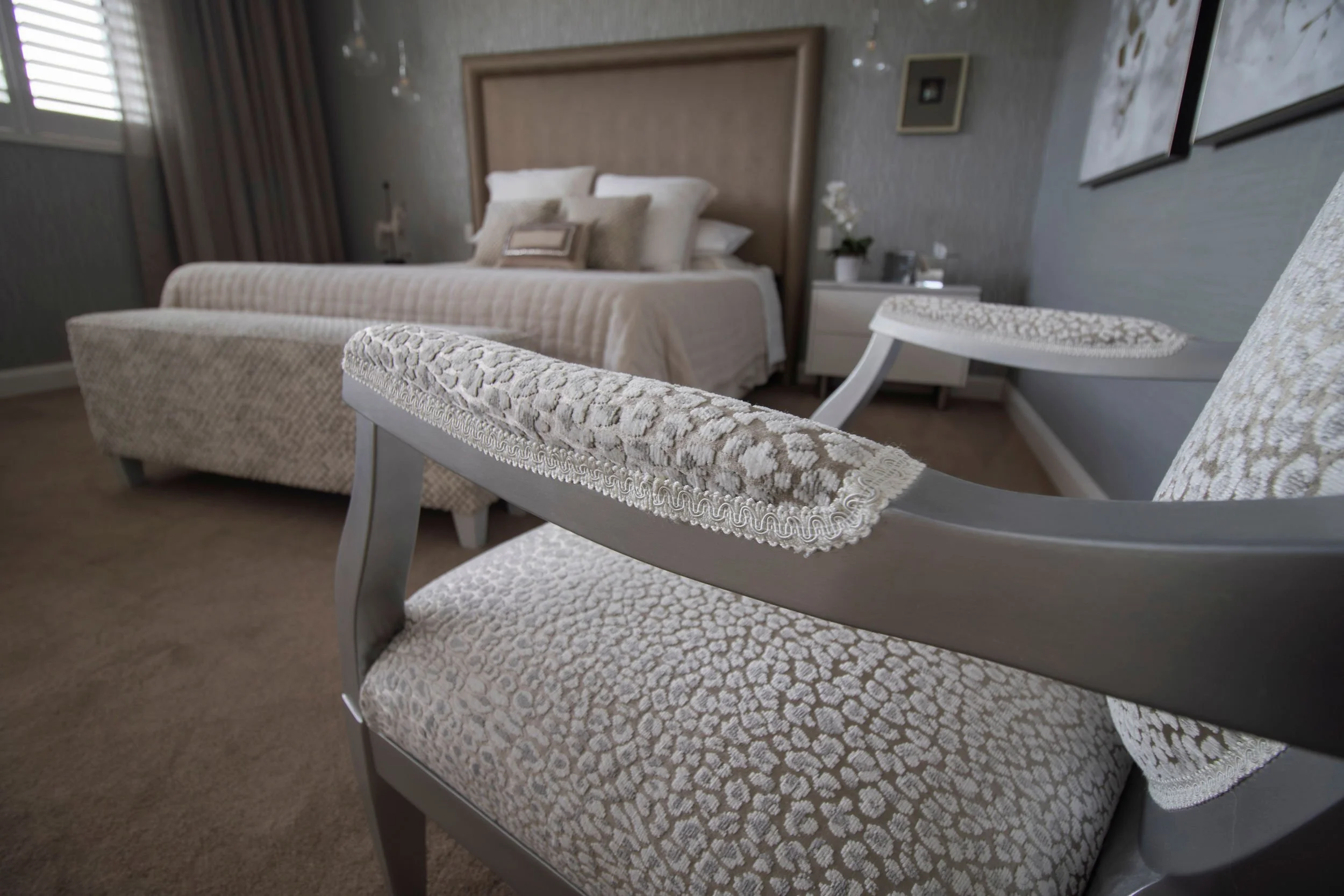
My very first blank canvas - a main bedroom in a North Adelaide luxury apartment on Mackinnon Parade. I mixed twelve different fabrics and finishes to create the neutral and calm result required by the owners. Two existing chairs were reupholstered and I designed the custom marble-top bedside tables too. Even then, it was inherent in me to create impact with textures. All images by Claudine Burgess Photography.
The Thing I Need You to Hear
Being invited into someone's home is one of the most humbling professional experiences that exists. A home is often someone's greatest financial asset — and more importantly, it is their sanctuary. Their refuge. The place they come back to at the end of every day. Being trusted with that is not a small thing.
What I've learned, across every project and every client, is that the 'aha' moment — the one where a client suddenly sees what their home could become — is worth everything that came before it. When someone says "can we really do that?" with this mixture of excitement and disbelief, that's it. That's the whole point.
Our clients know they want something different. They've just never had anyone give them permission to reach for it. That's what Plush Design Interiors does. That's what I have always done.
We ban beige as a default. We ban grey as a crutch. We champion personality over trend. We design for the human living in the space — not the hypothetical future buyer who may never materialise and certainly does not deserve to dictate how you live right now. Playing it safe because you might sell one day?
That is, to use precise and measured language, absolute bollocks. A space that looks exactly like every other space will not sell your home faster. It will just mean you spent years living somewhere that felt like a waiting room.
The No-Vanilla Design Manifesto and The No-Vanilla Design Archetypes exist because of this conviction. Don't label your home. Don't put it in a box. It is not Hamptons. It is not Coastal. It is not Japandi or Scandi or Rustic or Mid-Century Modern — unless those are genuinely expressions of your own authentic self, in which case: magnificent. Go with full force.
Your home should be YOU. In all your particular, glorious, slightly-weird, wonderfully specific, absolutely irreplaceable you-ness.
Even a neutral space can be extraordinary. Even a quiet space can be bold. Bold does not mean loud. Bold means intentional. It means chosen. It means this room knows exactly what it is.
Don't be afraid of colour. Don't be afraid of pattern. Don't be afraid of the object that makes your friends do a double-take. Strive not for perfection — perfection is cold and uninhabited. Strive for comfort, for surprise, for function, for the things you genuinely love, and yes — for a little controlled weirdness. It is the secret ingredient every spectacular home has in common.
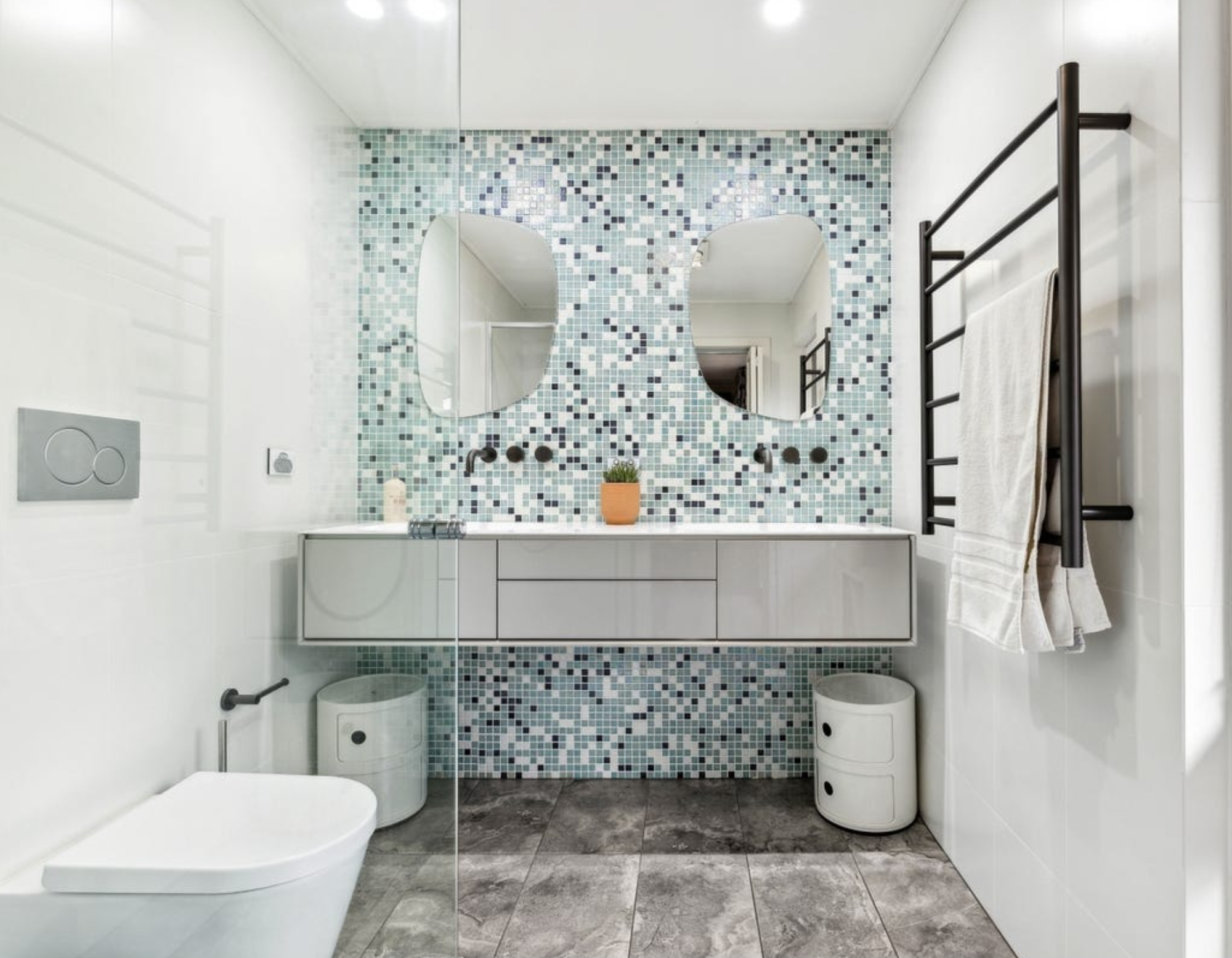
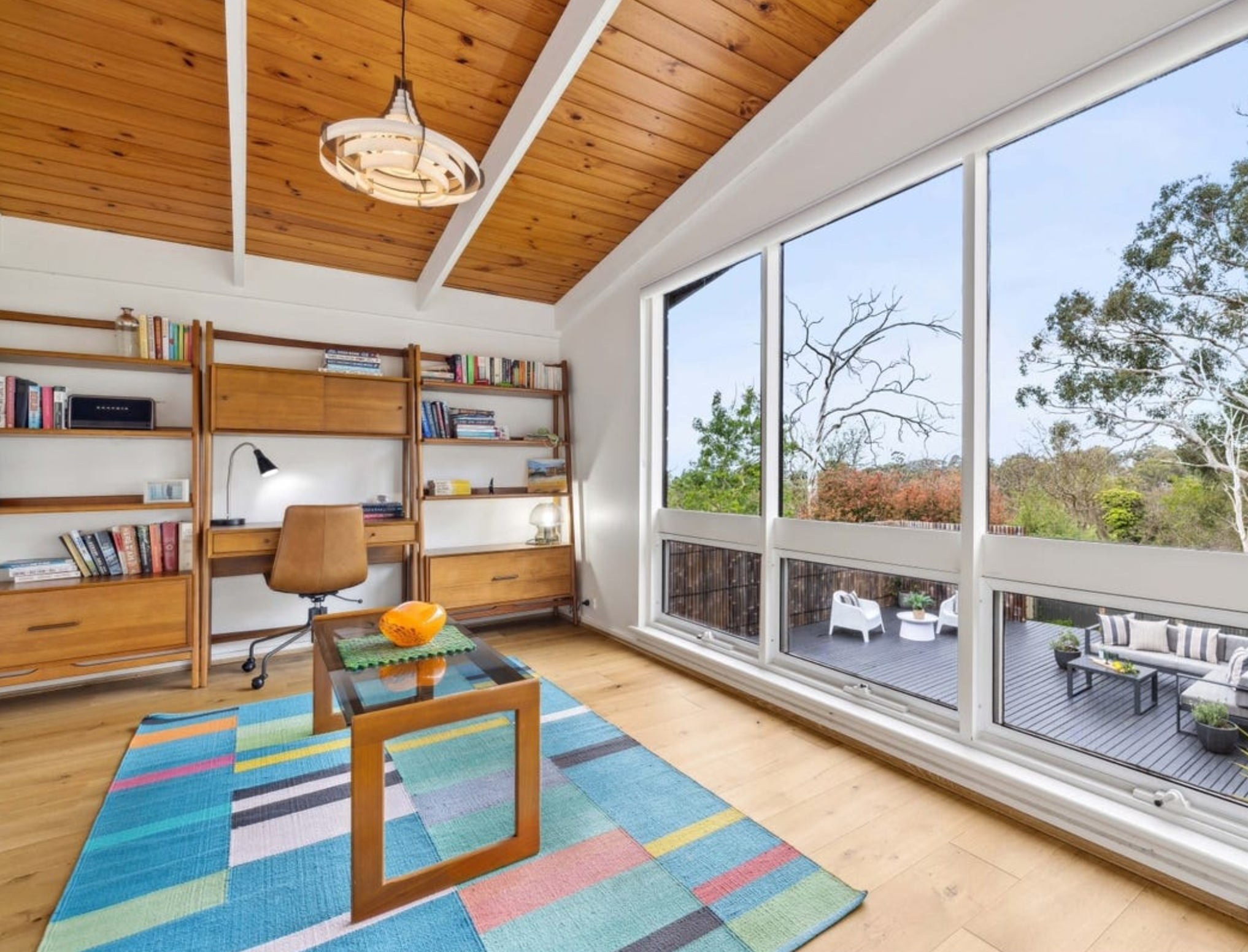
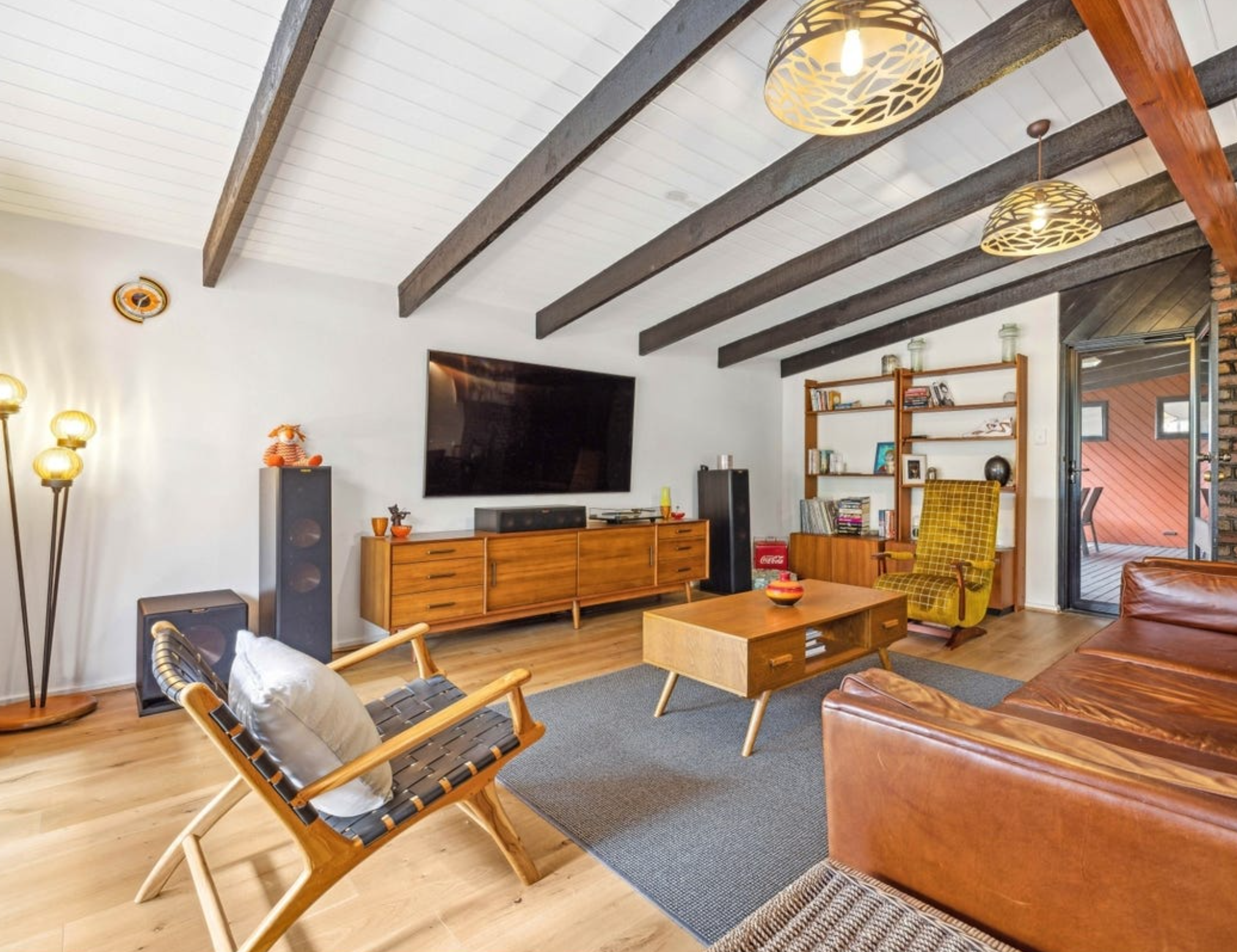
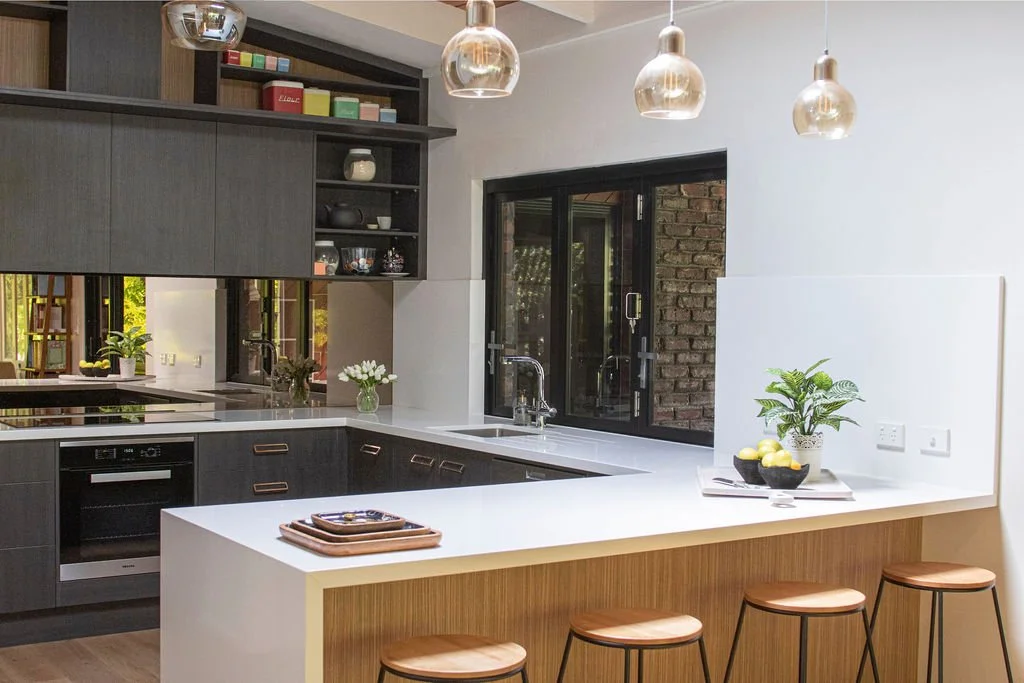
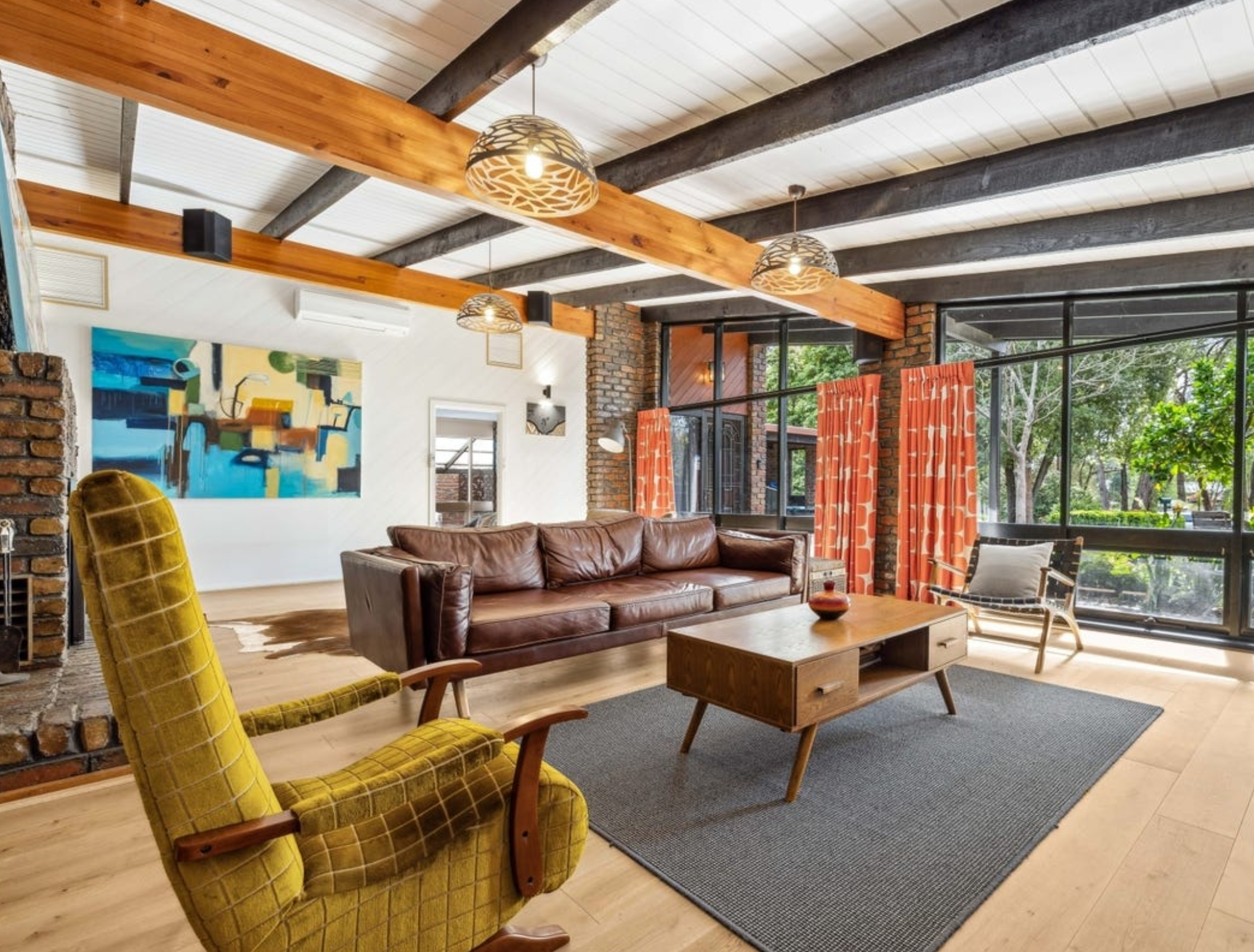
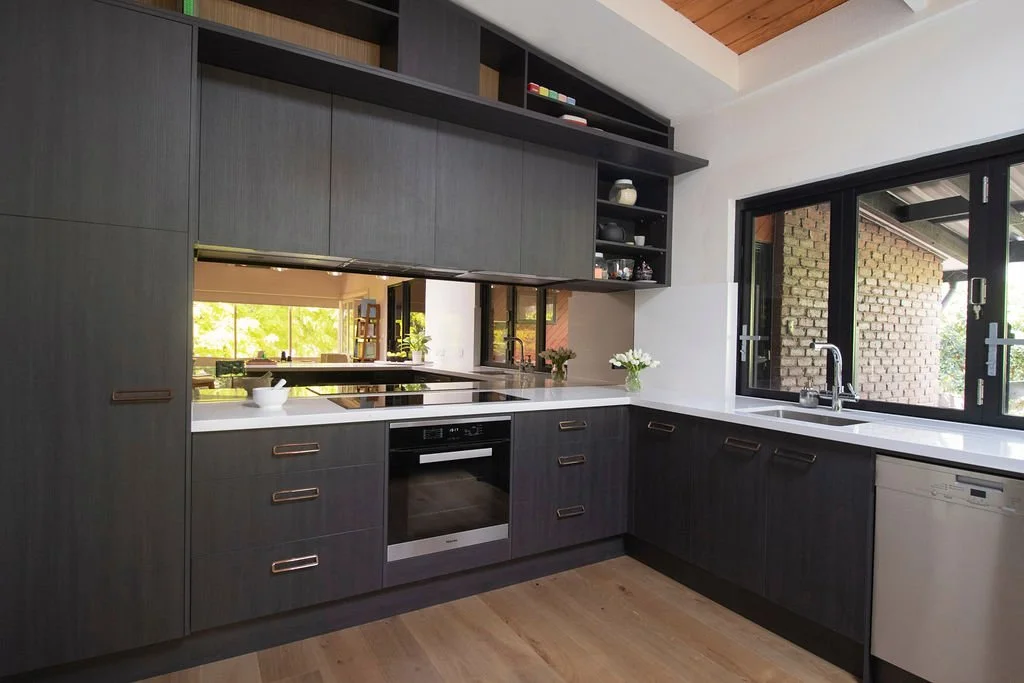
The next kitchen I designed (my second) after the Crafers project (above) was also my first mid-century modern renovation. It was in Bridgewater (Adelaide Hills). I loved sourcing retro-style fabrics, crazy paving, and working WITH the architecture to preserve the original bones. Whilst the original kitchen space was totally gutted and rearranged, the rest of the home acknowledged the history of the house which had been in the same ownership for decades. Images by Claudine Burgess Photography.
The Gate Was Open All Along
I spent decades looking for the gate before finally realising: it had been open the whole time. I just had to stop running in the other direction long enough to see it.
Plush Design Interiors is my Lion's Gateway moment made permanent. It is, without any contest, the work I was put on earth to do.
And if you've been lurking on this website, reading these words, looking at these rooms, thinking someone finally gets it — I promise you: I do. Come through the gate.
Let's make something extraordinary.
Love, Penelope xx
— Penelope Herbert : Principal Designer & Founder, Plush Design Interiors, Interior Architecture + Interior Design, Adelaide Hills, SA
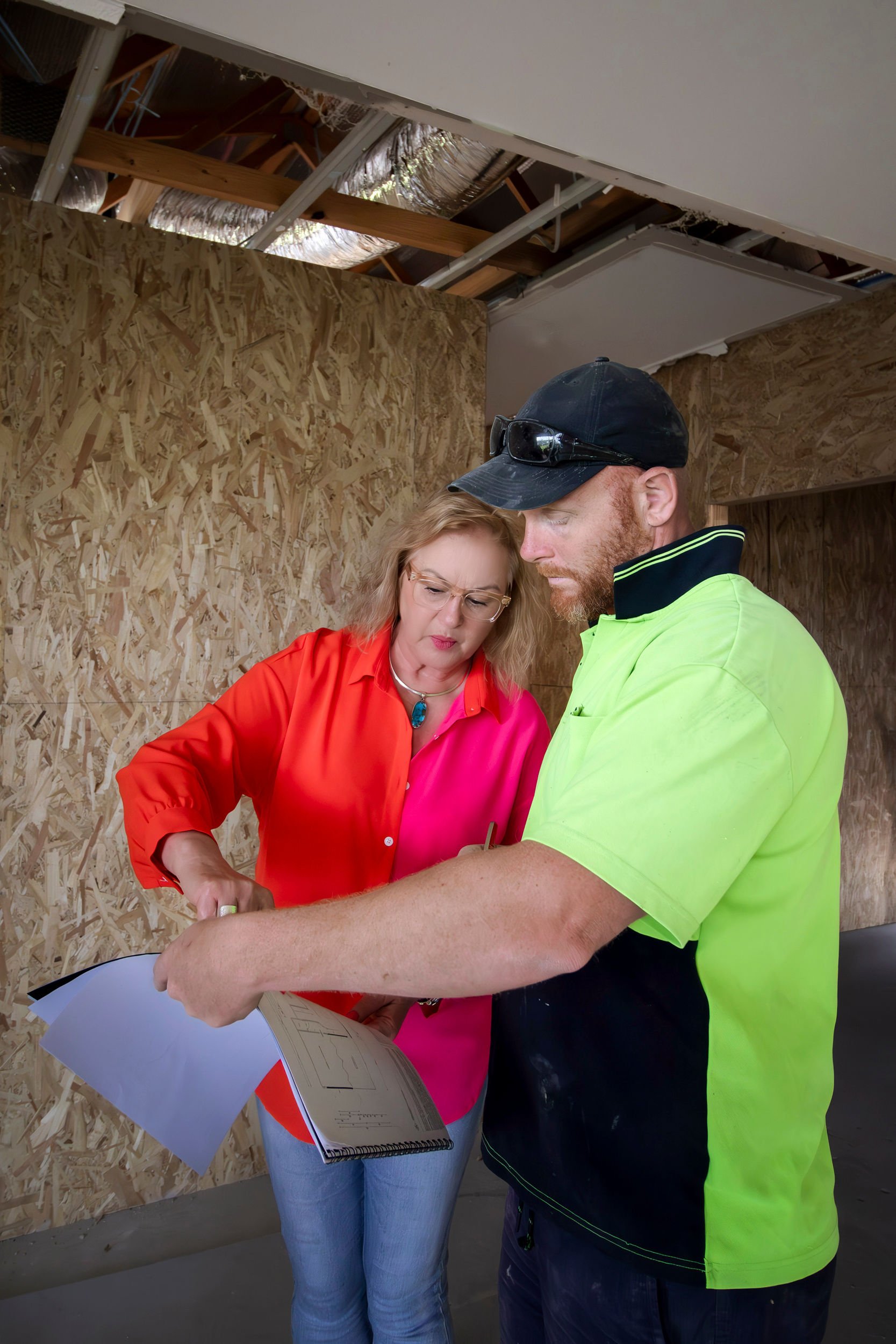
In Case You Scrolled Too Fast
Penelope Herbert spent decades in careers she was good at but didn't love — film editing, marketing, PR — before a whiteboard-fuelled epiphany in her early fifties revealed what had been staring her in the face since she was three years old: she was born to design spaces. Plush Design Interiors is the result. Now she and her team design bold, personality-driven, absolutely never-vanilla homes for people who are done playing it safe. Don't label your home. Design you.
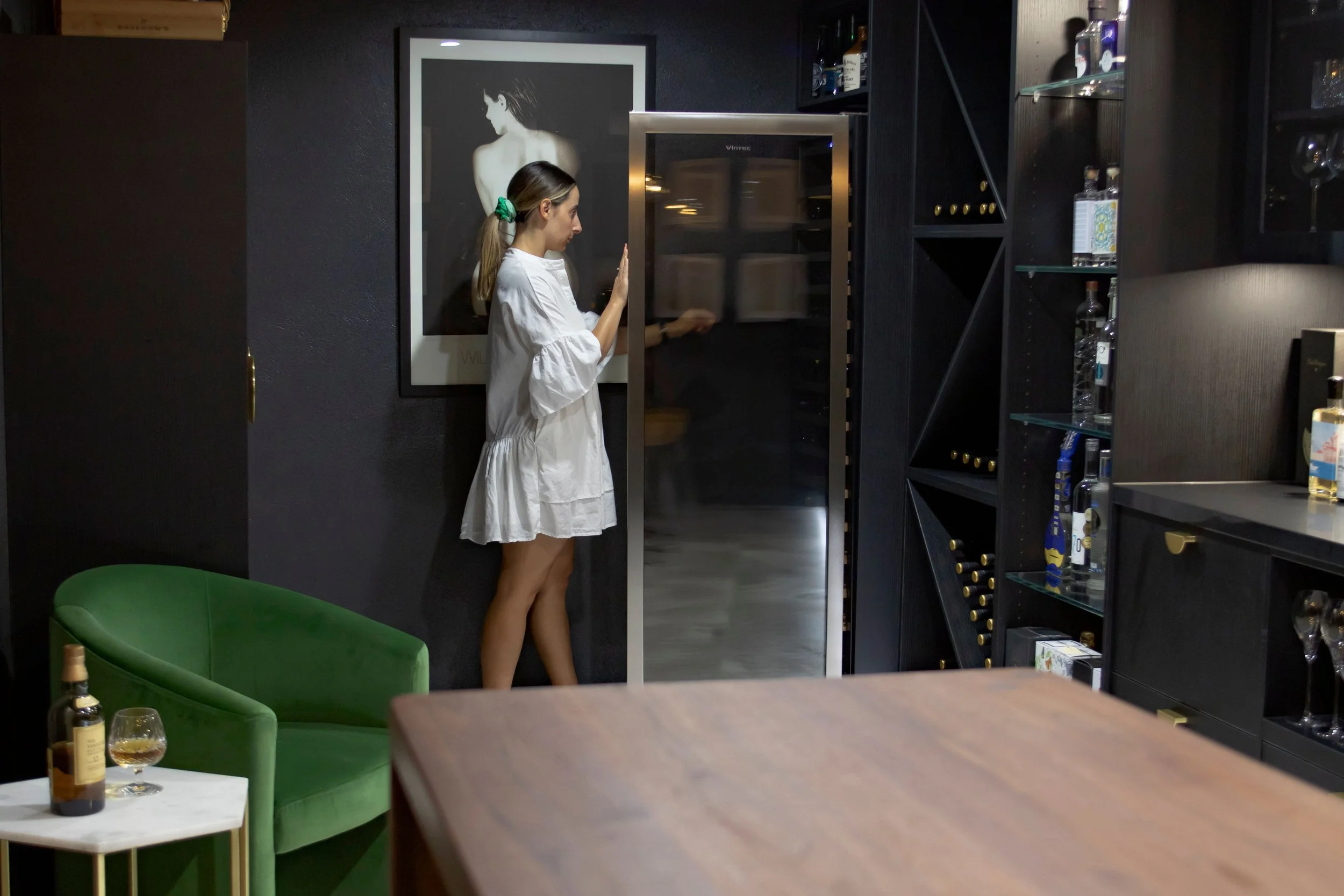
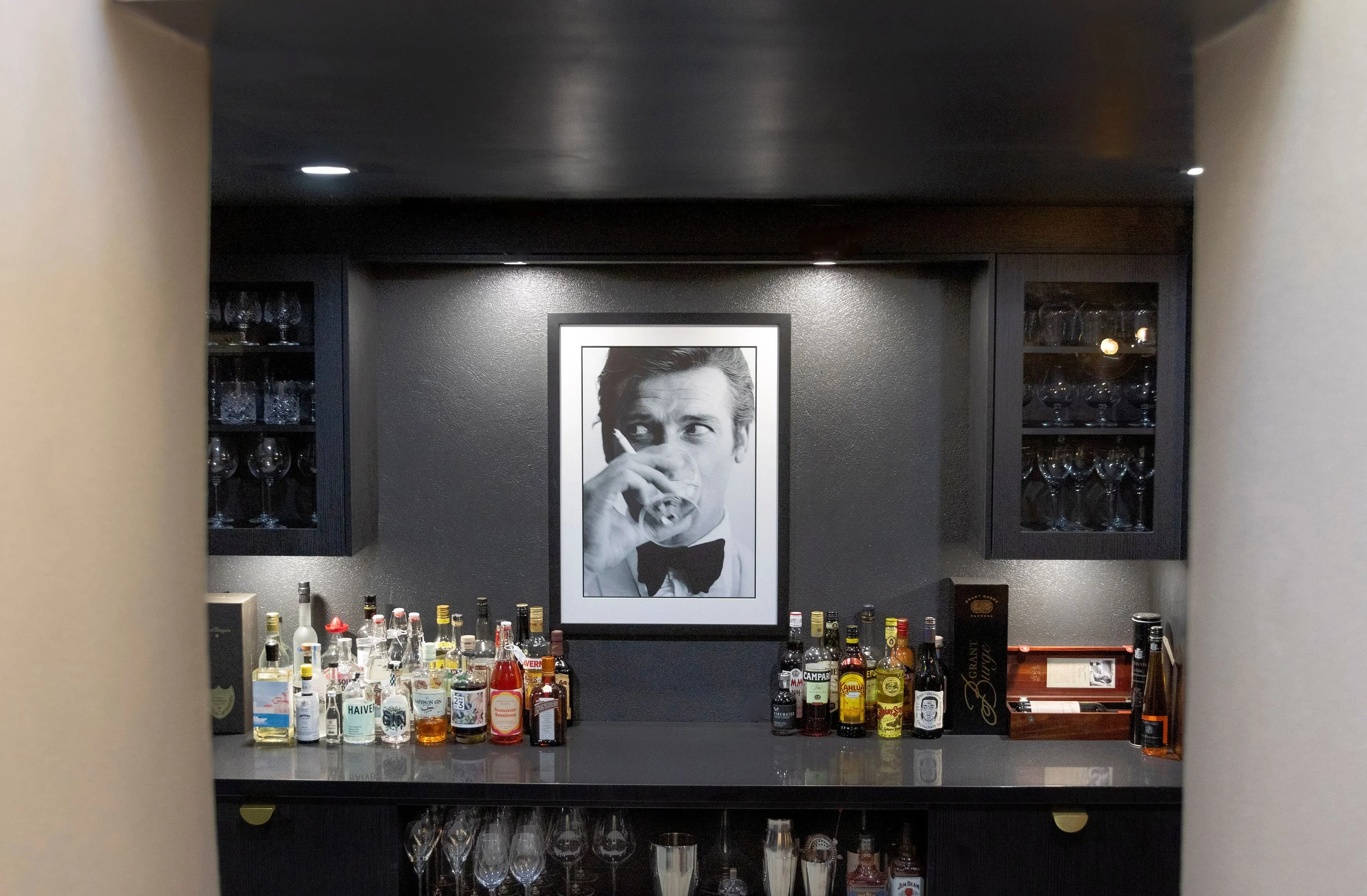
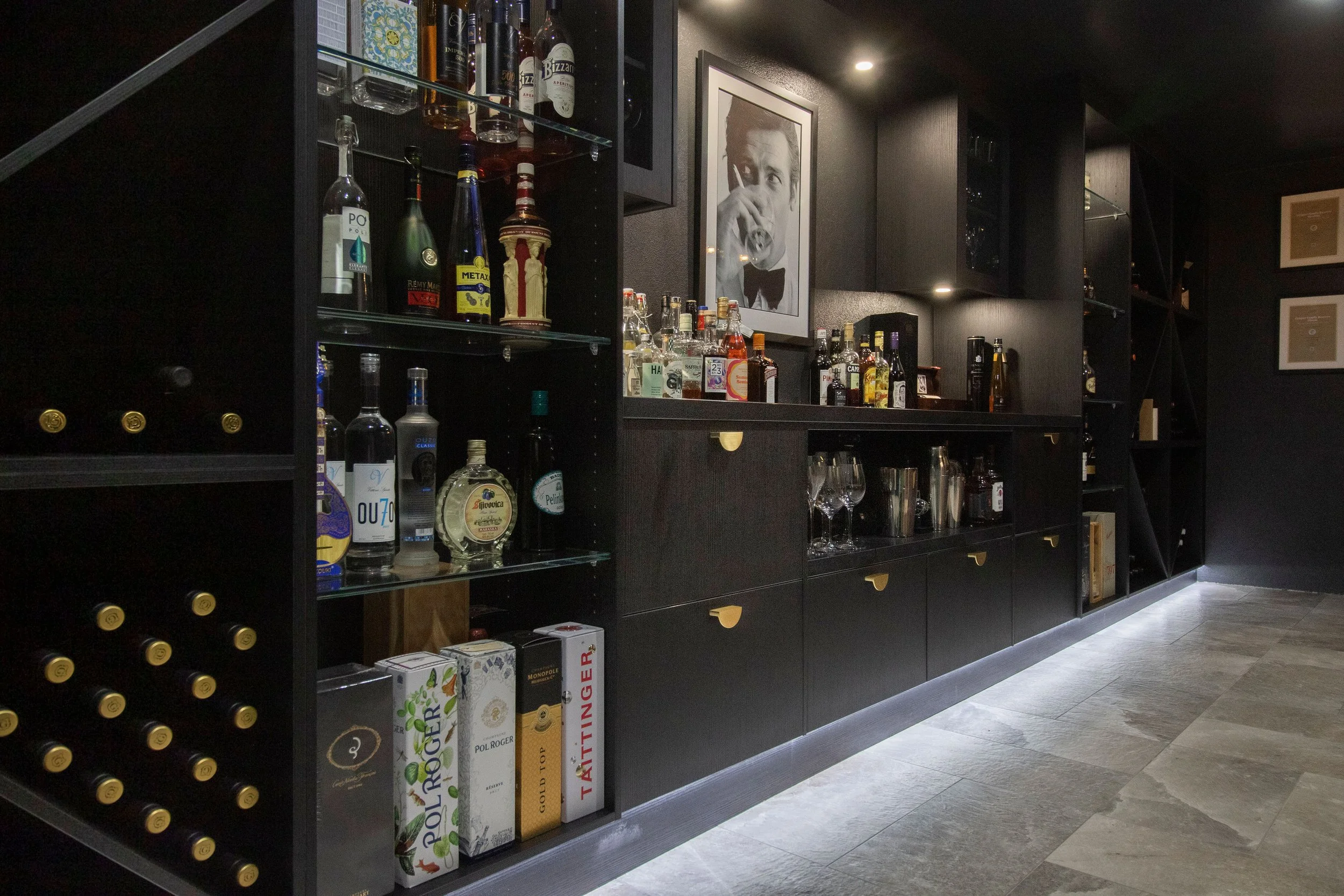
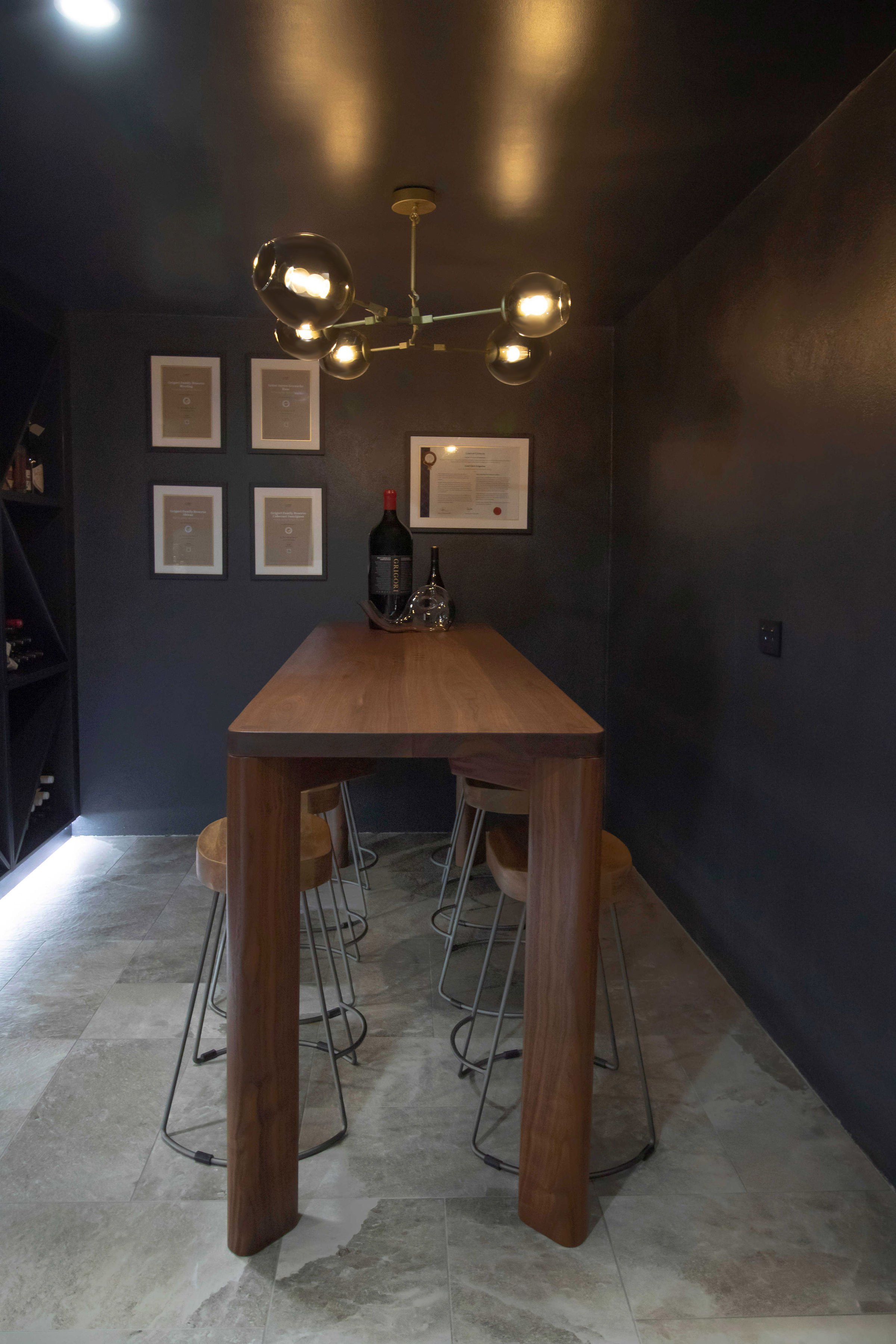
My first ever Wine Tasting Room in a private home in Toorak Gardens. The owners are wine makers and gin distillers who also wished to display their Japanese whiskey collection. The original cellar was white and boring. I went with black, even on the ceiling, which makes it feel like a much bigger space. Renee is checking out the champagne fridge (that should be MY job!)
The Kismet Moment
The real twist in this story is that every single "failed" career contributed something irreplaceable to who Penelope became as a designer. The film editing taught her storytelling, pacing, and that the edit — like the interior — is where the real meaning is found. The marketing years taught her how to understand an audience. The PR work taught her how to present a vision with conviction. Nothing was wasted. The gate was open, but the journey to it was the whole point.
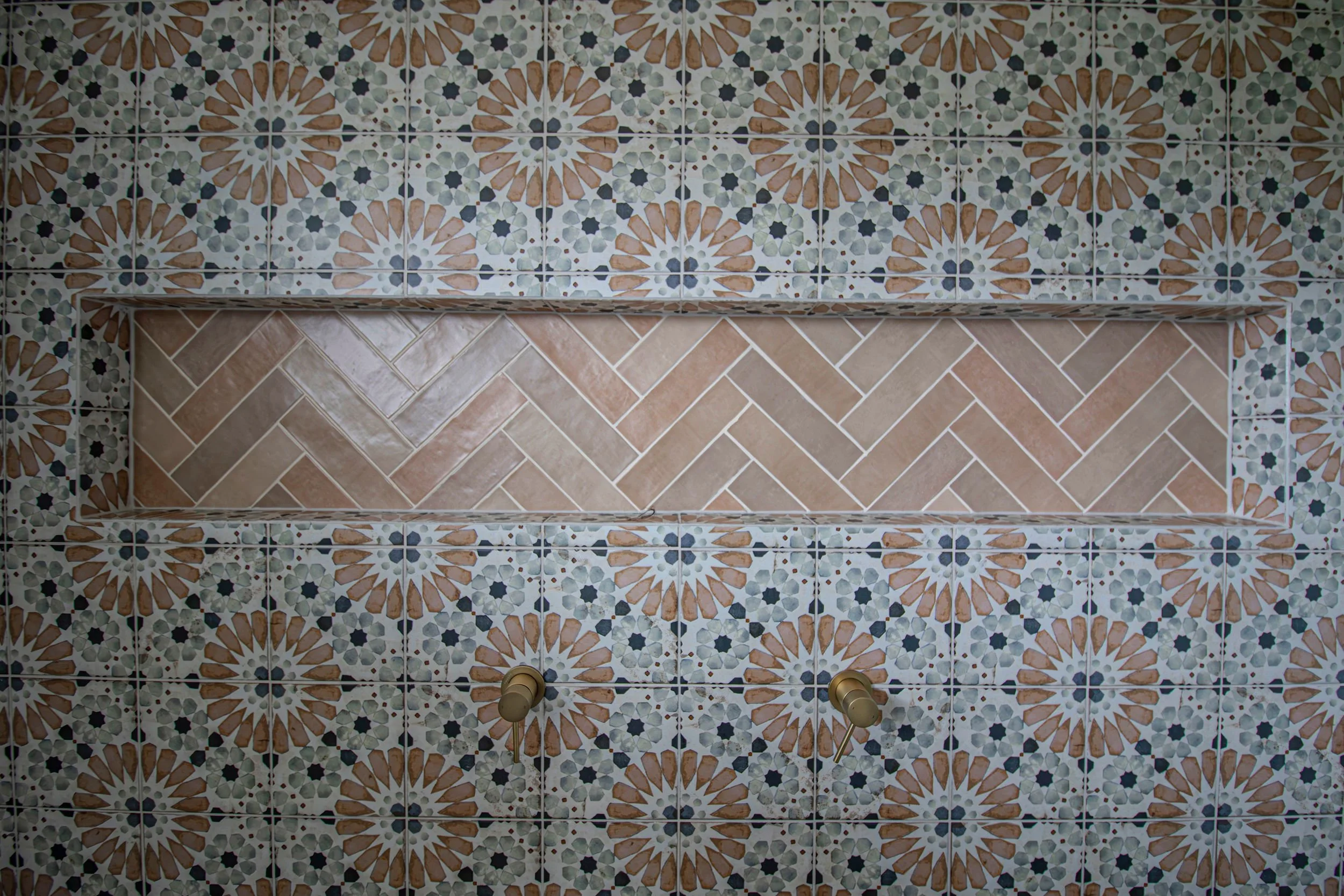
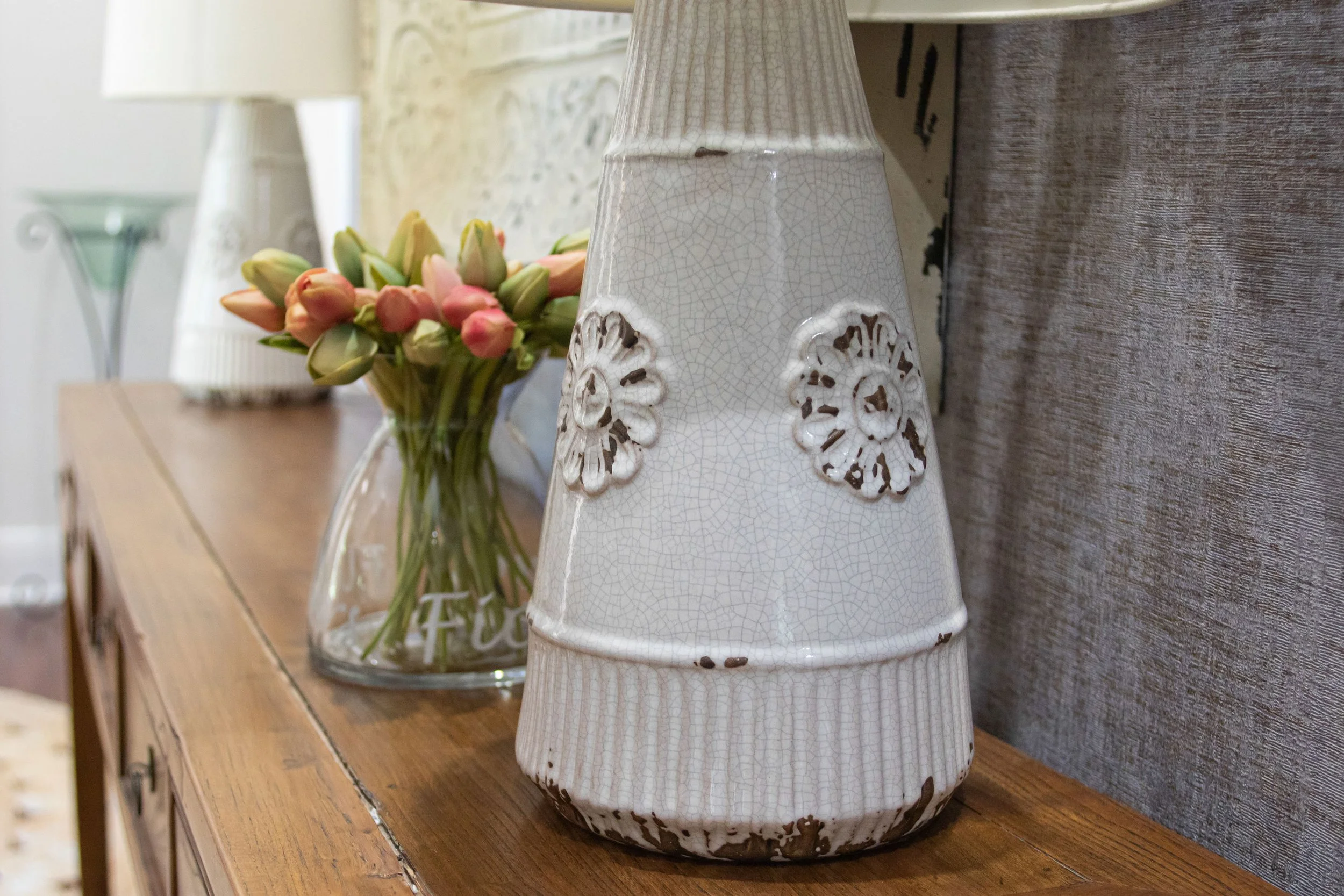
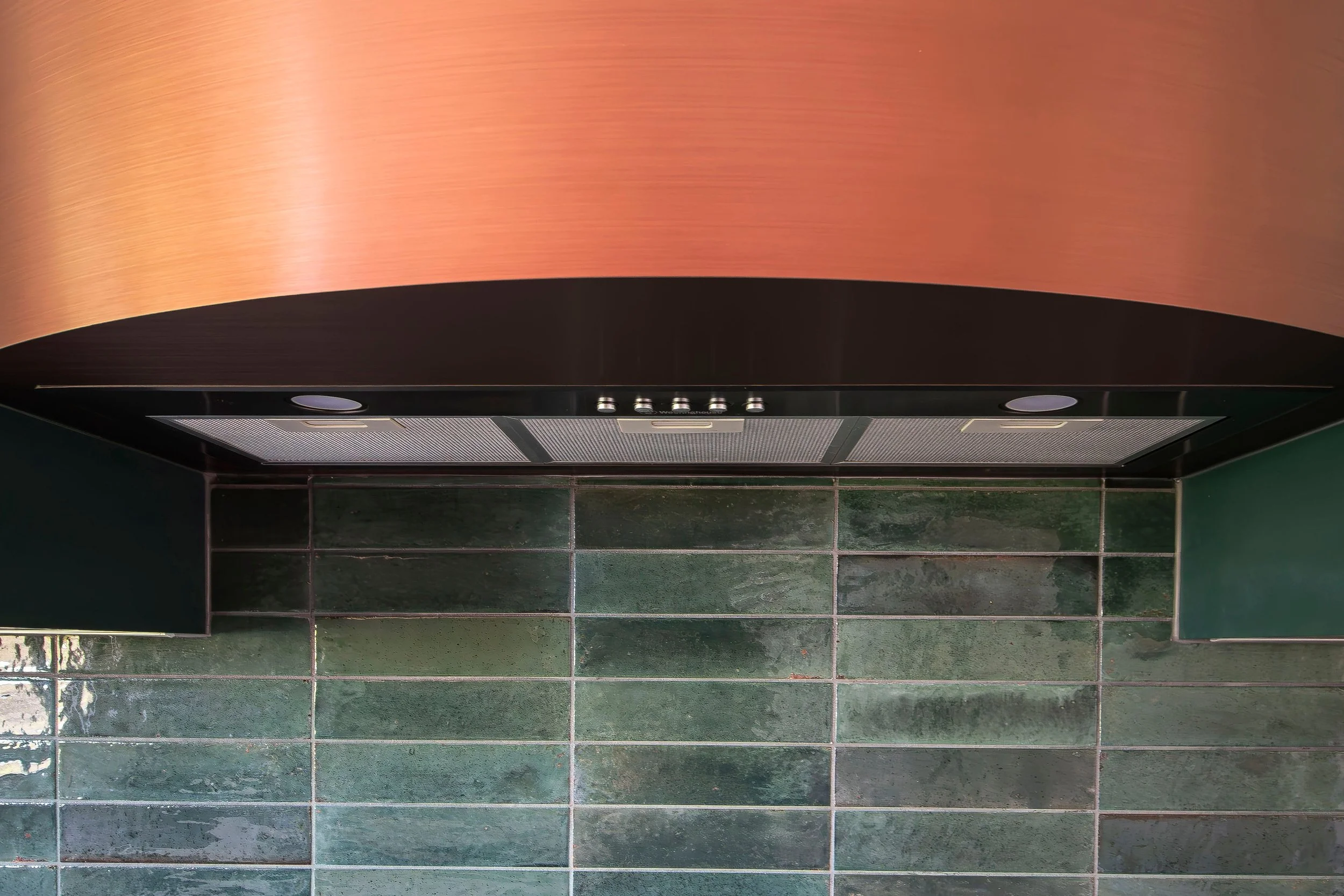
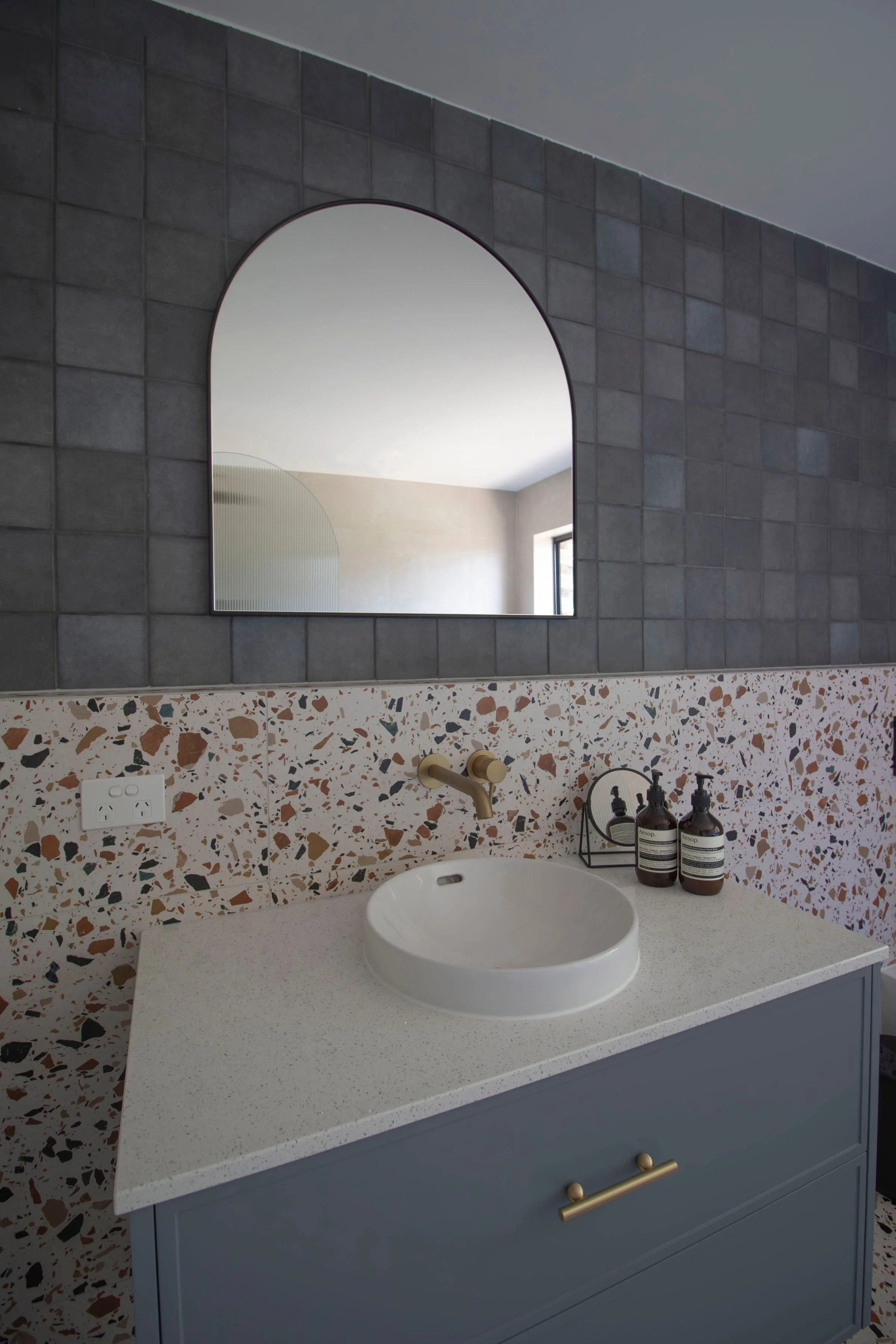
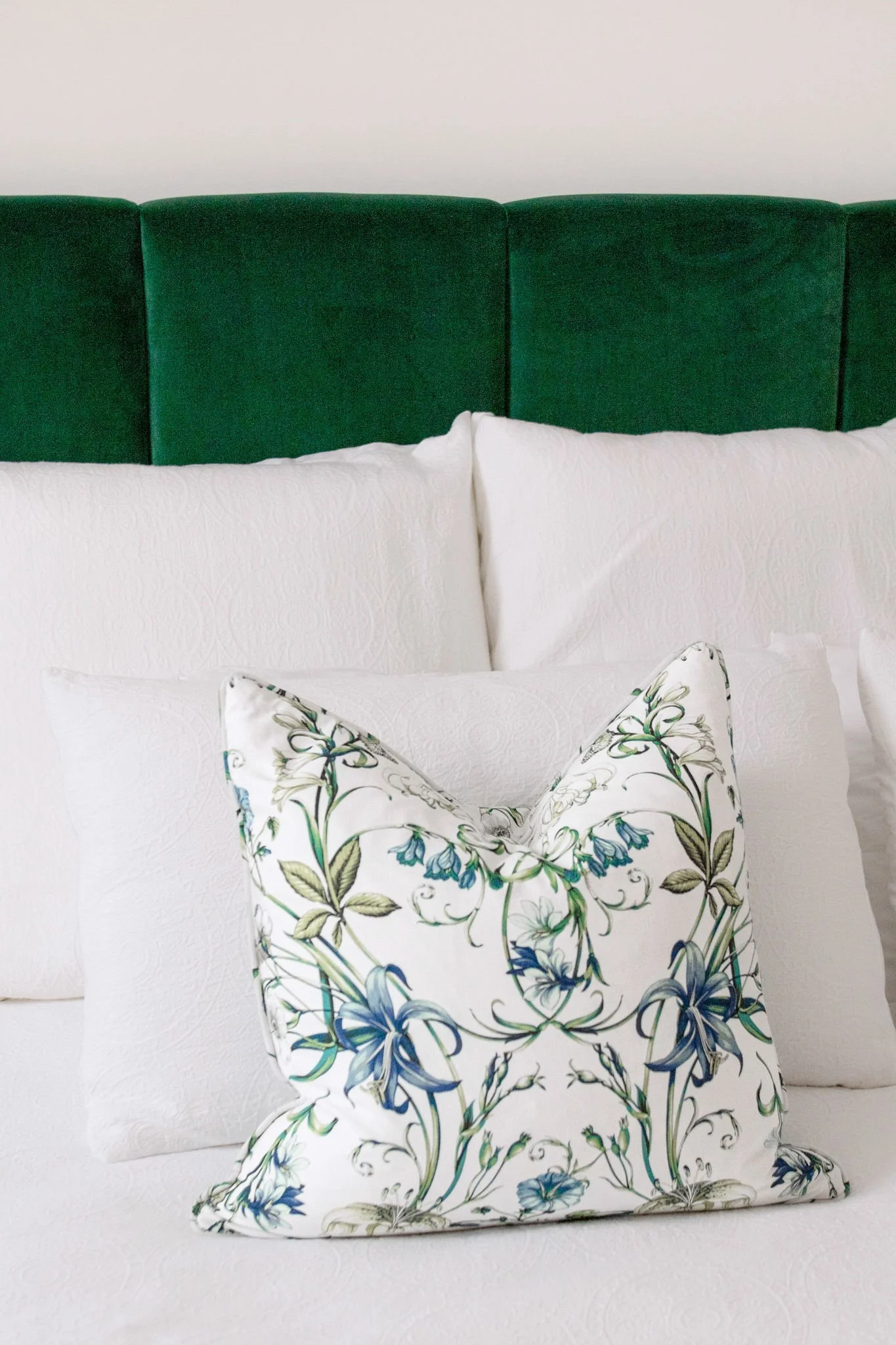
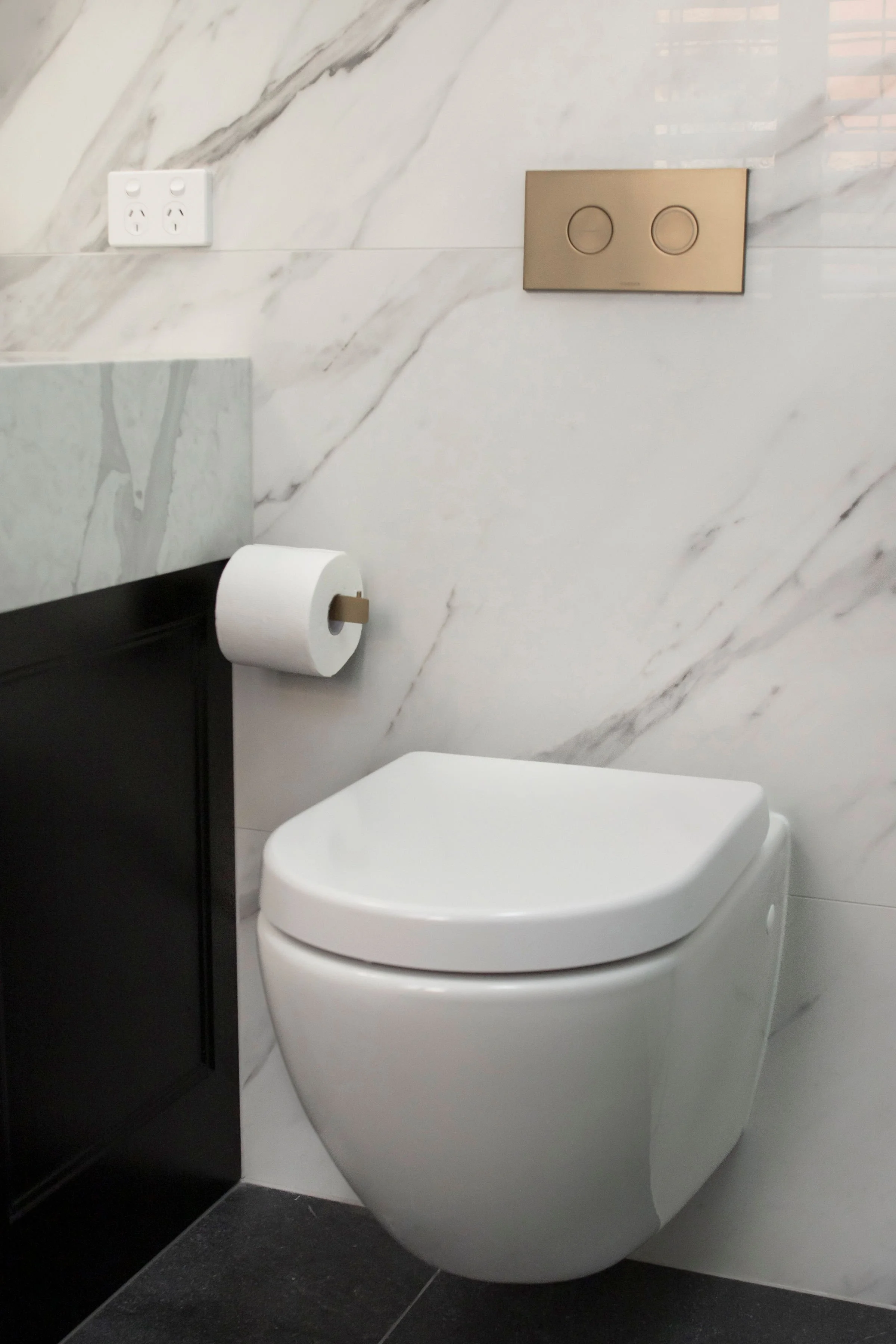
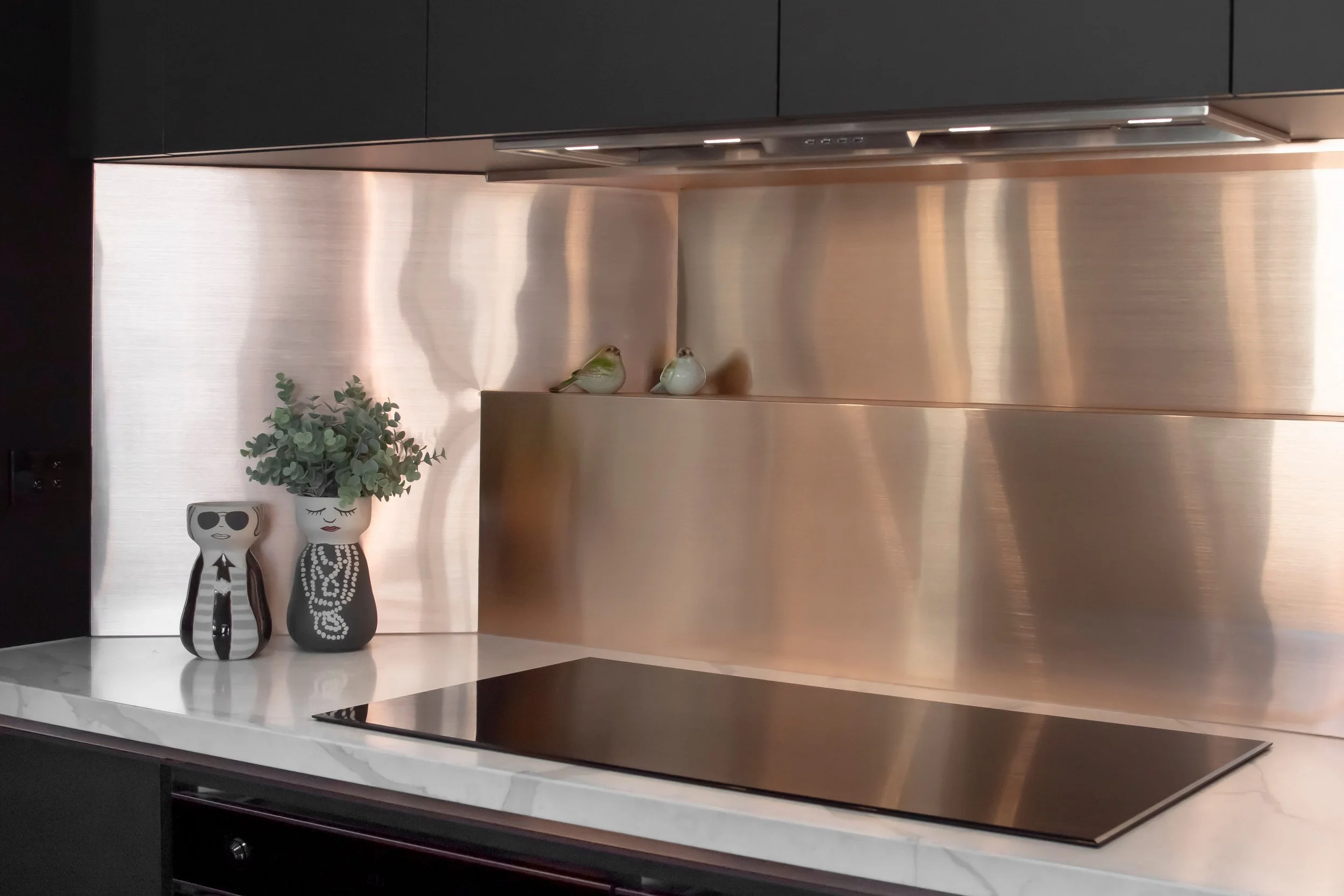
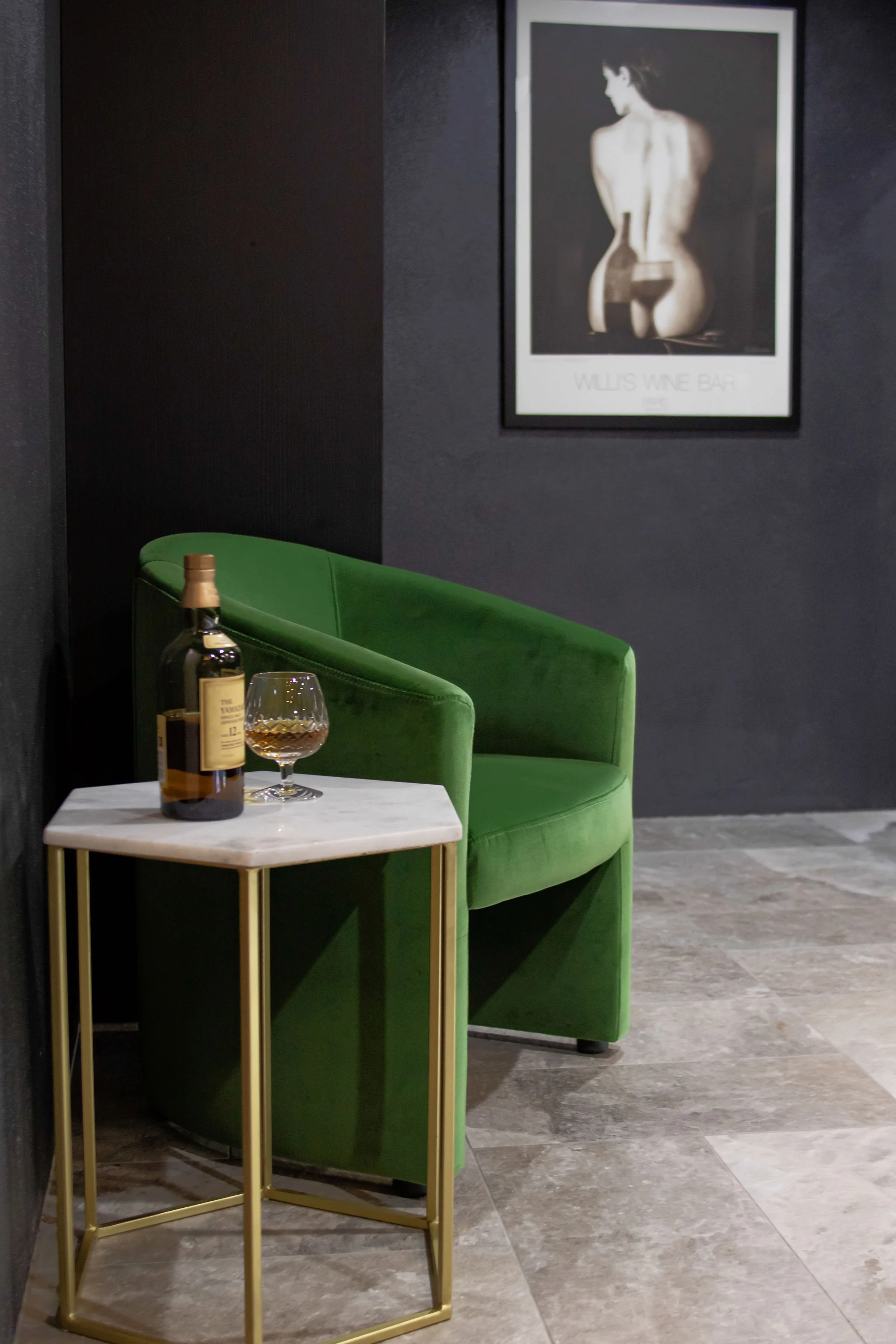
Some of our projects in Toorak Gardens, Bridgewater, and Largs Bay. See our Portfolio of photographed works. Unfortunately, we can’t always photograph all projects. All images by Claudine Burgess Photography.
The Impossible Scenario
Imagine if, at seventeen years old, someone had handed Penelope a commission to design a luxury residence. What would have happened? Almost certainly: a spectacularly overscaled indoor pool, at least one statement staircase, seventeen textural layers, and a boudoir that would have made a Hollywood set designer weep. She would have been completely right, and entirely unprepared. Some passions need seasoning. Some vocations need time. And some designers need a few decades of living before they can really, truly help someone live.
FAQs About Penelope Herbert and Plush Design Interiors
Who is Penelope Herbert?
Penelope Herbert is an interior designer and interior architect based in Aldgate in the Adelaide Hills, South Australia. She is the founder of Plush Design Interiors, author of Don't Get Ripped Off By Your Reno, A Home With a Pulse and Colour Without Apology, and creator of the No-Vanilla Design Manifesto and The No-Vanilla Archetypes. She designs bold, personality-driven homes for Adelaide Hills and greater Adelaide clients who refuse to settle for beige.
What is Plush Design Interiors?
Plush Design Interiors is a luxury residential interior design and interior architecture studio based in Aldgate, Adelaide Hills. The studio specialises in full-service residential renovations and new builds — from pre-renovation planning and concept development through to construction oversight and handover. The studio's philosophy is rooted in designing for who actually lives in a home rather than for resale, trend cycles or hypothetical buyers.
What is the difference between an interior designer and an interior architect?
An interior designer focuses on aesthetics, materials, colour and spatial arrangement. An interior architect operates at the structural level — interrogating floor plans, assessing whether walls should move, determining plumbing placement, and producing technical drawings and specifications that builders can actually build from. Penelope Herbert is both — which means Plush Design Interiors can take a project from concept to construction document without needing to hand off to a third party.
Where is Plush Design Interiors based?
The studio is based in Aldgate in the Adelaide Hills, South Australia. Penelope works across the Hills region — Stirling, Crafers, Bridgewater, Hahndorf, Balhannah, Mylor, Echunga, Littlehampton and Mount Barker — as well as greater Adelaide including the Eastern suburbs, inner South and CBD.
What does "No Beige. Luxury is Law." mean?
It's the Plush Design Interiors philosophy in six words. "Beige is Banned" means: stop designing from fear, stop choosing safe neutrals to please hypothetical buyers, and stop producing homes that could belong to anyone. "Luxury is Law" means: every home — regardless of budget — deserves to be designed with intention, quality and genuine personality. Apply within.
Interior Designer + Author of ‘Don’t Get Ripped Off By Your Reno’ and ‘A Home With A Pulse’. Both available on my e-book interior design and renovation resources page on my website.
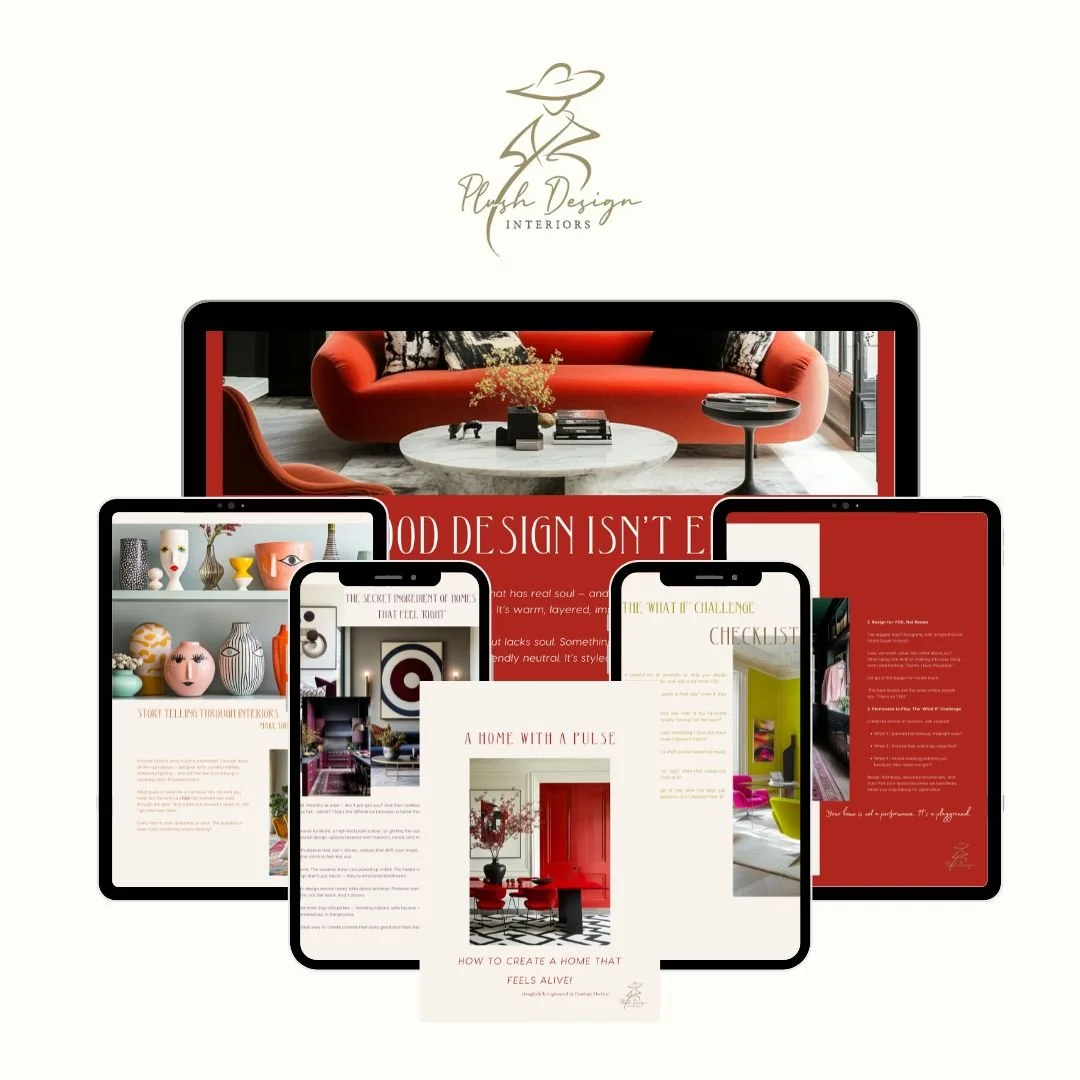
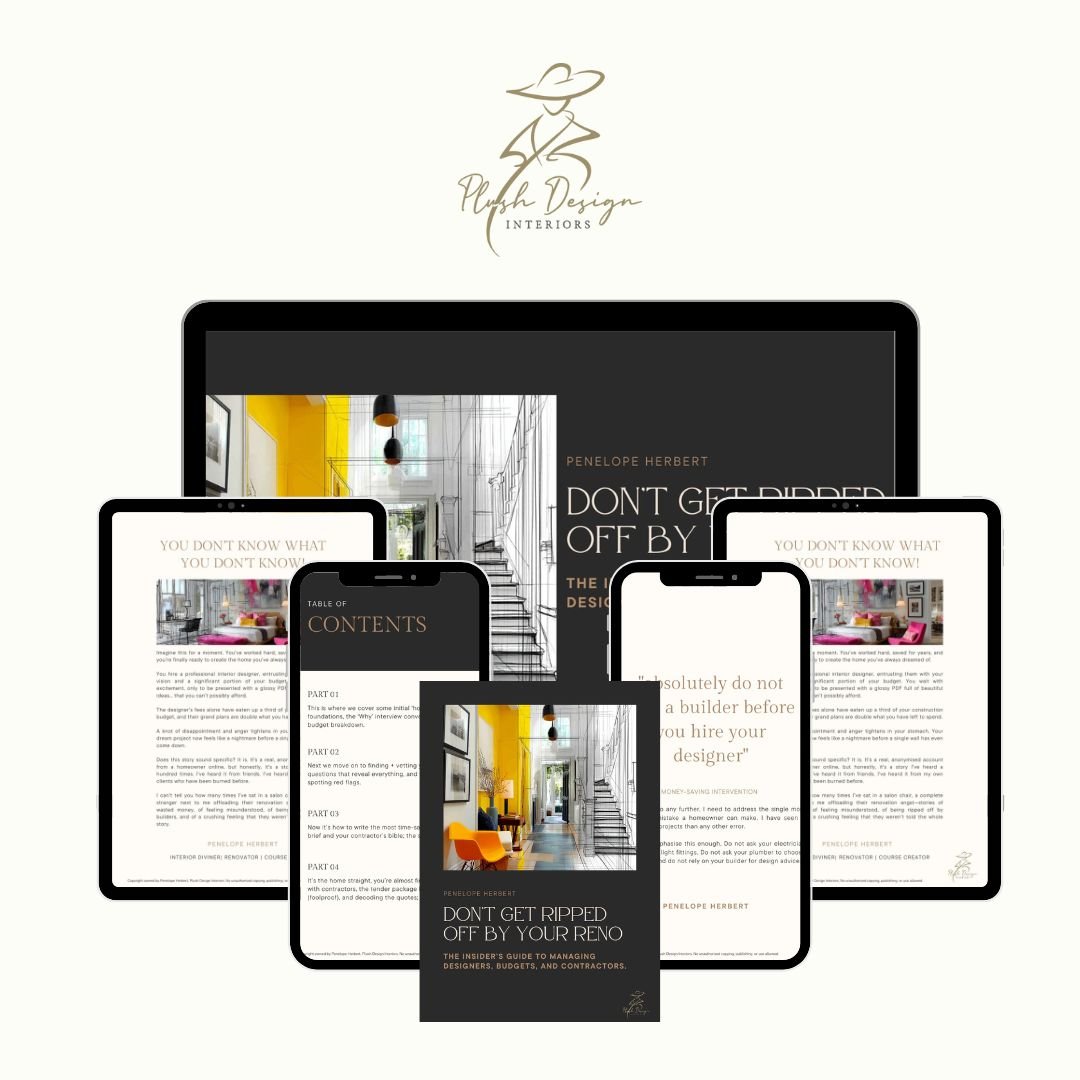
Plush Design Interiors uses AI‑generated imagery to help illustrate design concepts and possibilities in a fast, flexible and cost‑effective way. These images are inspirational visualisations only and may not represent final selections, exact colours, finishes or products available in Australia. All real‑world Plush Design Interiors work, including all design, specifications, selections and purchases, are curated by a human interior designer and are confirmed with clients using accurate samples, supplier information and detailed documentation before any work proceeds.